









A Comprehensive Guide to DevSecOps: Integrating Security at Velocity
DevSecOps is a cultural and technical methodology that seamlessly integrates security practices, tools, and shared responsibility into the entire DevOps workflow, from code development through to deployment and operations, to ensure continuous and collaborative delivery of secure software.
DevOps really changed how we get software out there by getting rid of the walls between the people who write the code and those who keep it running. This let companies push out updates super-fast. But, this speed sometimes caused problems because security teams found it hard to keep up. They were often called in late and seen as slowing things down.
That's where DevSecOps comes in. It fixes this problem by making security everyone's job from the start. It's about putting security practices and tools right into the process of building and releasing software. This way, security is a key part of getting software out quickly, instead of being something that slows it down. The result? Companies can create and release software that's both fast and secure.
How DevSecOps Works
DevSecOps operates on the principle of "shifting left"—incorporating security early and often in the software development lifecycle—while also ensuring security is maintained "everywhere," through operations. This is achieved through the strategic automation of security controls within the Continuous Integration and Continuous Deployment (CI/CD) pipeline. The pipeline becomes the central nervous system for DevSecOps, where automated security gates are placed at every logical stage. When a developer commits code, the pipeline automatically triggers a series of security scans. This begins with Static Application Security Testing (SAST) tools analyzing the source code for vulnerabilities without executing it, providing immediate feedback to the developer, often within their integrated development environment (IDE).
As the code progresses, the pipeline builds the application and deploys it to a test environment. Here, Dynamic Application Security Testing (DAST) tools and Interactive Application Security Testing (IAST) tools are triggered. DAST probes the running application for vulnerabilities, while IAST, with its agents inside the application, provides real-time, contextual analysis of attacks during automated tests. Simultaneously, Software Composition Analysis (SCA) tools scan the application's dependencies and open-source libraries for known vulnerabilities, ensuring the software supply chain is secure. If any of these automated scans discover a critical vulnerability, they can be configured to "break the build," preventing the risky code from advancing further and forcing remediation early in the process.
DevSecOps also impacts the infrastructure. Security measures are turned into code by using tools like Terraform or Ansible. These scripts are checked for security mistakes before setting up any cloud environment. After the application goes live, security checks keep going without any break. RASP agents can be added to the application to spot and stop attacks as they happen. SIEM systems get logs from both the application and the infrastructure, which helps with constant threat detection and response. Think of it as a system where security is always running, not just a one-time thing.
Key Characteristics of DevSecOps
DevSecOps is defined by a set of core characteristics that distinguish it from traditional, bolted-on security models. The most fundamental is the principle of "security as code" and automation. In a DevSecOps environment, security policies and checks are defined in code and automated within the pipeline. This includes automated security testing, compliance as code, and automated configuration management. This automation is non-negotiable; it is the engine that allows security to scale at the speed of DevOps without creating manual bottlenecks.
Another critical characteristic is collaboration and shared responsibility. DevSecOps dismantles the traditional silos where security was the sole domain of a separate team. It fosters a culture where developers, operations staff, and security engineers work collaboratively from the outset. Security is no longer a gatekeeper but an enabling partner. Developers are empowered and trained to write secure code and fix security issues, while security teams contribute by building and maintaining the automated security tools and pipelines that make this possible. This shared ownership is a cultural cornerstone.
Furthermore, DevSecOps is characterized by continuous feedback and improvement. The model relies on tight feedback loops where security findings are immediately reported back to the developer who introduced the issue. This rapid feedback, provided in the tools developers already use (like pull request comments or Slack alerts), is far more effective than a lengthy report delivered weeks later. This iterative process allows teams to learn and adapt quickly, continuously improving their security posture with each code commit and deployment. Finally, DevSecOps embraces proactive risk management through practices like threat modeling and secure design, which are integrated into the planning and design phases, ensuring security is considered before a single line of code is written.
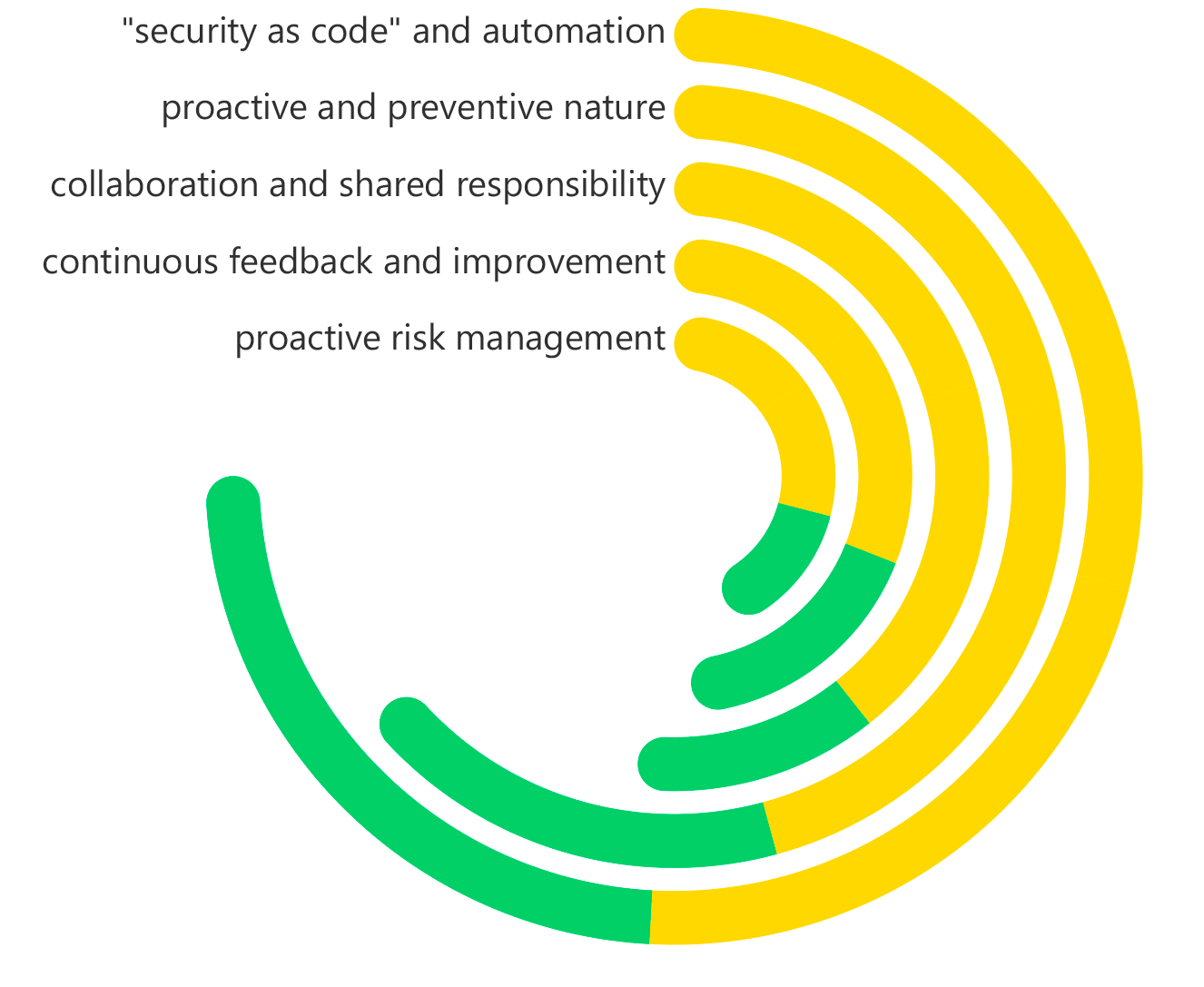
DevSecOps Key Characteristics
What Problems Does DevSecOps Solve?
DevSecOps deals with some big problems that came up when old-school security met fast-moving DevOps. The main issue is the Security Bottleneck in CI/CD. Before, security checks happened right before the release, which slowed things down and made developers and security teams not like each other. DevSecOps fixes this by adding security all the time, so there are no surprises at the end, and security can keep up with development.
It also lowers the cost of fixing things very late. Finding problems after release costs more time and money than finding them during coding. By checking early, DevSecOps lowers these costs and avoids emergency fixes, security problems, bad publicity, and money loss. Security becomes efficient.
Also, DevSecOps fixes security practices that don't work well across the board. Using manual security and one-time tools doesn't work when you have many teams releasing code all the time. DevSecOps puts in place a security system that is standardized, automatic, and scalable. Each build gets the same security checks, which makes sure that all apps have a basic level of security. This adds control to fast development.
Benefits of DevSecOps
The adoption of a mature DevSecOps practice yields transformative benefits that impact security, business, and culture. The most significant advantage is the acceleration of secure software delivery. By automating and integrating security, organizations can maintain—or even increase—their release velocity without compromising on security. This creates a powerful competitive advantage, allowing businesses to innovate and respond to market changes faster than their competitors, all while managing risk effectively.
From a security and operational standpoint, DevSecOps leads to a fundamentally stronger security posture. The continuous, automated nature of security testing means that vulnerabilities are found and fixed faster, steadily reducing the overall attack surface of applications. This proactive approach results in more resilient software and a reduced likelihood of a data breach. Moreover, it brings improved compliance and auditability. Security and compliance policies can be codified and automatically enforced in the pipeline, generating clear audit trails that demonstrate due diligence and consistent policy application, making compliance audits faster and less painful.
Finally, DevSecOps fosters a positive and collaborative culture. By breaking down silos and making security a shared goal, it reduces friction between teams. Developers gain a greater sense of ownership and understanding of security, while security teams become enablers of business goals rather than blockers. This cultural shift leads to higher job satisfaction, more innovative problem-solving, and an organization-wide resilience that is difficult to achieve with traditional, segregated models.
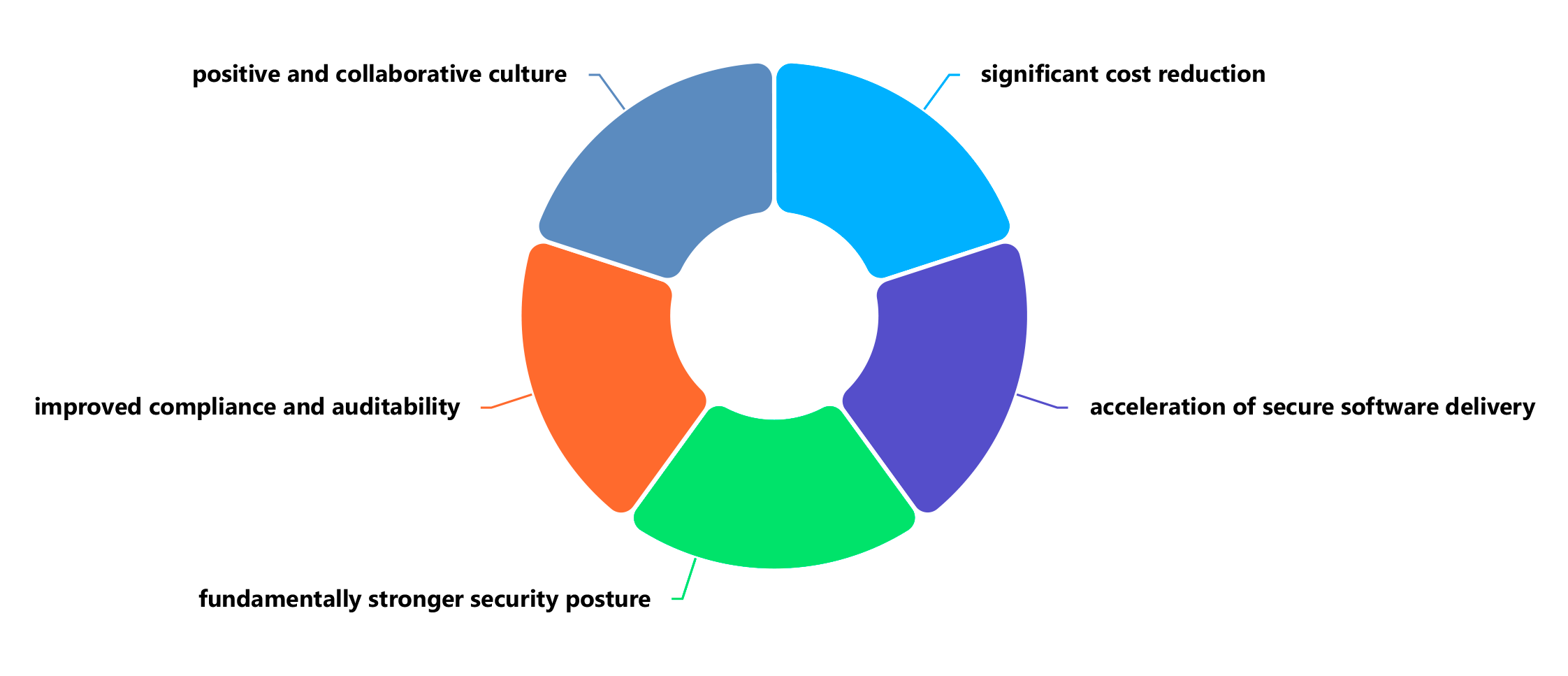
DevSecOps Benefits
How Is DevSecOps Different from DevOps?
DevSecOps comes from DevOps, but there's a key difference. DevOps mainly wants to make things faster and more reliable by connecting developers and operations to get software out quickly and steadily. It's all about automation, teamwork, and constant delivery. But with just DevOps, security was usually something added later, handled by a different team, almost like an extra piece.
DevSecOps makes security a main part of the DevOps process. It's not separate; it's built-in. The big change is in how people think and act. In DevOps, you might ask, How fast can we get this out? But in DevSecOps, you ask, How fast can we get this out safely? This means thinking about security when you design something, using automatic security tools, and tracking security as closely as you track how well things are running and how often you put out releases.
What this looks like in action is using different tools and steps. A DevOps process might involve compiling code, running tests, and sending it out. DevSecOps adds things like automatic security scans and checks, and it might even stop a release if there's a security problem. So, DevSecOps isn't replacing DevOps; it's just making it better. It's realizing that going fast without being secure isn't going to work in the end, and that being quick and flexible means building in quality and security from the start.
Why Is DevSecOps Vital to Application Security?
DevSecOps is super important now because the old way we handled security for apps just doesn't work anymore with new cloud setups, microservices, and constant updates. Back then, you might test a whole app once a year, but that’s useless when teams are updating small parts of an app multiple times daily. DevSecOps is the only way to keep things secure all the time in this fast-moving, complicated world.
Also, there are way more ways for attackers to get in now. Apps aren't just code we write ourselves; they include open-source stuff, outside APIs, and containers. Keeping all that safe means always being on guard, and that's where automation comes in. DevSecOps makes this watchfulness part of the process, like running basic tests. It makes sure every change, big or small, gets checked for security, so we’re always ready for threats.
In the end, DevSecOps is key to making everyone care about security. If developers can easily find and fix problems themselves, security becomes part of the company's culture. This change, along with automation, helps companies stay flexible and handle risks well. Instead of security costing a ton, it actually helps the business move forward.
Real-World Examples of How DevSecOps Is Used
DevSecOps is being used in some interesting ways across different fields.
For example, think about automated security in a FinTech setup. A digital bank put SAST and SCA tools right into its GitHub Actions setup. Now, when a developer wants to change how payments are handled, the system kicks in right away. The SAST tool spots a possible SQL injection problem in the new code, and the SCA tool finds a serious weakness in a temporary logging tool. The system stops the change from going live, and it even comments on the change request with advice on how to fix it. The developer gets on it, fixes the issues, and the next test run is clean, so the change can be safely implemented.
Here's another one: Imagine an online store securing its setup on AWS. This retail company uses Terraform to keep its cloud stuff in order. Before any Terraform code goes live, it's checked by a special tool in their GitLab system. The check finds that a new S3 bucket setup would make it open to the public, which breaks company rules. The system stops the code from going live, preventing a potentially leaky bucket from being created. Checking Infrastructure as Code like this is key to DevSecOps, stopping cloud problems right at the start.
DevSecOps is also valuable for keeping things compliant, like for a Healthcare SaaS company. This company has to follow strict HIPAA rules. So, their Jenkins setup includes a step that automatically checks their systems using InSpec profiles. After deploying to a test environment, the compliance check runs and fails because a database wasn't set up with encryption. This gets reported, and the operations team fixes it fast, making sure every deployment meets the rules before it hits the real world, which makes audits much easier.
How ImmuniWeb Helps with DevSecOps
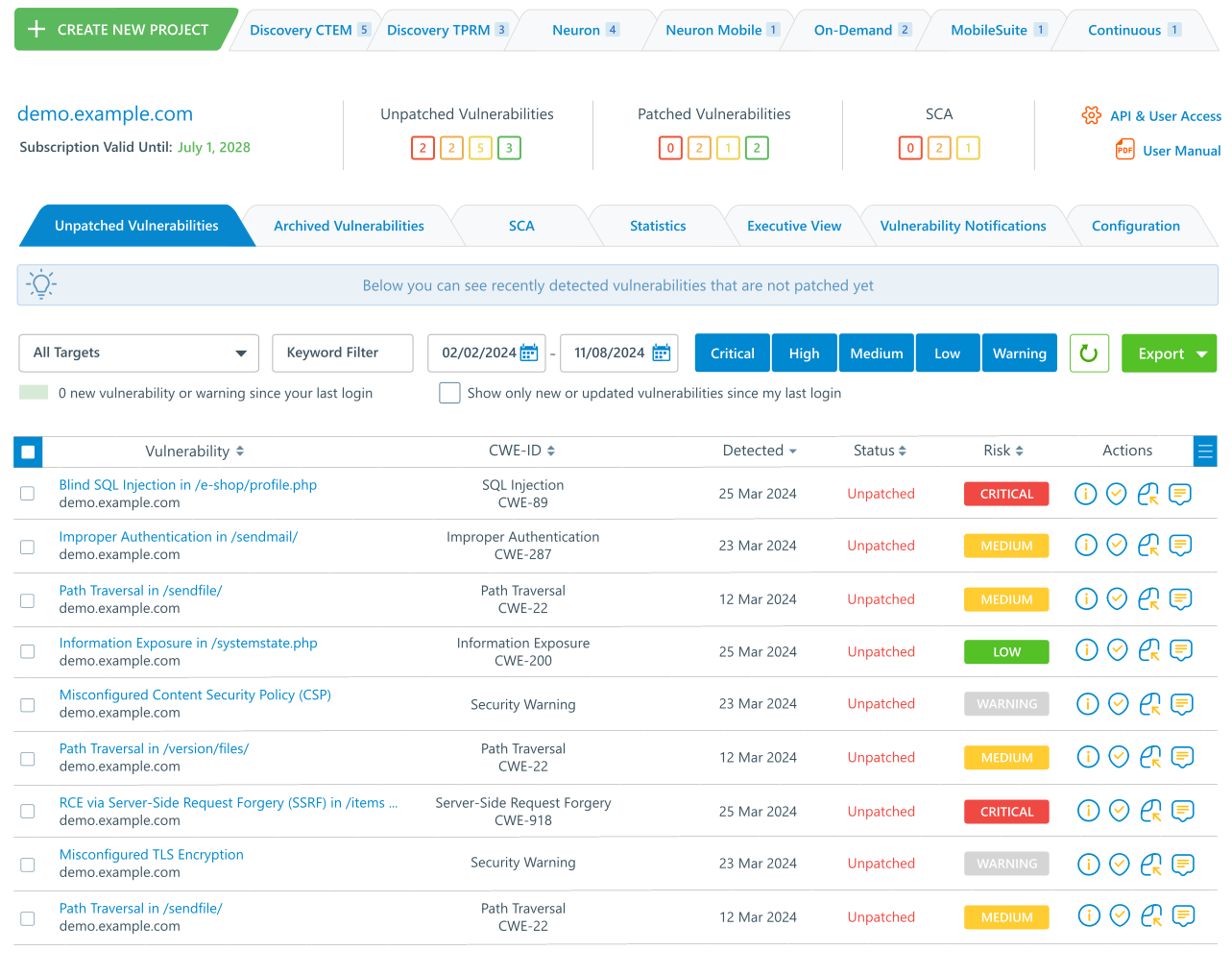
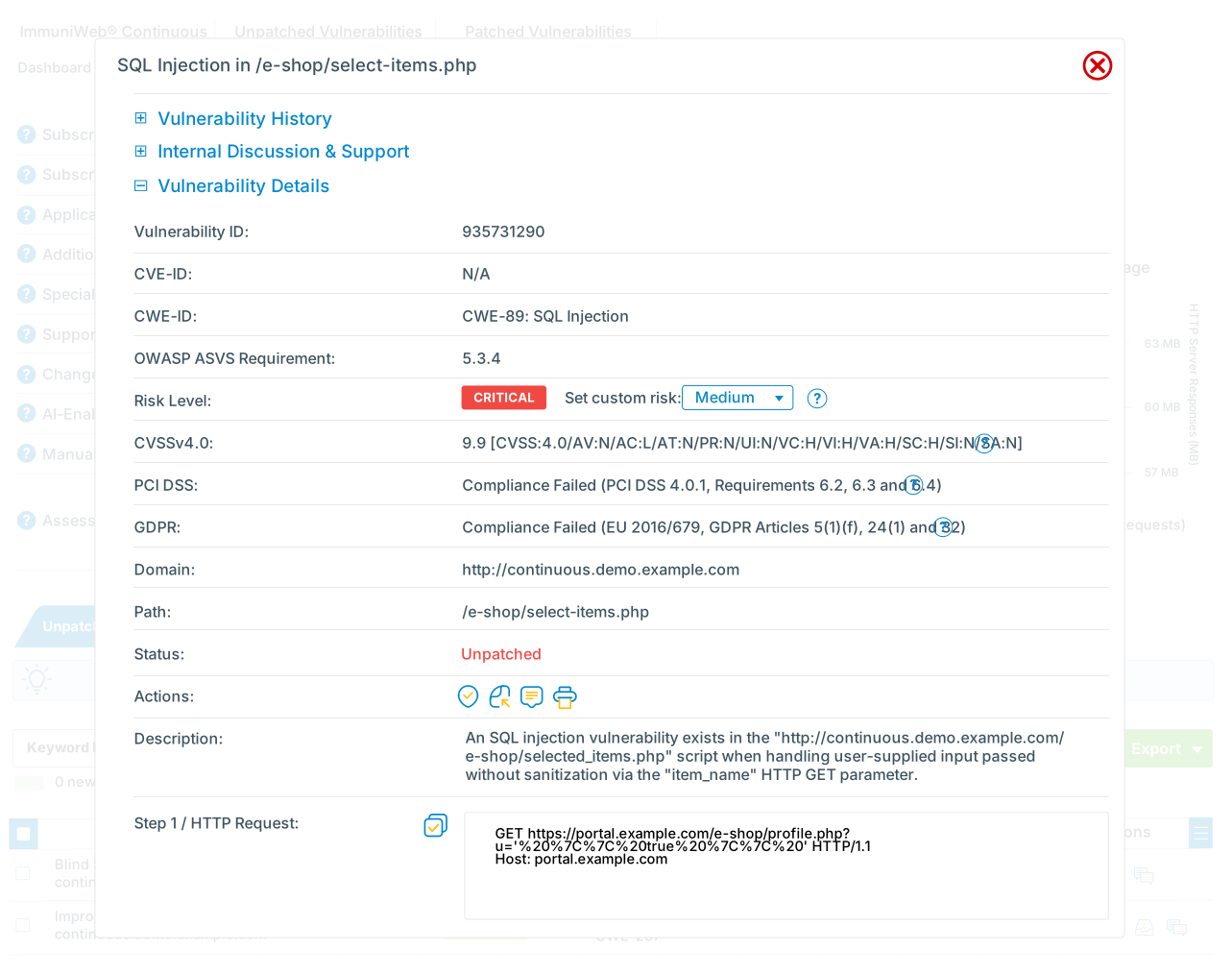
ImmuniWeb provides a robust, AI-powered platform that is inherently designed to support and accelerate DevSecOps initiatives. It offers a suite of integrated application security testing tools that can be seamlessly automated within any CI/CD pipeline, enabling the "Security as Code" principle that is central to DevSecOps. With capabilities spanning SAST, DAST, IAST, and SCA, ImmuniWeb provides comprehensive coverage that aligns perfectly with the need for continuous, automated testing at every stage of the software lifecycle.
A key strength of ImmuniWeb in a DevSecOps context is its focus on accuracy and integration. The platform leverages AI to correlate findings from its different testing methodologies, significantly reducing false positives that can create alert fatigue and erode developer trust. This provides development teams with high-fidelity, actionable security intelligence directly in their workflows, facilitating the rapid feedback loops that are critical for DevSecOps success. ImmuniWeb’s solutions can be integrated via APIs into popular platforms like Jenkins, GitLab, and Azure DevOps, allowing security to become a natural and non-disruptive part of the development process.
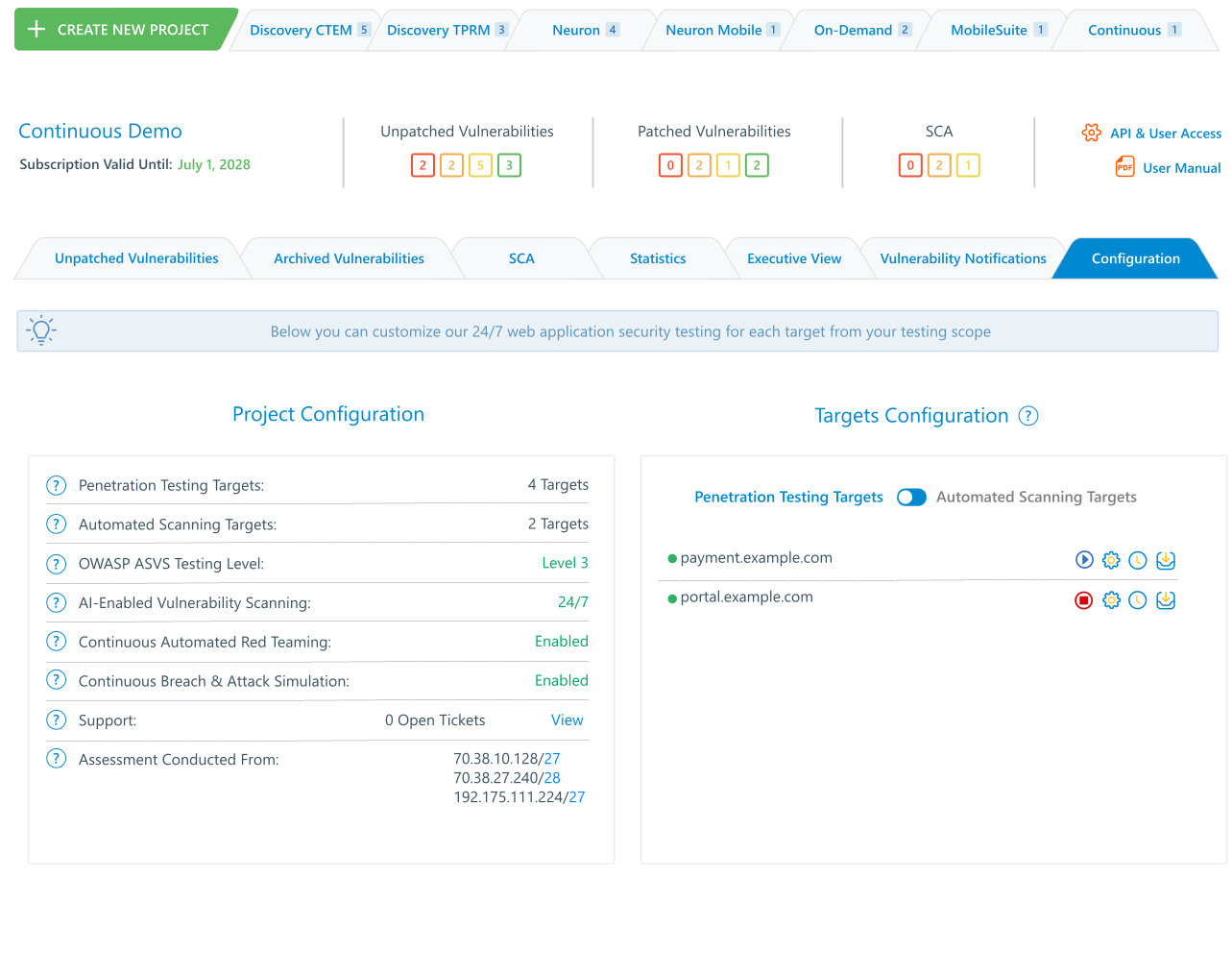
Furthermore, ImmuniWeb extends DevSecOps principles beyond the pipeline with its continuous monitoring and compliance management capabilities. The platform can continuously monitor web and mobile applications in production for new vulnerabilities, changes, and compliance drift, providing an ongoing security assurance that complements the shift-left testing. By offering a unified view that combines deep security testing, monitoring, and compliance reporting (for standards like PCI DSS, GDPR, and HIPAA), ImmuniWeb empowers organizations to not only build security in but also to maintain it, delivering on the full promise of DevSecOps as a continuous cycle of improvement and protection.
Disclaimer
The above-mentioned text does not constitute legal or investment advice and is provided “as is” without any warranty of any kind. We recommend talking to ImmuniWeb experts to get a better understanding of the subject matter.


















 API Penetration
 API Security
 Application Penetration
 Application Security
 Attack Surface
 Automated Penetration
 Cloud Penetration
 Cloud Security
 Continuous Automated
 Continuous Breach and
 Continuous Penetration
 Continuous Threat
 Cyber Threat
 Data Security Posture
 Dark Web
 Mobile Penetration
 Mobile Security
 Network Security
 Penetration
 Phishing Websites
 Third-Party Risk
 Threat-Led
 Web Penetration
 Web Security