

What is Cybersecurity Compliance?
Cybersecurity compliance refers to following a set of rules and regulations designed to protect
information and data from cyber threats.
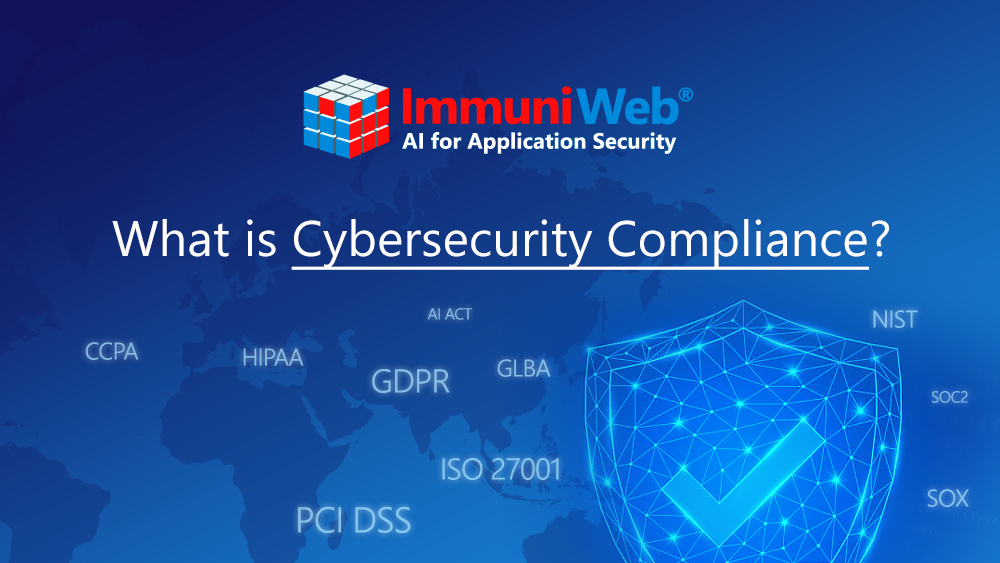
These rules can be established by various governing bodies or organizations, and they may apply at local, national, or international levels.
In collaboration with law firms, ImmuniWeb helps staying compliant with data protection, privacy and cybersecurity laws and regulations, whereby a law firm provides legal advice and ImmuniWeb implements the technical part. Try ImmuniWeb Cybersecurity Compliance services.
Compliance Requirements
Compliance requirements depend on several factors, including:
- The type of data your organization handles (e.g., financial data, medical records)
- The size and industry of your organization
- The geographic locations where you operate
Here's a deeper look at what cybersecurity compliance entails:
- Meeting Established Standards: Organizations must adhere to standards and regulations set forth by relevant authorities. These standards often focus on protecting the confidentiality, integrity, and availability (CIA) of data, also known as the CIA triad.
- Confidentiality: Ensuring data is only accessible to authorized users.
- Integrity: Guaranteeing the accuracy and completeness of data.
- Availability: Making sure data is accessible to authorized users when needed.
- Implementing Security Controls: To comply with regulations, organizations need to implement security controls like firewalls, data encryption, and regular system updates. These controls help mitigate security risks and prevent cyberattacks.
- Regular Risk Assessments: Maintaining compliance often involves conducting regular risk assessments to identify and address potential vulnerabilities in your systems and data security practices.
Why is Cybersecurity Compliance Important?
There are several reasons why cybersecurity compliance is important:
- Protects Data: Compliance helps organizations safeguard sensitive data from unauthorized access, modification, or destruction.
- Reduces Risk of Breaches: By following security best practices outlined in compliance frameworks, organizations can significantly reduce their risk of data breaches.
- Maintains Trust: Compliance demonstrates to customers, partners, and investors that your organization takes data security seriously.
- Avoids Legal Issues: Non-compliance with certain regulations can lead to hefty fines and other legal repercussions.
Overall, Cybersecurity Compliance is a crucial aspect of any organization's cybersecurity strategy. It helps organizations protect their data, build trust, and avoid legal trouble.
What's Next:
- Learn more about Web Security Scanning.
- See the benefits of our Partner Program.
- Read our Cyber Law and Cybercrime Investigation blog.
- Follow ImmuniWeb on LinkedIn, X (Twitter), and Telegram.
- Subscribe to our Newsletter.