

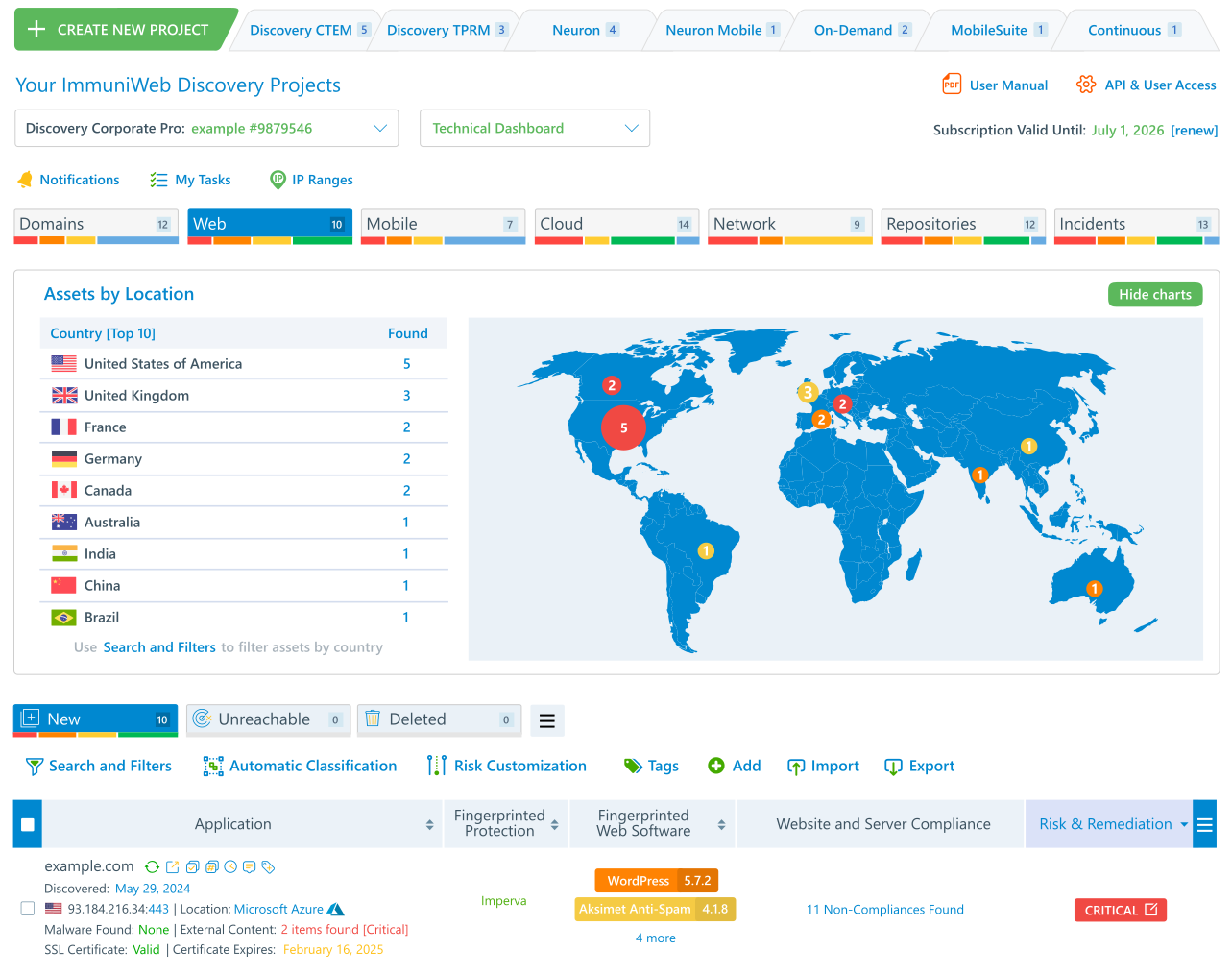
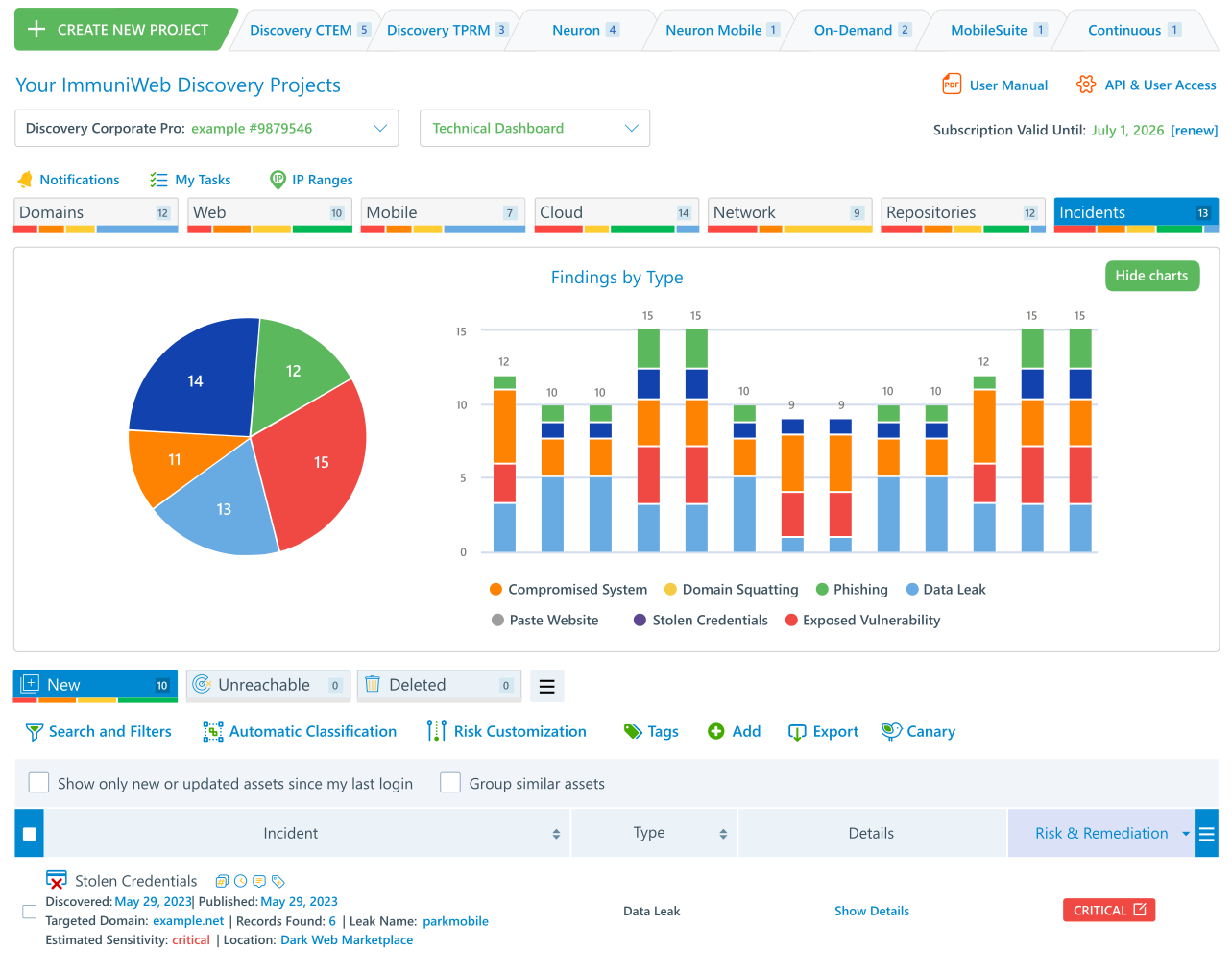
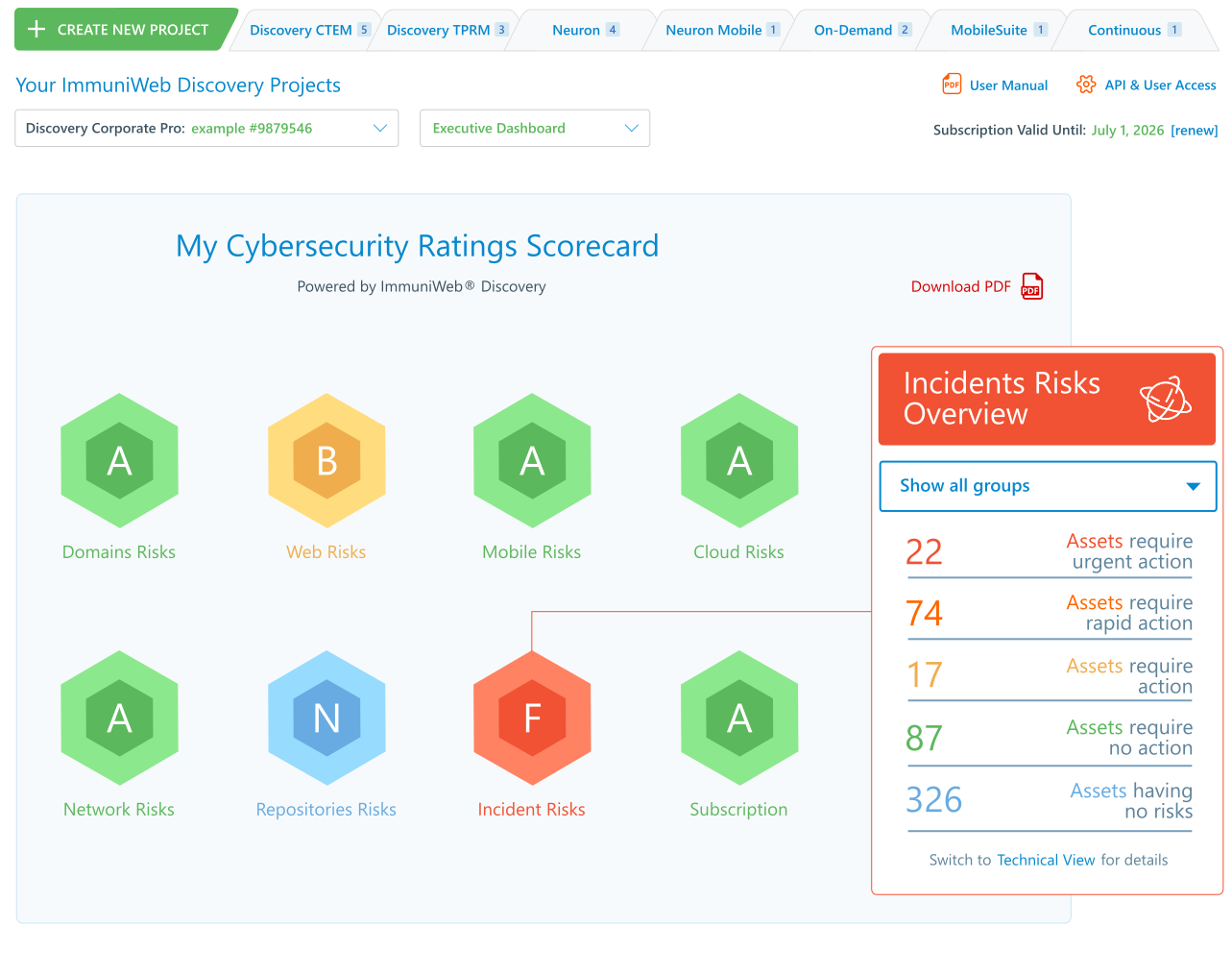






Adversarial Exposure Validation (AEV) is a proactive cybersecurity process that continuously discovers, analyzes, and validates an organization's internet-facing digital exposures from an attacker's perspective to prioritize and remediate critical risks.


What Is Adversarial Exposure Validation (AEV)?

Adversarial Exposure Validation (AEV) is a proactive and intelligence-driven cybersecurity methodology designed to identify, analyze, and remediate an organization's digital exposures from the perspective of a real-world adversary. Unlike traditional vulnerability scanning, which often focuses on known software flaws within a predefined network perimeter, AEV adopts a much broader and more aggressive stance. It operates on the fundamental principle that attackers do not limit their reconnaissance to known IP addresses and domains; they instead scour the entire digital landscape to find every possible entry point, including forgotten assets, misconfigured cloud storage, exposed data, and shadow IT. The core objective of AEV is to "think like an attacker" to find what they can see and exploit before they do.
At its heart, AEV is a continuous process of discovery and validation. It seeks to answer the critical question: "What can an attacker see about my organization, and how can they use it to breach our defenses?" This involves looking beyond the traditional firewall to encompass all internet-facing assets. The term "adversarial" signifies the shift from a passive, compliance-checking mindset to an active, threat-hunting posture. It’s not just about finding weaknesses; it's about validating which of those weaknesses represent a credible and imminent threat based on current adversary tactics, techniques, and procedures (TTPs).
The concept builds upon and combines elements of other security practices, such as External Attack Surface Management (EASM) and Digital Risk Protection Services (DRPS), but adds a crucial layer of validation. While EASM discovers assets, AEV actively tests and validates the level of risk associated with each discovery, often by attempting exploitation or demonstrating proof-of-concept attacks. This moves beyond a simple inventory list to a prioritized, contextualized risk assessment that directly informs remediation efforts, ensuring that security teams are focused on the issues that matter most.
In essence, Adversarial Exposure Validation is a paradigm shift from being a defender waiting behind fortifications to becoming a scout who actively patrols the territory, identifying and neutralizing threats from the same vantage point as the enemy. It acknowledges that the modern attack surface is dynamic, sprawling, and often unknowingly exposed by the organization itself, and it provides the framework to regain control and visibility.
Key Aspects of Adversarial Exposure Validation (AEV)
Adversarial Exposure Validation is characterized by several defining aspects that differentiate it from conventional security approaches. First and foremost is its outside-in perspective. AEV methodologies are conducted from outside the organization's network, using no privileged internal access. This mimics the exact starting point of a real attacker and provides a true picture of what is accessible to a malicious actor with only an internet connection and some curiosity. This external lens is crucial for understanding the initial attack vectors that lead to major breaches.
Another critical aspect is its continuous and comprehensive discovery. The digital footprint of an organization is not static; new subdomains are spun up, cloud instances are launched, and third-party partners are integrated, all of which can introduce new exposures. AEV is not a one-time project but an ongoing program that constantly monitors for new assets, configurations, and data leaks. This ensures that security posture is assessed against the current state of the attack surface, not what it looked like last quarter.
A third key aspect is risk-based contextualization and prioritization. Discovering thousands of assets and potential vulnerabilities is useless without context. AEV platforms and processes don't just list findings; they enrich them with intelligence. This includes correlating an exposed service with known exploit availability, determining if it contains sensitive data, and assessing its criticality to business operations. This allows security teams to prioritize remediation based on a combination of exploitability, impact, and attacker interest, rather than just a generic CVSS score.
Finally, AEV is defined by its actionable evidence and validation. Instead of just flagging a potential misconfiguration, AEV seeks to prove its exploitability. For instance, it might not only find an exposed.git repository but also demonstrate that an attacker can use it to reconstruct source code. Or, it may not only detect an open S3 bucket but also confirm that data can be exfiltrated from it. This proof-of-concept approach provides irrefutable evidence of risk, which is far more compelling for motivating remediation and securing executive buy-in for necessary security investments.
Why Is Adversarial Exposure Validation (AEV) Important?
The importance of Adversarial Exposure Validation stems directly from the evolving nature of cyber threats and the radical transformation of the corporate network. The traditional, perimeter-based security model is effectively obsolete. With the mass adoption of cloud services, remote work, SaaS applications, and complex digital supply chains, the concept of a defined "inside" and "outside" has vanished. Organizations now have a vast, dynamic, and often poorly understood digital attack surface that presents a target-rich environment for adversaries.
AEV is critically important because it addresses the root cause of many of today's most high-profile data breaches. Incidents involving exposed databases, unsecured cloud storage, and leaked API keys are rarely the result of a sophisticated zero-day exploit. Instead, they are consequences of human error, misconfiguration, and a simple lack of visibility. Attackers know this and have adapted their strategies to focus on these "low-hanging fruits." By adopting AEV, organizations can fight back against this trend, discovering and rectifying these issues before they appear on a hacker's radar.
Furthermore, AEV is a powerful tool for managing third-party and supply chain risk. An organization's security is only as strong as its weakest link, which is often a vendor, partner, or subsidiary. AEV techniques can be extended to monitor the external attack surface of these connected entities, identifying risks that could cascade into the primary organization. This provides a level of supply chain insight that was previously difficult or impossible to achieve, enabling proactive risk management and more informed vendor assessments.
From a strategic standpoint, AEV transforms cybersecurity from a technical cost center into a business enabler. A robust AEV program demonstrates due diligence to regulators, auditors, and insurance providers, potentially leading to lower premiums and smoother compliance audits. It also protects brand reputation and customer trust by preventing the embarrassing and costly breaches that stem from easily preventable exposures. In a world where digital resilience is a competitive advantage, AEV provides the clarity and control needed to operate confidently in a hostile digital environment.
How Does Adversarial Exposure Validation (AEV) Work?
The operational workflow of Adversarial Exposure Validation is a cyclical process that mirrors the cyber kill chain but is executed for defensive purposes. It typically begins with Comprehensive Discovery. Using a combination of techniques—including DNS enumeration, IP range scanning, certificate transparency log analysis, and web crawling—the AEV process builds an inventory of all assets associated with an organization. This includes not only owned domains and IPs but also assets hosted on third-party infrastructure (e.g., AWS, Azure, Akamai) and shadow IT resources that the central security team may be unaware of.
Following discovery, the next phase is Classification and Analysis. Each discovered asset is fingerprinted to identify the technologies in use, such as web servers, operating systems, and specific applications. This is where the "exposure" part is deeply analyzed. The system checks for misconfigurations, such as open ports, unencrypted services, default credentials, and publicly accessible administrative panels. It also hunts for sensitive data leaks, such as exposed credentials in public code repositories, leaked documents on paste sites, or inadvertently published internal files.
The third and most crucial phase is Adversarial Validation and Testing. This is what separates AEV from simple asset management. In this phase, the identified exposures are actively tested to validate their severity. This is done with careful consideration to avoid causing disruption. For example, the system might attempt to authenticate with a set of commonly used passwords against an exposed service, check if an open database allows write operations, or use metadata from a leaked document to find more sensitive information. The goal is to produce concrete evidence of exploitability, moving from "this could be a problem" to "this is how an attacker would breach us."
The final phase is Prioritization and Remediation. The validated findings are fed into a risk-scoring engine that considers contextual factors like the sensitivity of the exposed data, the criticality of the affected asset, and the ease of exploitation. This generates a prioritized list of issues for the security team. The AEV platform then facilitates the remediation workflow by providing detailed technical evidence, assigning tickets to the relevant system owners, and tracking the issues to closure. The cycle then repeats continuously, ensuring that new exposures are found and addressed as the attack surface evolves.
Types of Adversarial Exposure Validation (AEV)
While the core philosophy of AEV is consistent, its implementation can be categorized into different types based on scope, methodology, and automation level. The first and most common type is Automated Continuous AEV. This is typically delivered via a SaaS platform that performs non-intrusive, continuous scanning and validation of the external attack surface. It provides a always-on, real-time view of an organization's exposures and is ideal for managing the dynamic nature of modern IT environments, catching new misconfigurations as soon as they appear.
A second type is Manual Penetration Testing with an AEV Focus. This involves engaging human security experts (ethical hackers) to perform a deep-dive, project-based assessment. These testers use the same tools and techniques as malicious attackers but bring human intuition and creativity to the process. They can chain together multiple minor exposures to demonstrate a path to a critical breach, something automated tools might miss. This type is excellent for in-depth validation of critical assets or for simulating a targeted attack campaign.
Another important type is Red Team Exercises Driven by AEV. In this scenario, a dedicated red team uses the initial data gathered from an AEV discovery phase as the launch point for a full-scale simulated attack. The goal is not just to find exposures but to use them to achieve a specific objective, such as stealing sensitive data or gaining domain administrator privileges. This type of AEV is the most realistic simulation of a determined adversary and provides the ultimate validation of an organization's defensive capabilities and detection response.
Finally, there is Third-Party and Supply Chain AEV. This type focuses the AEV methodology on an organization's vendors, partners, and acquisitions. By monitoring the external attack surface of third parties, organizations can gain insight into their security posture and identify potential risks that could impact their own operations. This is increasingly important for compliance with regulations that mandate supply chain risk management and for preventing breaches that originate from a less-secure partner's environment.
Components of Adversarial Exposure Validation (AEV)
A mature Adversarial Exposure Validation program is built upon several interconnected technological and process components. The first is the Discovery Engine. This is the core technology that uses a vast array of data sources and scanning techniques to build the asset inventory. It relies on connectors to domain registrars, cloud providers, SSL certificate databases, and threat intelligence feeds to ensure no asset is left overlooked.
The second critical component is the Analysis and Fingerprinting Module. Once an asset is discovered, this component performs deep inspection to identify its characteristics. It uses banner grabbing, HTTP header analysis, and cryptographic fingerprinting to determine the software and services running. It also employs data loss prevention (DLP)-like techniques to scan for sensitive information patterns (like credit card numbers or API keys) in exposed data stores and documents.
The third component is the Validation and Exploitation Framework. This is the "adversarial" heart of the system. It contains a library of non-intrusive checks and proof-of-concept exploits designed to safely validate the severity of an exposure. This could range from a simple check for directory listing on a web server to a more complex test that demonstrates how an exposed Jenkins server can be used to execute arbitrary code.
Finally, a robust AEV solution requires a Risk Prioritization and Workflow Engine. This component takes all the findings, applies contextual business risk logic (e.g., "this asset is in our PCI segment" or "this data is classified as confidential"), and generates a prioritized list of actions. It integrates with ticketing systems like Jira or ServiceNow to assign tasks to remediation owners and provides dashboards and reporting for management oversight, closing the loop from discovery to resolution.
Benefits of Adversarial Exposure Validation (AEV)
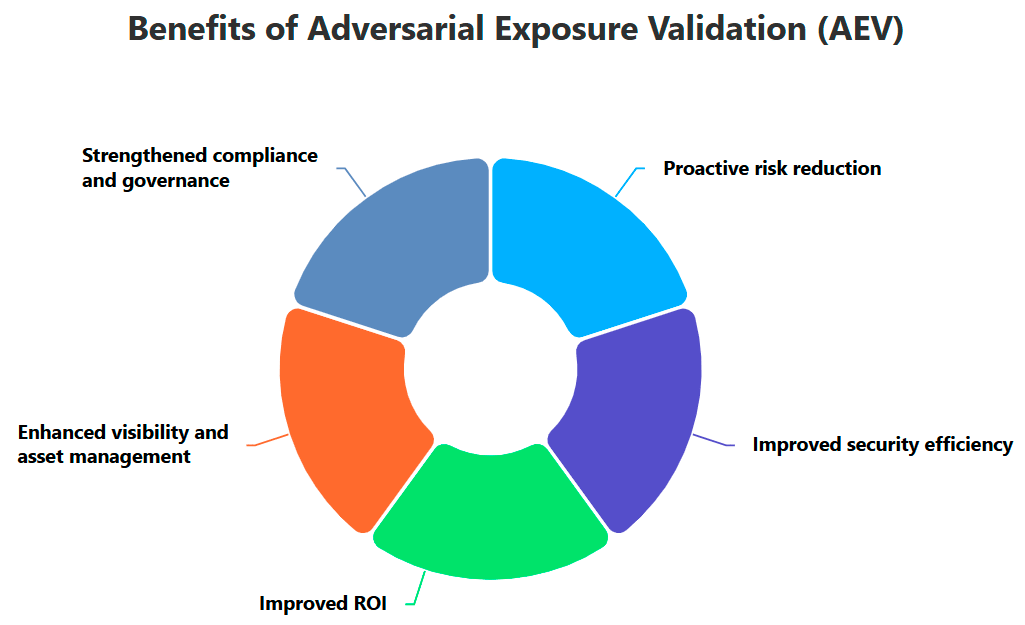
Implementing an Adversarial Exposure Validation program yields a multitude of tangible and strategic benefits. The most direct benefit is proactive risk reduction. By continuously identifying and helping to remediate critical exposures before they are exploited, AEV significantly lowers the likelihood of a damaging data breach. This shifts the security posture from reactive firefighting to proactive risk management.
A second major benefit is improved security efficiency and ROI. Security teams are often overwhelmed with alerts and vulnerabilities. AEV provides clear, evidence-based, and business-contextualized prioritization. This allows teams to focus their limited time and resources on the issues that pose the most immediate and severe threat, stopping the most plausible attack paths and maximizing the impact of their efforts.
Enhanced visibility and asset management is another profound benefit. Many organizations are shocked to discover the sheer number of internet-facing assets they own through an AEV program. This discovery alone is invaluable, allowing them to bring shadow IT under management, decommission forgotten systems, and finally achieve a complete and accurate picture of their digital footprint, which is the foundational first step of any security program.
Finally, AEV delivers strengthened compliance and governance. Regulations like GDPR, HIPAA, and various financial standards require organizations to implement appropriate technical measures to protect data. AEV provides demonstrable evidence of due care in managing the external attack surface. The detailed reports and remediation tracking can be used in audits to prove compliance and show a continuous commitment to security best practices.
Challenges of Adversarial Exposure Validation (AEV)
Despite its clear benefits, deploying and operating an AEV program is not without challenges. A primary hurdle is the potential for sheer volume of findings. The initial discovery scan can often reveal thousands of assets and hundreds of exposures, which can be overwhelming for a security team. Without proper prioritization and workflow integration, this can lead to "alert fatigue" and cause critical issues to be lost in the noise.
Remediation ownership and organizational silos present another significant challenge. An exposed cloud server might be managed by the DevOps team, a misconfigured firewall by the network team, and a leaked document by a marketing unit. The security team often identifies the problem but does not have the authority to fix it. Driving remediation across different business units with different priorities and budgets requires strong executive sponsorship and clear communication channels.
There are also technical and operational risks to consider. While AEV tools are designed to be non-intrusive, there is always a small risk that a particular test could disrupt a fragile or legacy system. This necessitates careful scoping and communication with system owners before broad scans are initiated. Furthermore, the continuous nature of AEV generates a significant amount of data that requires security expertise to interpret and act upon effectively.
Finally, cost and resource allocation can be a barrier. Comprehensive AEV platforms, especially those offering continuous monitoring and human-led validation, represent a significant investment. For smaller organizations, the cost may seem prohibitive. However, this must be weighed against the potential financial and reputational cost of a single breach that could have been prevented by such a tool.
Best Practices for Adversarial Exposure Validation (AEV)
To maximize the effectiveness of an AEV program and overcome its inherent challenges, organizations should adhere to several best practices. First, start with a clear scope and executive sponsorship. Define which parts of the organization are in scope (e.g., all subsidiaries, specific cloud environments) and secure buy-in from senior leadership. This top-down support is essential for breaking down silos and ensuring cooperation during the remediation phase.
Second, integrate AEV into existing workflows. An AEV platform should not exist in a vacuum. Integrate it with ticketing systems (Jira, ServiceNow), SIEMs, and communication platforms (Slack, Teams) to automatically create tasks for system owners and alert the SOC to critical, validated exposures. This embeds AEV into the fabric of the security operations and makes remediation a seamless part of business-as-usual.
Third, focus on context and prioritization, not just volume. Configure the AEV tool to incorporate business context. Tag critical assets that handle sensitive data or support essential operations. This ensures that the risk scoring engine prioritizes a minor exposure on a critical server over a major one on a non-essential marketing site. The goal is actionable intelligence, not an overwhelming list of problems.
Finally, treat AEV as a continuous program, not a one-time project. The digital attack surface is constantly changing. Schedule regular reviews of the AEV findings and risk posture with key stakeholders. Use the data to track trends over time, measure the performance of your remediation efforts, and report on key risk indicators to the board, demonstrating a mature and evolving security program.
How ImmuniWeb Can Help with Adversarial Exposure Validation (AEV)?
ImmuniWeb provides a robust and AI-driven platform that seamlessly delivers on the core principles of Adversarial Exposure Validation. Its solution is specifically designed to offer continuous, outside-in visibility and validation of an organization's digital attack surface, making it an ideal partner for implementing a mature AEV program.
At the discovery stage, ImmuniWeb Discovery leverages artificial intelligence and a massive data repository to provide a comprehensive inventory of an organization's web and mobile assets, including forgotten, orphaned, and shadow IT assets. It goes beyond simple domain discovery to identify associated APIs, cloud storage, and third-party components, ensuring no stone is left unturned. This foundational visibility is critical for any effective AEV initiative.
For validation and testing, ImmuniWeb excels with its Web Penetration Testing and deep security testing capabilities. It doesn't just list potential vulnerabilities; it actively and safely exploits them to demonstrate real-world risk, providing proof-of-concept evidence that is invaluable for convincing technical teams and management of the urgency to remediate. This adversarial validation is performed with a high degree of accuracy, minimizing false positives and ensuring that teams spend their time on genuine threats.
Furthermore, ImmuniWeb incorporates strong Third-Party Risk Management functionality, allowing organizations to extend their AEV practices to their supply chain. By continuously monitoring the attack surface of vendors and partners, ImmuniWeb helps identify and assess risks originating from third parties, a critical capability in today's interconnected business landscape. The platform’s intuitive dashboard, clear prioritization based on business risk, and integration capabilities make it a comprehensive solution for any organization seeking to adopt an adversarial mindset and proactively secure its ever-expanding digital frontier.
Disclaimer
The above-mentioned text does not constitute legal or investment advice and is provided “as is” without any warranty of any kind. We recommend talking to ImmuniWeb experts to get a better understanding of the subject matter.


















 API Penetration
 API Security
 Application Penetration
 Application Security
 Attack Surface
 Automated Penetration
 Cloud Penetration
 Cloud Security
 Continuous Automated
 Continuous Breach and
 Continuous Penetration
 Continuous Threat
 Cyber Threat
 Data Security Posture
 Dark Web
 Mobile Penetration
 Mobile Security
 Network Security
 Penetration
 Phishing Websites
 Third-Party Risk
 Threat-Led
 Web Penetration
 Web Security