







The widespread adoption of Application Programming Interfaces (APIs) has revolutionized how applications interact and data is exchanged. As APIs become the backbone of modern software architecture, securing them is paramount. API security scanning emerges as a critical practice in this landscape, providing automated means to identify and mitigate vulnerabilities within these essential connectors.


What Is API Security Scanning?

API security scanning is like having a robot detective that hunts for weaknesses in your apps' behind-the-scenes connections (APIs). It's way faster than having someone manually check everything. The goal is to find security holes that hackers could exploit to steal data or mess things up.
These tools check an API's security in a bunch of ways. They look for common problems, like those listed in the OWASP API Security Top 10 guide. They also send fake requests to the API, trying to trick it into revealing secrets or letting them bypass security. The end result is a report showing what vulnerabilities were found and how bad they could be.
Think of API security scanning as the first line of defense for your business. It gives your tech teams a way to find and fix problems early on. By checking things automatically, you can keep your APIs secure, lower the risk of attacks, and stay safe in our connected world.
Key Aspects of API Security Scanning
One of the best things about API security scanning is that it's automatic and quick. Instead of slow manual testing, these tools can check loads of API connections for all sorts of problems. This means you can run tests often, which is awesome for teams that are constantly updating their apps. You get fast feedback on your APIs' security, so developers can fix things early.
Good scanners look for all sorts of problems, from basic web security issues to API-specific flaws. This means checking how you log people in, how you handle data, and whether you're giving away too much info. Most scanners use security guidelines like the OWASP API Security Top 10 to make sure they're covering everything.
Also, API security scanning plays well with other tools. You can plug it into your usual development routine, so security checks happen automatically. Plus, it can grow with you. As you add more APIs, the scanner can keep up, making sure your security stays strong.
Why Is API Security Scanning Important?
APIs are super important these days. They connect everything, so a single weak spot can expose a ton of sensitive data. That's why hackers love targeting them. Without automatic scanning, you're basically flying blind, hoping nobody finds those holes first.
Also, APIs are always changing. If you're updating your apps a lot, manual security checks can't keep up. But scanning tools can be baked right into your process, so they automatically check for problems every time you make a change. This way, you can fix things early and avoid headaches later.
Finally, API security scanning helps you follow the rules and keep your customers happy. Many regulations require you to protect sensitive data. Since APIs often handle this data, scanning them regularly shows you're serious about security. Plus, if you get hacked because of a weak API, you'll lose customers' trust. Scanning helps you avoid that disaster.
How Does API Security Scanning Work?
API security scanning usually starts by figuring out what the API looks like. The scanner needs to know all the different connections it has, what kind of requests they accept, and what info they expect. It can get this info by looking at things like OpenAPI files or by watching how the API is used normally.
Once it knows the API's layout, the scanner starts sending test requests to each connection, trying to find vulnerabilities. It might try to inject bad code, bypass logins, mess with data, or see if it can get access to too much info. The scanner watches the API's responses for anything that looks suspicious, like error messages or unusual data patterns.
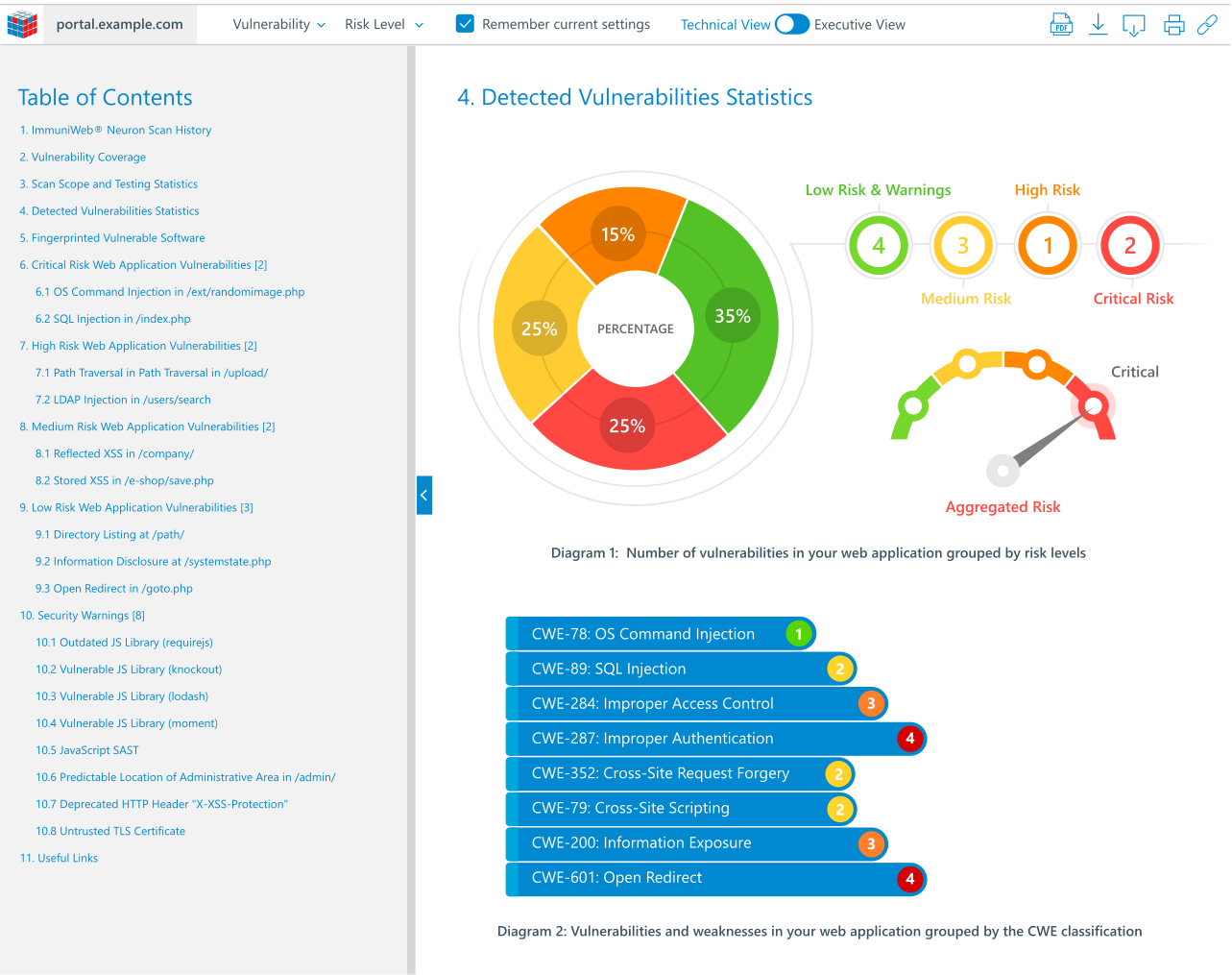
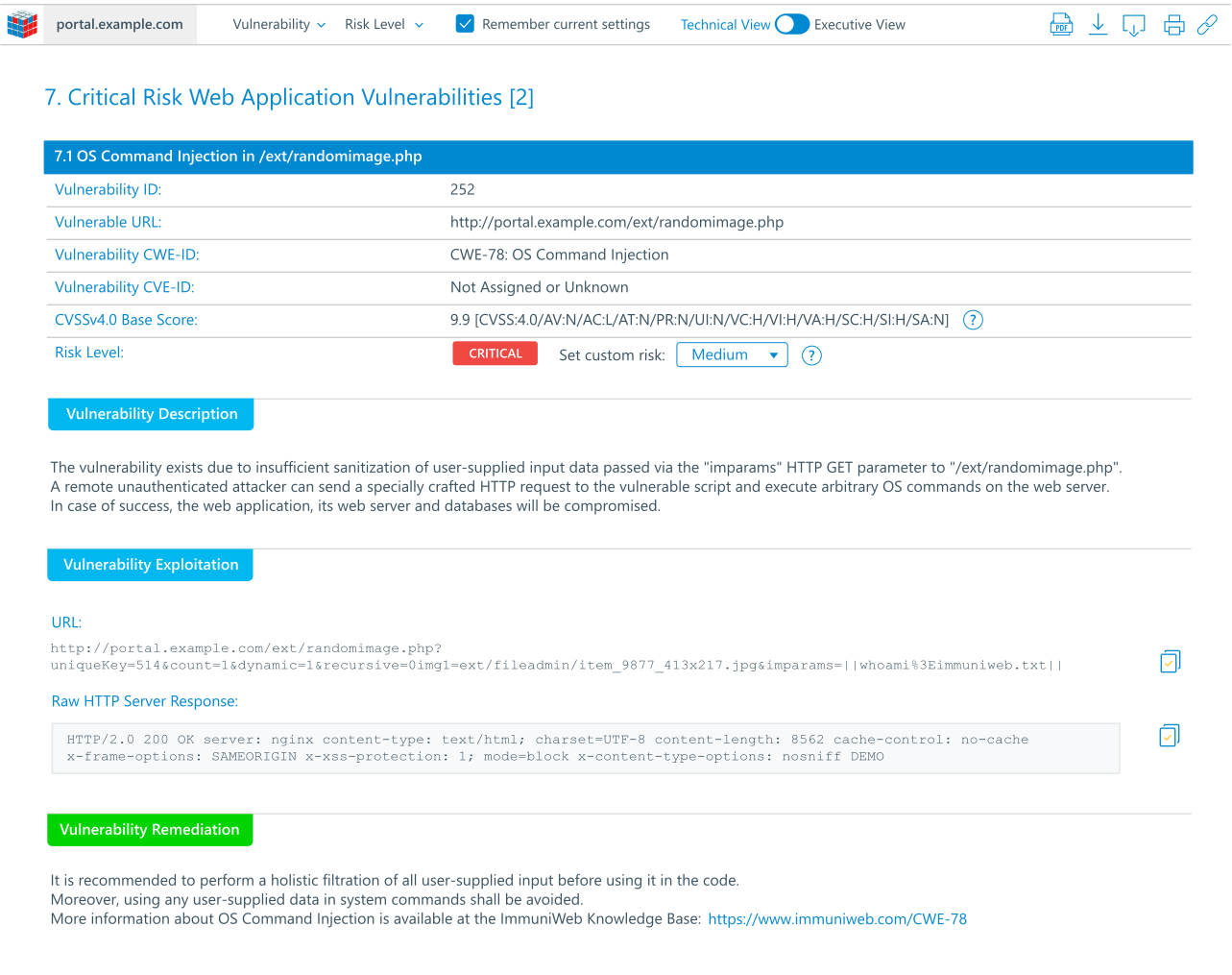
The final step is getting a report. The scanning tool tells you what vulnerabilities it found, how bad they are, and how to fix them. Many scanners can even connect to bug trackers or other tools to make the fix process easier.
Types of API Security Scanning
There are a few different types of API security scanning. One popular type is called Dynamic Application Security Testing (DAST). DAST tools act like real users or attackers. They send requests to the API and watch how it responds to find problems like code injection or broken logins. DAST is good for finding issues that show up when the API is running, even if you don't have access to the code.
Another type is Static Application Security Testing (SAST). SAST tools look at the API's code to find errors and weaknesses. They can spot things like hardcoded passwords or bad cryptography. SAST is great for finding problems early in development, before the code is even deployed.
Finally, there's Interactive Application Security Testing (IAST). IAST tools combine DAST and SAST. They sit inside the API and watch what's happening while it's being used. This lets them find vulnerabilities by looking at both the code and the runtime behavior. IAST is more accurate than DAST and gives you more info than SAST.
Components of API Security Scanning
API security scanning tools have a few important parts.
First, there's the API Definition and Discovery part. This helps the scanner understand the API's structure. It can read API definitions from files like OpenAPI (Swagger) or learn the API's layout by watching network traffic.
Next, there's the Scanner Engine. This is the brain of the tool. It sends requests to the API, checks the responses, and looks for vulnerabilities. It has different modules for different types of problems, like SQL injection or broken logins.
Finally, there's the Reporting and Remediation Guidance System. This takes all the vulnerabilities that were found and puts them in a clear report. The report tells you what the problem is, how bad it is, how to fix it, and who to assign the fix to.
Benefits of API Security Scanning
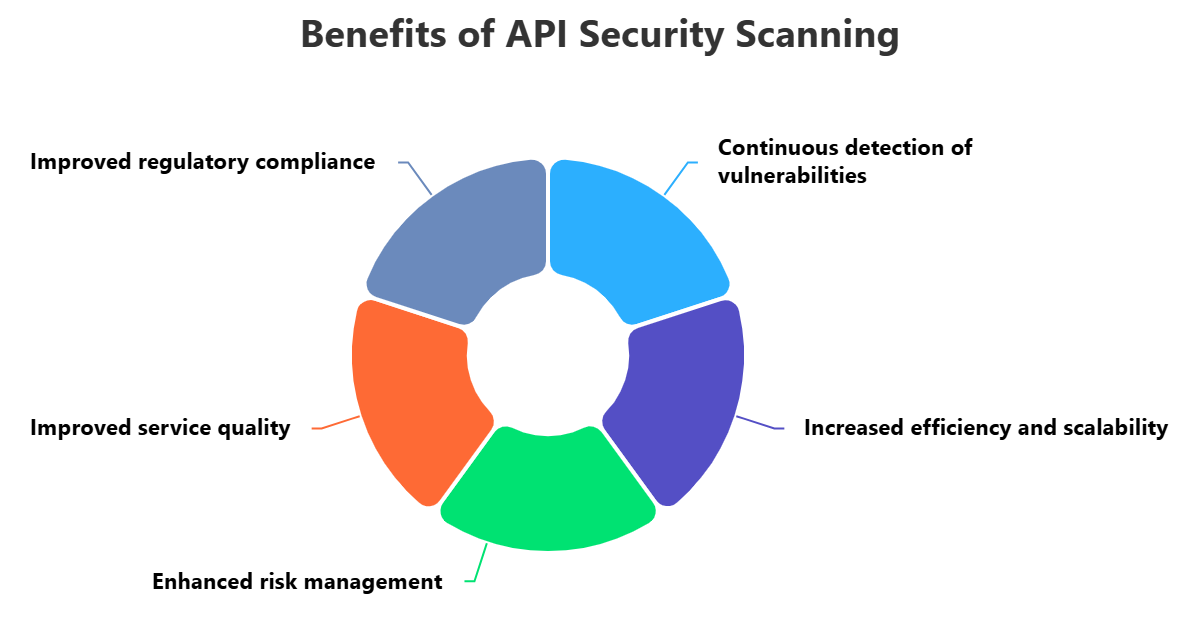
API security scanning has lots of benefits. One of the biggest is that it helps you find vulnerabilities early and often. By checking your code as you write it, you can catch problems before they make it into production. This saves you time, money, and headaches.
Another benefit is efficiency. Automated scanning tools can check a lot more code than a human can, and they can do it much faster. This means you can run tests more often and cover more ground.
Finally, API security scanning helps you stay compliant and manage risk. By showing that you're taking security seriously, you can meet regulatory requirements and protect your business from legal and financial problems.
Challenges of API Security Scanning
API security scanning isn't always easy. APIs can be complex and use different technologies. A single scanner might not be able to handle everything, so you might need multiple tools. Also, if your APIs aren't well-documented, it can be hard for scanners to understand them.
Another challenge is dealing with false positives and false negatives. False positives are problems that the scanner thinks it found but aren't real. False negatives are real problems that the scanner missed. You need to carefully configure your tools and review the results to avoid these issues.
Finally, getting scanning tools to fit into your existing development process can be tricky. You need to make sure that security checks don't slow down development. Also, you need a good way to decide which vulnerabilities to fix first.
Best Practices for API Security Scanning
To get the most out of API security scanning, follow these tips:
Scan early and often. Bake scanning into your development process so that every code change is automatically checked for security flaws.
Use API specifications. Give your scanning tools detailed API definitions so they know exactly what to test.
Combine automated scanning with human expertise. Automated scanners are great, but they can't catch everything. Supplement them with manual testing to find more complex vulnerabilities.
Prioritize fixes based on risk. Focus on fixing the most serious vulnerabilities first. Make sure that your security and development teams are communicating effectively.
How ImmuniWeb Can Help with API Security Scanning?
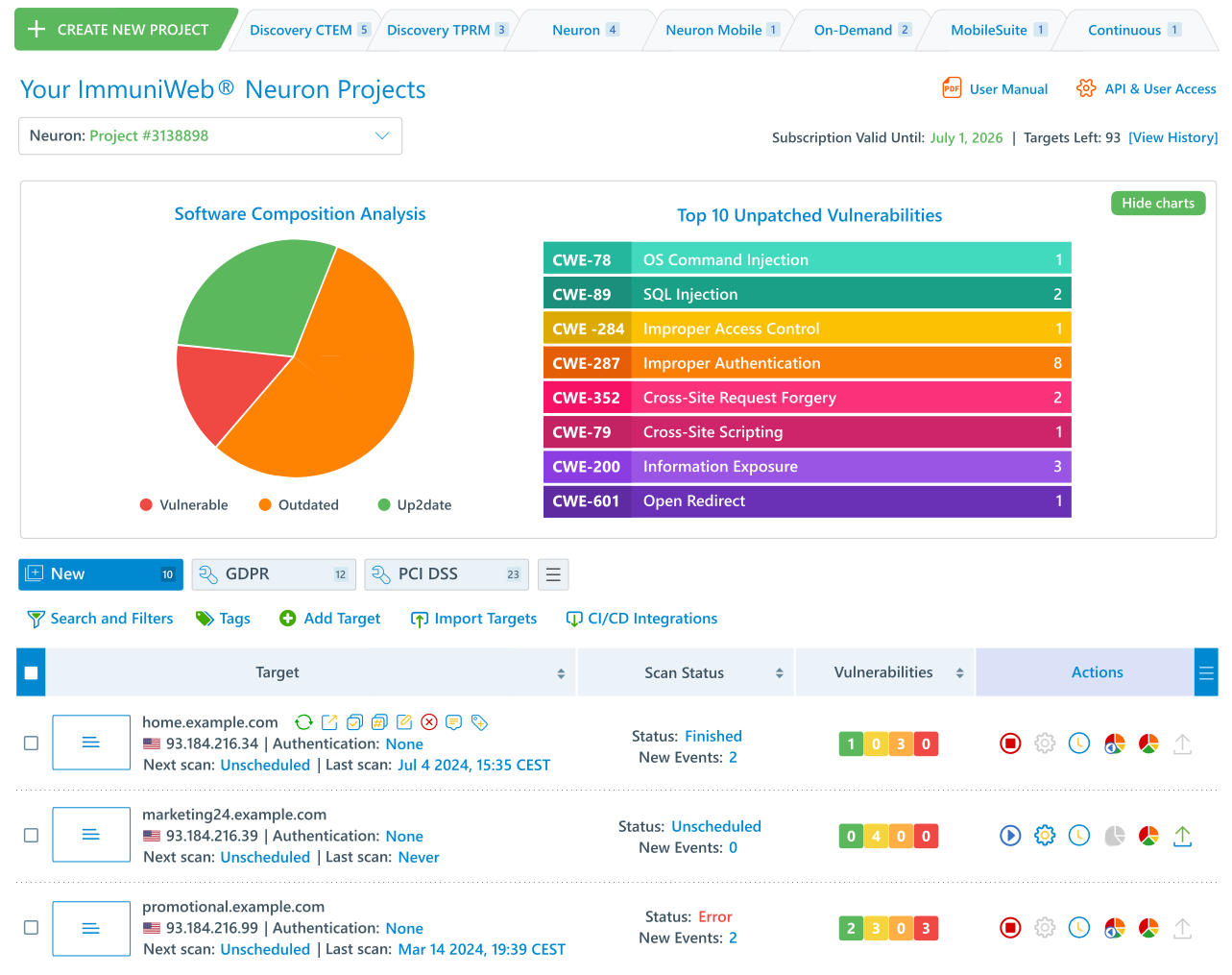
Run unlimited scans of your APIs and microservices for OWASP API Top 10 vulnerabilities with ImmuniWeb® Neuron premium API security scanning. Customize your API security scanning requirements and authentication including SSO and MFA. Schedule recurrent API scans in a few clicks and configure email notifications about completed API scans.
Our API security scanning is provided with a contractual zero false positives SLA. If there is false positive in your API security scanning testing report, you get the money back. Additionally, our award-winning Machine Learning technology provides better vulnerability detection and coverage rate compared to traditional software scanners that rely solely on heuristic vulnerability detection algorithms.
The API scanning reports are available via a multiuser dashboard with flexible RBAC access permissions. Our turnkey CI/CD integrations enable 100% automation of your web and API security testing within your CI/CD pipeline, both in a cloud environment and on-premise. Our 24/7 technical support is at your service may your software developers have questions or need assistance during API security scanning.
Disclaimer
The above-mentioned text does not constitute legal or investment advice and is provided “as is” without any warranty of any kind. We recommend talking to ImmuniWeb experts to get a better understanding of the subject matter.


















 API Penetration
 API Security
 Application Penetration
 Application Security
 Attack Surface
 Automated Penetration
 Cloud Penetration
 Cloud Security
 Continuous Automated
 Continuous Breach and
 Continuous Penetration
 Continuous Threat
 Cyber Threat
 Data Security Posture
 Dark Web
 Mobile Penetration
 Mobile Security
 Network Security
 Penetration
 Phishing Websites
 Third-Party Risk
 Threat-Led
 Web Penetration
 Web Security