







Apps are super important for businesses these days. They help us come up with cool ideas, keep customers happy, and basically run everything. Thing is, because we use software for everything, it's like we've made it way easier for bad guys to attack us. Apps are everywhere now, they're built using all sorts of tech, and they're spread out all over the place in different setups. Trying to protect them with a bunch of separate tools and teams? It's a mess! You end up not really seeing the whole picture, stressing out the developers, and apps just aren't safe. That’s where Application Security Posture Management (ASPM) comes in. It’s a way to pull everything together, figure out what's important, and get all your AppSec stuff working together. It gives you a clear idea of how safe your apps are across the board.



What Is Application Security Posture Management (ASPM)?

Basically, Application Security Posture Management (ASPM) is a way of looking at security that brings together and checks all the info from your app security tests and other places. It gives you a way to see what's risky with your apps, all in one place and in real-time. Regular app security tools only check things at one point in time or look for certain problems. ASPM's goal is to keep track of everything security-related to your apps, connect the dots to figure out which apps are important and who's in charge of them. So yeah, it's not just about finding problems, but about dealing with the overall risk of all your apps.
ASPM is all about bringing some order to app security. Most companies use specific tools – SAST, DAST, SCA, IAST, plus people testing things manually – and each one makes its own reports. ASPM helps put a layer on top of all that. It takes in data from those different places, gets rid of the duplicates, figures out what risks matter most to the business, and tells you who’s in charge of the code. This way, security teams can stop just putting out fires and start actually managing risk based on real info.
What it all boils down to, ASPM helps companies answer important questions about their app security. Like: Which apps are in the most danger? Where's the security weakest? Are we getting better at security over time? By making things visible, prioritizing what's risky, and giving useful info, ASPM helps security and development teams work better together, make apps less open to attack, get safe software out faster, and be ready for attacks on the apps.
Key Aspects of Application Security Posture Management (ASPM)
There are a couple of things that make Application Security Posture Management (ASPM) what it is. First off, it’s all about putting everything together and looking at it. ASPM systems act like a central spot for all your app security info. They bring in info from all sorts of tools (SAST, DAST, SCA, you name it), bug bounty programs, and security info that are actually happening. But it's not just about getting the data, it's about looking at it in a smart way. Looking at what things are related, getting rid of the extra noise, and giving you good stuff that’s workable.
Another important thing is figuring out what risks are important and matching them up with what the business does. Lots of times, app security just counts up problems, which can be too much. ASPM fixes that by adding stuff like how important the app is, how sensitive the data is, if it's on the internet, and who owns it in the company. When you have that info, you can focus on the stuff that matters most to the business first, instead of chasing every little thing.
Last, ASPM gives you real advice, smooth ways to work, and keeps getting better over time. ASPM systems don’t just show you numbers, they tell you what to do with them. That means telling you how to fix problems, point out security problems that keep popping up, and hook right into what the developers use, like bug trackers. By making it easier for security and development teams to talk and work together, ASPM just keeps making things better, helps you get safe software out the door faster, and makes your apps safer over time.
Why Is Application Security Posture Management (ASPM) Important?
Application Security Posture Management (ASPM) is a big deal because building apps is harder than ever, and attacks on apps are getting pretty smart. Nowadays, with things like DevOps and apps living in the cloud, we’re making so much software so fast that security teams can’t keep up using old tools. ASPM is important because it gives you the power to see *everything* and control it all from one place. This keeps important problems with your apps from slipping through the cracks.
ASPM also helps you get safe software out the door faster and makes DevSecOps work a lot better. Security can slow things down if you have reports scattered everywhere and you're doing things by hand. ASPM fixes that by doing stuff automatically and giving developers tips that they can actually use, right where they’re already working. That way, they can fix problems earlier, security and development work together better so you can get safe apps out faster and more reliably.
Besides making things faster and safer, ASPM also helps you prove you’re following the rules and managing risk. Lots of rules (like PCI DSS, HIPAA, GDPR, SOC 2) say you have to check your app security regularly. ASPM helps you keep all that data in one place, track what you’re fixing, and make reports that are ready for an audit. By giving you a good view of your risk, ASPM lets the bosses make smart choices about where to put money on security and keep the company's money, reputation, and everything else safe.
How Does Application Security Posture Management (ASPM) Work?
Application Security Posture Management (ASPM) works by taking in data, looking at it, checking it out, and then spitting out advice that you can act on. It’s like a one-stop shop for managing app security risks.
It starts with taking in data and making it all the same. ASPM systems can connect to all sorts of app security testing tools (SAST, DAST, SCA, all those), plus other places like bug bounty programs and threat feeds. A big step here is making things the same, so when different tools use different words or ratings, ASPM turns it all into one standard format. That way, you can look at everything together.
Next, the system checks the data, gets rid of duplicates, and figures out what it means. This is where ASPM really shines. It connects the dots between different tools that might be talking about the same problem (that’s the duplicate part) and then it adds in what that problem means to the business. It figures out which apps are affected, who’s responsible for them, how important they are, and how risky they are. That turns just plain data into risk scores that actually mean something to the business.
Finally, ASPM shows you everything in one place, tells you what to fix first, and plugs into your workflow. It gives you dashboards and reports that give you a bird’s-eye view of your app security. It tells you which problems are the riskiest so the security and development teams know what to focus on. ASPM systems can also work with developer tools, bug trackers, and CI/CD setups, so the advice goes right to the teams that need it. This helps you manage problems faster and keep making your security better over time.
Types of Application Security Posture Management (ASPM)
Even though ASPM is pretty new, you'll see that different ASPM tools do things a little differently. It mostly comes down to how they pull together and understand your app security data.
One type is all about putting your vulnerabilities together and helping you fix them. These ASPM setups are good at taking in findings from different testing tools (SAST, DAST, the works), getting rid of the duplicates, and creating a dashboard where you can see all the problems and track how they're getting fixed. They're just super helpful for security teams, giving them one place to see everything, know who's in charge, and see how things are improving. They also usually play nice with issue trackers.
Another type is more about understanding your security and figuring out the risks. These ASPM systems don’t just take in the data they also look at it to see how it all connects up with the business, what threats are out there, and how your apps are built. They use smart math to come up with a risk score for each app and its problems, so you can really see what's risky. This kind of ASPM is awesome if you want to know the *real* danger to your apps, see what the common weaknesses are, and make smart choices about security.
And then there are ASPM tools that focus on DevSecOps, meaning they try to get security involved earlier in the process. They want security feedback to be part of the developer's everyday work. So, these tools work well with the stuff developers use every day (like IDEs), so they can get tips while they’re writing code. This helps prevent problems from popping up in the first place, helps catch them fast, gets safe software out the door faster, and helps the security and development teams work well together. TBH, a lot of ASPM tools try to do all these things to be a complete solution.
Components of Application Security Posture Management (ASPM)
A good Application Security Posture Management (ASPM) system is based on some key pieces that all work together:
First, you need a way to get data in and make it all the same. This part connects to all your different app security tools (SAST, DAST, SCA, you know the drill), bug bounty programs, and other security data (like cloud security stuff). It takes in all the vulnerability findings, info about what you've got, and other helpful stuff. Then, it makes it all the same, turning the different words, scores, and formats into one standard way of looking at things.
Second, there's the brain of the ASPM system: a way to connect the dots and give things context. This takes the data, gets rid of duplicates, sees how things relate, and adds in stuff like how important the app is to the business, how sensitive the data is, if it's on the internet, what rules you have to follow, and who's in charge of the app. This turns just random data into actually helpful information that shows you what's really risky.
Finally, you need a way to see everything, look at it, and connect it to your workflow. This gives the security and development teams a way to see what's up. There are dashboards, reports, and ways to see how things are changing over time. It also connects to the tools developers use (like IDEs), bug trackers, and CI/CD setups, so you can automatically assign tasks and get feedback. This lets everyone see what's going on and actually do something about it, making your app security better over time.
Benefits of Application Security Posture Management (ASPM)
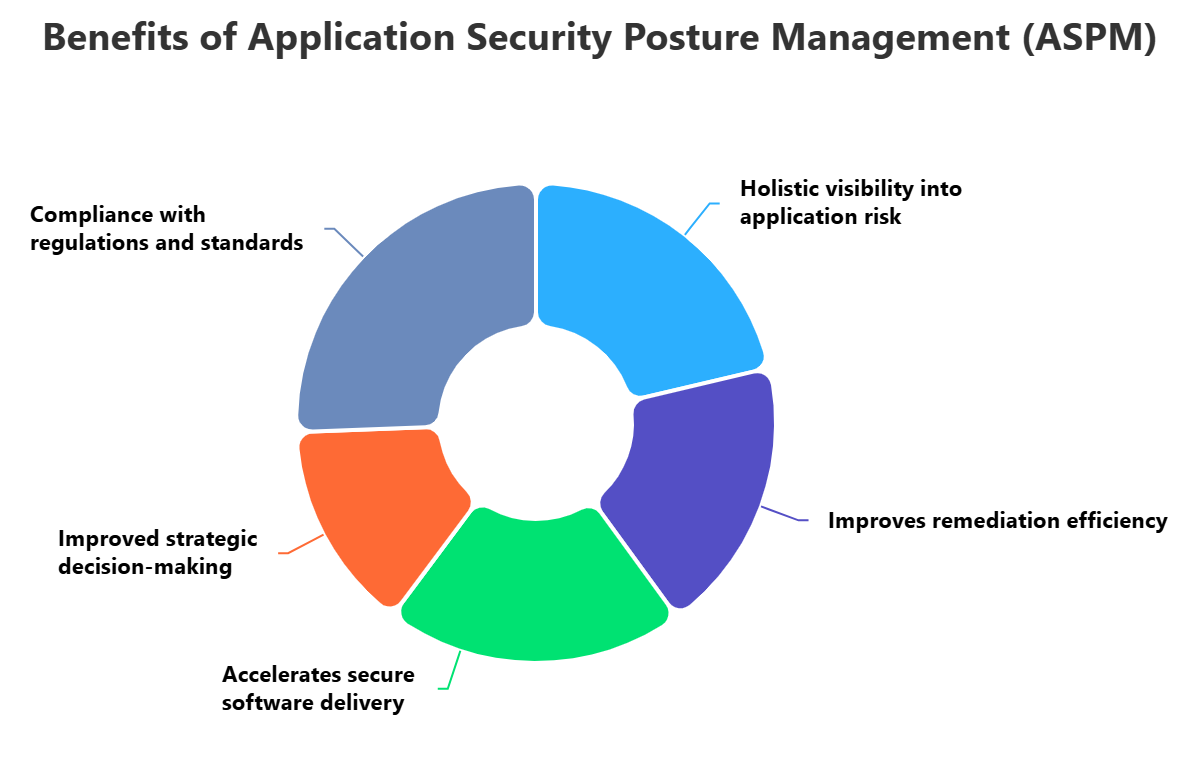
If you put a good Application Security Posture Management (ASPM) system in place, you'll see a *ton* of good changes in how you handle app security. One of the biggest things is that you’ll have *one view* of all your app risks. ASPM takes data from everywhere and puts it together, so you don't have a bunch of different views. You can see all your vulnerabilities in one place, which means you can see the real risks, find the weak spots, and make smart choices using data.
ASPM also makes you fix problems faster and get safe software out quicker. It gets rid of duplicates, figures out what risks mean to the business, and tells your development teams what to fix first. It also connects to the tools they're already using, so they get clear instructions, which speeds things up. That doesn't just make you safer, it also lets you get safe apps out the door faster, which fits in well with how people develop software now.
ASPM also helps you follow the rules and make smart decisions. By having all your app security data in one spot, it's easier to show that you're following rules and protecting data. You can make reports for audits and see where you're missing the mark. The people in charge get a clear view of how risky your apps are, so they can make smart choices about investing in security and protecting the company's reputation.
Challenges of Application Security Posture Management (ASPM)
Even though Application Security Posture Management (ASPM) can make things better, there are some challenges you need to be ready for. One big thing is the difficulties in getting the information from different places. They all have their own way of doing things. A lot of companies use a bunch of different tools like SAST, DAST, SCA, and testers to test manually each with random setups and formats. Getting that data into one place that is accurate can be tough.
Another challenge is the importance of not only knowing this is a problem but knowing what the impact is for the business. You need to know that if something goes wrong how critical or impactful it will be. If those things are valued wrong or not fully taken on, then this can lead to critical risks being overlooked.
You also need to overcome team silos and make security a part of the conversation. Communication needs to be open to make sure that risks and findings are communicated properly. All the new tools will not matter if nobody uses them correctly.
Best Practices for Application Security Posture Management (ASPM)
To make Application Security Posture Management really pay off, keep these tips in mind: First, make sure you know what apps you have and how important they are. Before you start putting tools in place, make a list of all your apps, figure out which ones are most important to the business, how sensitive their data is, and if they're on the internet. This'll help you set up the ASPM system to focus on what matters most.
Second, make sure the data is good and the tools all work together. ASPM is only as good as the data it gets. Make sure your SAST, DAST, SCA, and other tools are running well and feeding good info into the ASPM system. Spend time making sure the data's all the same and getting rid of duplicates. And make sure your tools are connected to the ASPM platform with good connections.
Third, build a team of security and work towards a DevOps culture to encourage remediation. If finding have a clear workflow and plan this will create much better efficiency. Also make sure that everyone keeps learning, track success and keep encouraging others to take ownership.
How ImmuniWeb Can Help with Application Security Posture Management (ASPM)?
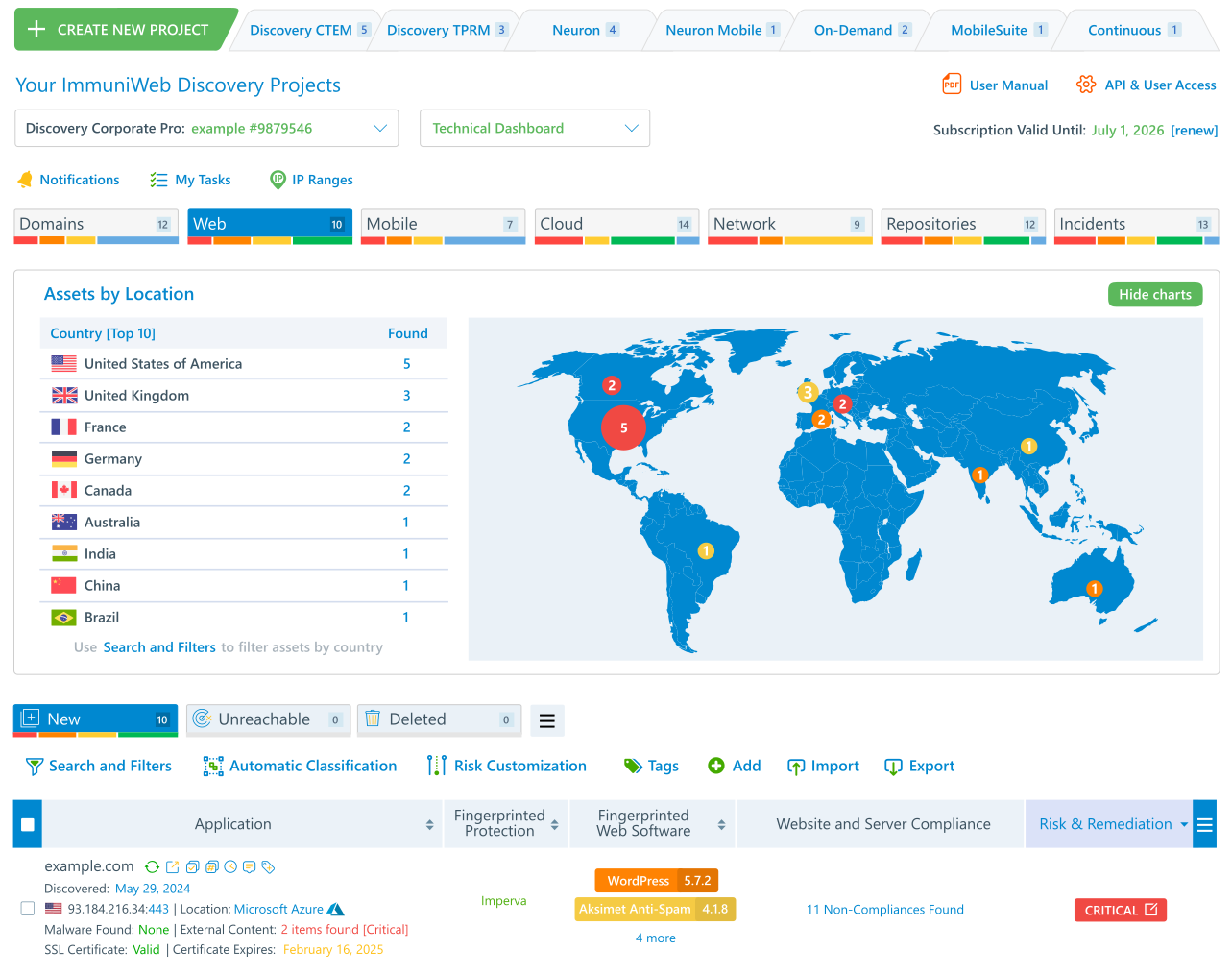
ImmuniWeb is uniquely positioned to help organizations mature their Application Security Posture Management (ASPM) capabilities through its comprehensive, AI-driven, and human-powered platform. ImmuniWeb's core strength lies in its ability to aggressively and continuously discover an organization's entire digital footprint, including hidden, unknown, and forgotten web applications, APIs, and mobile applications that often fall outside the scope of traditional AppSec programs. This External Attack Surface Management (EASM) functionality provides the critical foundation for ASPM by ensuring that all applications—even shadow IT—are identified and brought under management for security assessment.
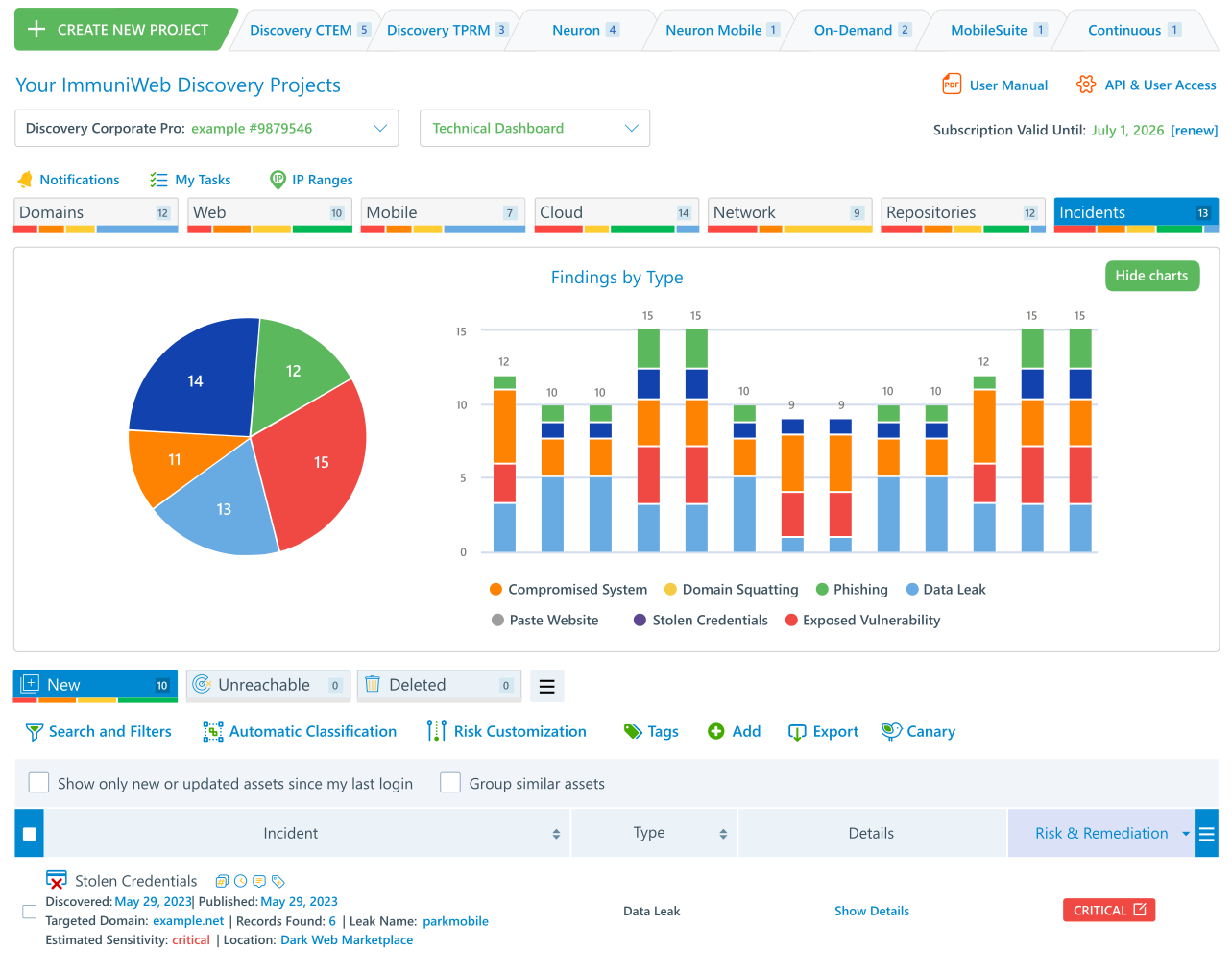
Furthermore, ImmuniWeb directly contributes to the ASPM data aggregation and risk contextualization needs by offering award-winning hybrid application security testing (AST) solutions. Their AI-powered web and mobile application penetration testing, coupled with expert human validation, delivers highly accurate and actionable vulnerability findings (DAST for web/mobile, API security testing). These findings are automatically ingested into the ImmuniWeb platform, where they are correlated, de-duplicated, and enriched with business context and threat intelligence. This ensures that security teams get a precise, prioritized view of application vulnerabilities, reducing noise and focusing on the most critical risks.
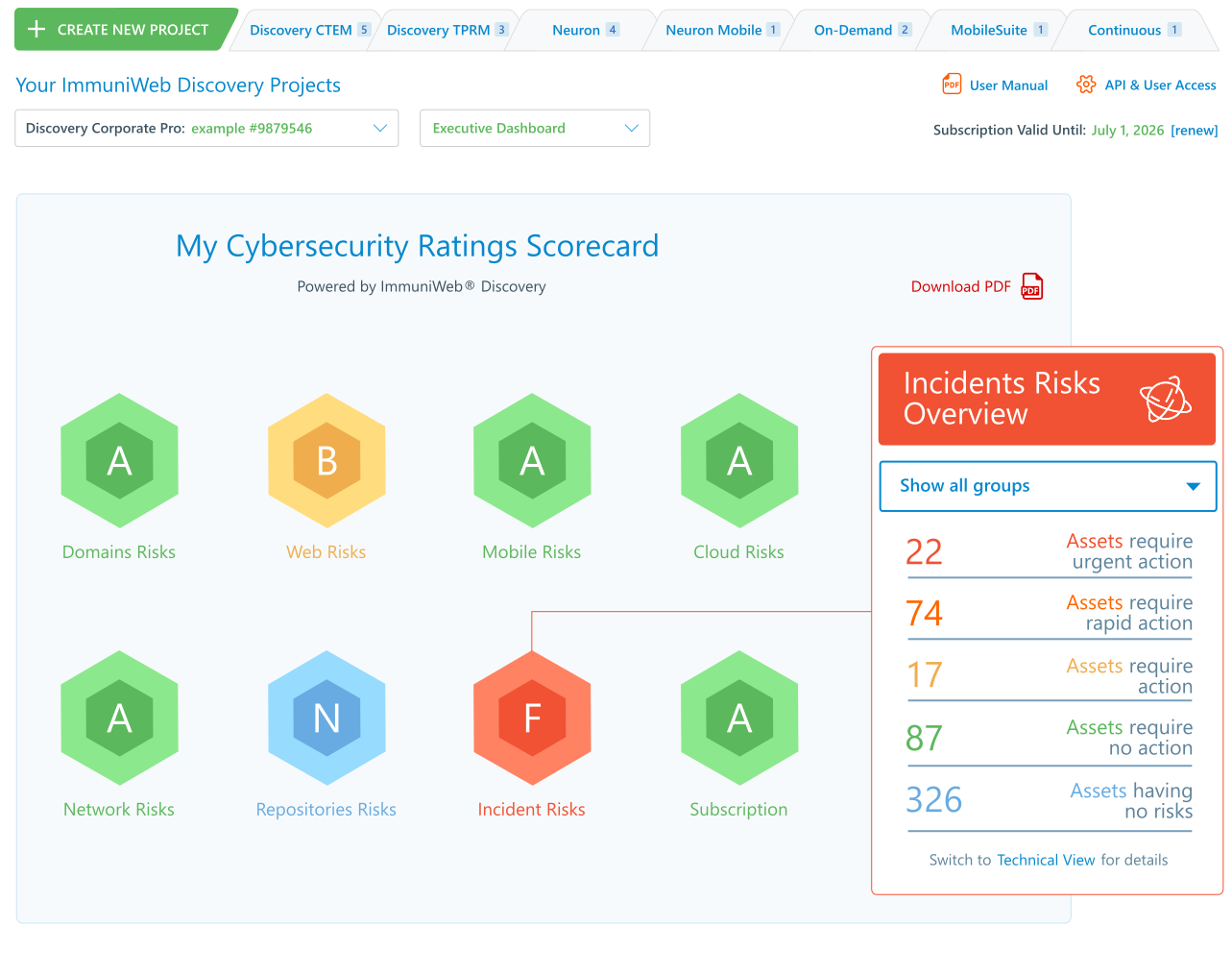
Finally, ImmuniWeb's platform provides the centralized visibility, risk prioritization, and seamless workflow integration essential for effective ASPM. The interactive dashboard offers a holistic view of application security posture across the entire discovered attack surface. Vulnerabilities are clearly presented with detailed remediation guidance, assigned risk scores, and can be seamlessly integrated with popular issue trackers (e.g., Jira), allowing for efficient assignment and tracking of fixes. By combining comprehensive discovery, highly accurate hybrid AST, and robust risk management capabilities, ImmuniWeb empowers organizations to build, maintain, and continuously improve a strong application security posture, safeguarding their most critical digital assets.
Disclaimer
The above-mentioned text does not constitute legal or investment advice and is provided “as is” without any warranty of any kind. We recommend talking to ImmuniWeb experts to get a better understanding of the subject matter.


















 API Penetration
 API Security
 Application Penetration
 Application Security
 Attack Surface
 Automated Penetration
 Cloud Penetration
 Cloud Security
 Continuous Automated
 Continuous Breach and
 Continuous Penetration
 Continuous Threat
 Cyber Threat
 Data Security Posture
 Dark Web
 Mobile Penetration
 Mobile Security
 Network Security
 Penetration
 Phishing Websites
 Third-Party Risk
 Threat-Led
 Web Penetration
 Web Security