







The rapid and widespread adoption of cloud computing has fundamentally reshaped the IT landscape, offering unprecedented agility, scalability, and innovation. However, this transformative shift also introduces a unique and complex set of security challenges. Traditional on-premise security tools and methodologies often fall short in dynamic, ephemeral cloud environments, leaving organizations vulnerable to novel threats.
Cloud Threat Detection, Investigation & Response (TDIR) emerges as a critical discipline designed to address these challenges head-on, providing the specialized capabilities needed to identify, analyze, and neutralize cyber threats across diverse cloud infrastructures, ensuring the continuous security and resilience of cloud-native operations.


What Is Cloud Threat Detection, Investigation & Response (TDIR)?

Cloud Threat Detection, Investigation & Response (TDIR) is a specialized cybersecurity framework and set of capabilities focused on identifying, analyzing, containing, and remediating security incidents within cloud environments. It encompasses the entire lifecycle of a security event, from the initial signs of a potential threat (detection) to understanding its scope and impact (investigation) and ultimately neutralizing it and preventing recurrence (response). Unlike traditional TDIR, which primarily focuses on on-premise networks and endpoints, Cloud TDIR is specifically tailored to the unique characteristics and complexities of cloud platforms, including Infrastructure-as-a-Service (IaaS), Platform-as-a-Service (PaaS), and Software-as-a-Service (SaaS).
The core purpose of Cloud TDIR is to provide continuous visibility and control over the dynamic and distributed nature of cloud assets. Cloud environments are characterized by ephemeral workloads, serverless functions, containerized applications, and a shared responsibility model for security. This necessitates specialized tools and processes that can ingest vast quantities of cloud-native logs, monitor API calls, analyze network flow data, and detect anomalous behavior across multiple cloud providers. Cloud TDIR aims to correlate these diverse data points to paint a comprehensive picture of a potential attack, enabling security teams to act decisively.
Ultimately, Cloud TDIR is about maintaining a robust security posture in the cloud by proactively identifying and responding to threats that could compromise data, disrupt services, or lead to compliance violations. It moves beyond simply preventing known attacks to actively hunting for new and evolving threats, understanding their context within the cloud environment, and orchestrating a rapid and effective response. By doing so, organizations can confidently leverage the benefits of cloud computing while minimizing their exposure to the inherent risks of a highly interconnected and constantly changing digital infrastructure.
Key Aspects of Cloud Threat Detection, Investigation & Response (TDIR)
Cloud Threat Detection, Investigation & Response (TDIR) is distinguished by several key aspects that are unique to the cloud operating model. Firstly, the shared responsibility model is fundamental. In cloud computing, security responsibilities are divided between the cloud service provider (CSP) and the customer. While CSPs secure the underlying infrastructure ("security of the cloud"), customers are responsible for securing their data, applications, configurations, and access within the cloud ("security in the cloud"). Cloud TDIR capabilities must therefore focus heavily on the customer's domain of responsibility, leveraging cloud-native tools and APIs to gain visibility and control over their deployed assets.
Secondly, the dynamic and ephemeral nature of cloud environments is a critical consideration. Unlike static on-premise infrastructures, cloud workloads can scale up and down rapidly, virtual machines are spun up and down in minutes, and serverless functions execute for mere seconds. This constant flux generates enormous volumes of logs and makes traditional, agent-based monitoring challenging. Cloud TDIR solutions must be able to ingest and analyze these vast, high-velocity data streams in real-time, correlating events across ephemeral resources to detect threats that might otherwise be missed in the noise or disappear before they can be investigated.
Finally, API-driven operations and identity-centric security are paramount in the cloud. Almost every action in a cloud environment, from provisioning resources to accessing data, is performed via API calls. This makes API activity logs a rich source of security intelligence. Cloud TDIR capabilities heavily rely on monitoring these API calls for anomalous behavior, unauthorized actions, or indicators of compromise. Furthermore, cloud security is inherently identity-centric, with granular access controls tied to identities. Effective Cloud TDIR must therefore integrate deeply with Identity and Access Management (IAM) systems to understand who is doing what, where, and when, across the cloud estate.
Why Is Cloud Threat Detection, Investigation & Response (TDIR) Important?
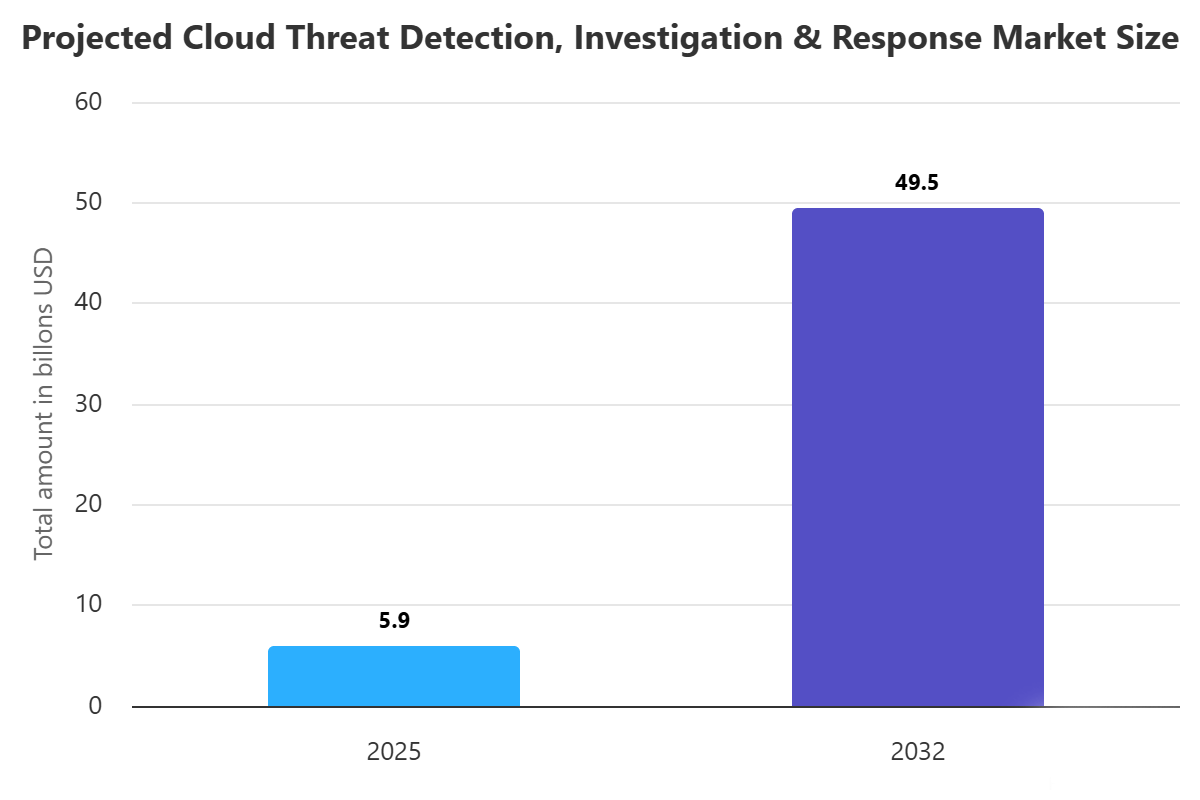
Cloud Threat Detection, Investigation & Response (TDIR) is of paramount importance in today's digital landscape due to the pervasive adoption of cloud computing and the unique security challenges it presents. As organizations migrate critical workloads and sensitive data to the cloud, they become exposed to a new set of threats that traditional security tools are ill-equipped to handle. Cloud TDIR is essential for addressing cloud-specific attack vectors and vulnerabilities, such as misconfigured cloud services, exposed APIs, compromised cloud identities, and supply chain attacks targeting cloud-native components, which can bypass traditional perimeter defenses.
Furthermore, Cloud TDIR is crucial for maintaining operational resilience and ensuring business continuity in cloud environments. A successful cyberattack in the cloud can lead to widespread service outages, data exfiltration, or ransomware deployment, severely impacting an organization's ability to operate. By providing continuous threat detection, rapid investigation capabilities, and automated response mechanisms, Cloud TDIR minimizes the dwell time of attackers, contains breaches quickly, and reduces the overall impact of security incidents, thereby safeguarding critical business functions and ensuring uninterrupted service delivery.
Beyond immediate threat mitigation, Cloud TDIR is also vital for achieving and demonstrating compliance with a growing body of cloud-specific regulations and industry standards. Many regulatory frameworks (e.g., GDPR, HIPAA, PCI DSS, FedRAMP) now have specific requirements for securing data and applications in the cloud. Cloud TDIR provides the necessary visibility, audit trails, and incident response capabilities to meet these compliance mandates, helping organizations avoid costly fines, legal repercussions, and reputational damage, while building trust with customers and partners who rely on their cloud services.
How Does Cloud Threat Detection, Investigation & Response (TDIR) Work?
Cloud Threat Detection, Investigation & Response (TDIR) operates through a continuous cycle of data collection, analysis, alert generation, and orchestrated response. The process typically begins with ingestion of cloud-native logs and telemetry. Cloud TDIR solutions connect to various cloud service providers (CSPs) to collect a vast array of security-relevant data, including cloud audit logs (e.g., AWS CloudTrail, Azure Activity Logs, GCP Cloud Audit Logs), network flow logs (e.g., VPC Flow Logs), container logs, serverless function logs, and identity and access management (IAM) activity. This raw data forms the foundation for threat detection.
Next, the ingested data is subjected to advanced analytics and threat detection mechanisms. Cloud TDIR platforms leverage a combination of techniques, including rule-based detection, behavioral analytics, machine learning, and threat intelligence feeds, to identify suspicious activities and anomalies. This might involve detecting unusual API calls, unauthorized access attempts, data exfiltration patterns, misconfigured resources, or indicators of compromise (IoCs) associated with known cloud threats. When a suspicious event is identified, an alert is generated, often enriched with contextual information.
Finally, the process moves into investigation and automated/orchestrated response. Upon receiving an alert, security analysts use the Cloud TDIR platform's investigation capabilities to drill down into the details, correlate events across different cloud services, and understand the full scope and impact of the potential threat. Once confirmed, the platform facilitates rapid response through automation and orchestration. This could involve automatically isolating compromised resources, revoking suspicious access, triggering alerts to incident response teams, or initiating predefined remediation playbooks, thereby minimizing the attacker's dwell time and containing the breach effectively.
Types of Cloud Threat Detection, Investigation & Response (TDIR)
While Cloud TDIR is a comprehensive capability, its implementation can manifest in different "types" or approaches, often reflecting the tools and services utilized by organizations.
One common approach involves leveraging Cloud-Native Security Services. Major cloud providers (AWS, Azure, GCP) offer a suite of built-in security services for logging, monitoring, threat detection, and sometimes automated response (e.g., AWS GuardDuty, Azure Security Center/Defender for Cloud, GCP Security Command Center). Organizations can build their Cloud TDIR program primarily using these native tools, which offer deep integration with the cloud environment and are often cost-effective for single-cloud deployments, providing foundational visibility and basic response capabilities within that specific CSP.
Another significant type involves the use of Third-Party Cloud Security Platforms and SIEM/SOAR Solutions. These solutions offer a multi-cloud or hybrid cloud approach, providing a unified view across different CSPs and on-premise environments. They ingest logs and telemetry from various sources, apply advanced analytics, and often include Security Information and Event Management (SIEM) for centralized logging and correlation, and Security Orchestration, Automation, and Response (SOAR) capabilities for automated incident response workflows. This approach is favored by organizations with complex, multi-cloud architectures seeking consolidated visibility and advanced automation.
Finally, organizations can opt for Managed Detection and Response (MDR) for Cloud Environments. This involves outsourcing the Cloud TDIR function to a specialized third-party security provider. MDR providers offer 24/7 monitoring, expert threat hunting, investigation, and guided response capabilities, leveraging their own tools and skilled analysts. This type is particularly beneficial for organizations with limited in-house security resources or those seeking to augment their existing teams with specialized cloud security expertise, providing a comprehensive Cloud TDIR capability without the need for significant internal investment in tools and personnel.
Components of Cloud Threat Detection, Investigation & Response (TDIR)
A robust Cloud Threat Detection, Investigation & Response (TDIR) framework is built upon several interconnected and essential components that work in synergy to secure dynamic cloud environments.
The foundational component is Comprehensive Cloud Logging and Monitoring. This involves enabling and configuring detailed logging across all cloud services, including audit logs (API calls), network flow logs, application logs, container logs, and identity and access management (IAM) activity. These logs provide the raw telemetry necessary for detecting suspicious activities. Complementary monitoring tools continuously collect and aggregate this data, ensuring real-time visibility into the state and behavior of cloud resources, which is critical for identifying deviations from normal operations.
Secondly, Advanced Threat Detection and Analytics Engines are crucial. These components ingest the vast streams of cloud logs and apply sophisticated techniques to identify threats. This includes rule-based detection (for known attack patterns), behavioral analytics (to spot anomalies from baseline activity), machine learning (to uncover subtle indicators of compromise), and integration with up-to-date threat intelligence feeds (to flag known malicious IPs, domains, or attack signatures). These engines are responsible for sifting through the noise and accurately flagging genuine security incidents that require investigation.
Finally, Automated Response and Orchestration Capabilities are vital for minimizing the impact of cloud threats. Once a threat is detected and confirmed, TDIR platforms facilitate rapid containment and remediation. This can involve pre-defined automated actions (e.g., isolating a compromised VM, revoking suspicious IAM roles, blocking malicious IPs) or orchestrated workflows that guide human analysts through the response process. Integration with incident response playbooks, ticketing systems, and security orchestration, automation, and response (SOAR) tools ensures that security incidents are handled efficiently, consistently, and with minimal human intervention where appropriate, reducing attacker dwell time.
Benefits of Cloud Threat Detection, Investigation & Response (TDIR)
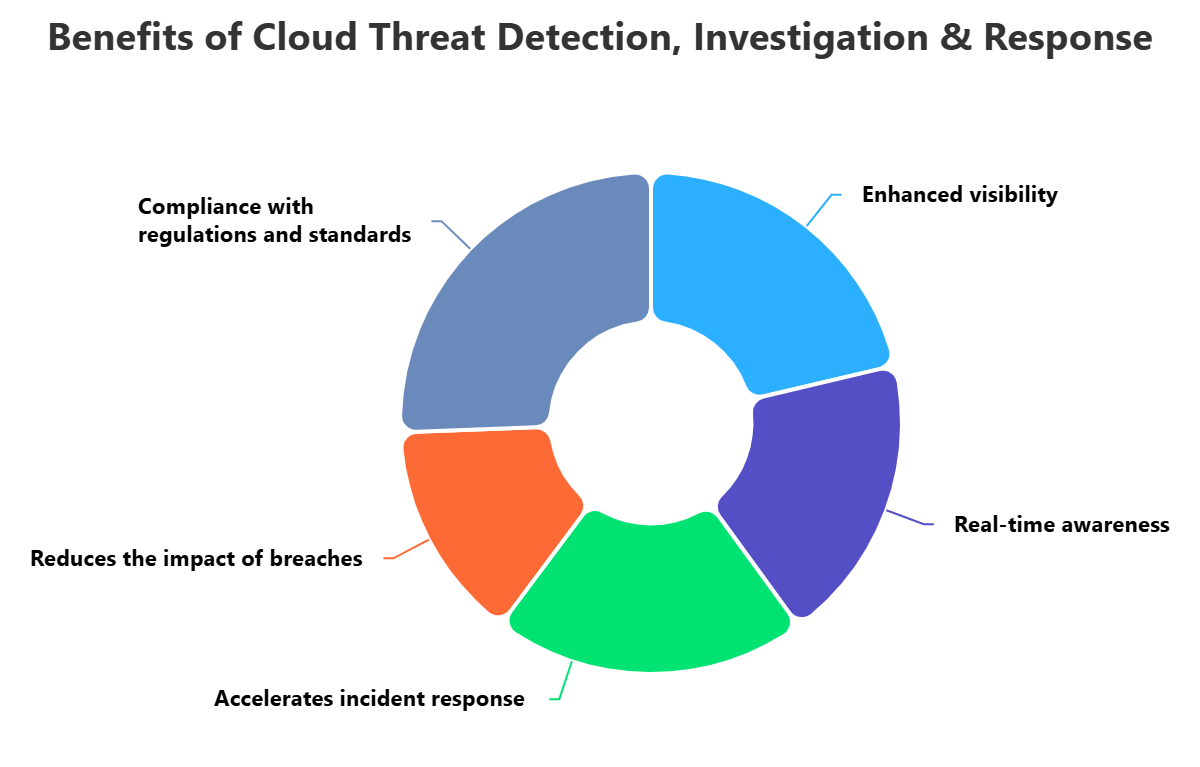
Implementing a robust Cloud Threat Detection, Investigation & Response (TDIR) program offers significant benefits that are crucial for organizations operating in the cloud. A primary advantage is enhanced visibility and real-time awareness of cloud security posture. Cloud environments are inherently dynamic and complex, often leading to blind spots. Cloud TDIR aggregates logs and telemetry from across the cloud estate, providing a unified, real-time view of security events, misconfigurations, and anomalous activities. This comprehensive visibility empowers security teams to understand their true risk exposure and detect threats that would otherwise go unnoticed.
Furthermore, Cloud TDIR significantly accelerates incident response and reduces the impact of breaches. By providing automated threat detection, granular investigative capabilities, and orchestrated response actions, Cloud TDIR minimizes the "dwell time" of attackers within cloud environments. Rapid detection and automated containment reduce the blast radius of a security incident, preventing data exfiltration, service disruption, or further compromise. This swift and decisive action directly translates to reduced financial losses, minimized reputational damage, and faster recovery times in the event of a cyberattack.
Beyond immediate threat mitigation, Cloud TDIR also plays a crucial role in improving compliance and fostering a proactive security culture. Many regulatory frameworks demand robust logging, monitoring, and incident response capabilities in the cloud. Cloud TDIR provides the necessary audit trails and demonstrable security controls to meet these requirements. Moreover, by continuously testing and refining detection and response mechanisms, organizations build a more mature security posture, shifting from a reactive stance to a proactive, threat-informed defense that continuously adapts to the evolving cloud threat landscape.
Challenges of Cloud Threat Detection, Investigation & Response (TDIR)
Despite its critical importance, implementing and maintaining an effective Cloud Threat Detection, Investigation & Response (TDIR) program comes with its own set of significant challenges. One major hurdle is the sheer volume, velocity, and variety of cloud data and logs. Cloud environments generate petabytes of telemetry from diverse services (VMs, containers, serverless, databases, networking, IAM). Ingesting, storing, and effectively analyzing this massive, high-velocity data stream to extract meaningful security insights without overwhelming security analysts or incurring exorbitant costs is a complex undertaking, often leading to alert fatigue and missed threats.
Another significant challenge is the complexity of multi-cloud and hybrid cloud environments. Many organizations operate across multiple cloud providers (AWS, Azure, GCP) and still maintain on-premise infrastructure. Each cloud provider has its own native security tools, logging formats, and APIs, making it difficult to achieve a unified view of security events and orchestrate consistent responses across disparate environments. Correlating threats across these siloed platforms requires sophisticated integration and normalization capabilities, often leading to increased operational overhead and potential blind spots.
Finally, the shortage of specialized cloud security expertise and the rapid evolution of cloud threats pose considerable challenges. Effective Cloud TDIR requires security analysts with deep knowledge of cloud architectures, specific cloud provider services, cloud-native attack techniques, and the ability to interpret complex cloud logs. Such talent is scarce and expensive. Furthermore, as cloud services and attack methods continuously evolve, security teams must constantly update their knowledge and tools, making it a demanding and continuously adapting discipline that requires significant investment in training and threat intelligence.
Best Practices for Cloud Threat Detection, Investigation & Response (TDIR)
To build and maintain a robust Cloud Threat Detection, Investigation & Response (TDIR) program, organizations should adhere to several key best practices. Firstly, establish comprehensive logging and monitoring across all cloud resources. Enable detailed audit logs, network flow logs, application logs, and identity activity logs for every cloud service and resource. Centralize these logs into a dedicated security information and event management (SIEM) or cloud-native data lake for unified analysis. This foundational step ensures that all relevant telemetry is available for threat detection and investigation.
Secondly, leverage a layered approach to threat detection, combining cloud-native tools with advanced analytics. Don't rely solely on one detection method. Utilize cloud provider-specific security services (e.g., AWS GuardDuty, Azure Defender for Cloud) for foundational threat detection. Complement these with third-party cloud security platforms or SIEM/SOAR solutions that offer advanced behavioral analytics, machine learning, and integration with global threat intelligence feeds to detect more sophisticated and novel threats across your multi-cloud or hybrid environment. Regularly tune detection rules to reduce false positives and improve accuracy.
Finally, prioritize automation and orchestration for rapid response, and continuously test your TDIR capabilities. Develop automated playbooks for common cloud security incidents (e.g., isolating compromised instances, revoking suspicious access). Integrate your TDIR platform with incident response tools and ticketing systems to streamline workflows. Crucially, conduct regular red team exercises and incident response drills specifically tailored to cloud attack scenarios. This continuous testing and refinement of your TDIR processes, people, and technology will ensure that your organization can effectively detect, investigate, and respond to real-world cloud threats, building true resilience.
How ImmuniWeb Can Help with Cloud Threat Detection, Investigation & Response (TDIR)?
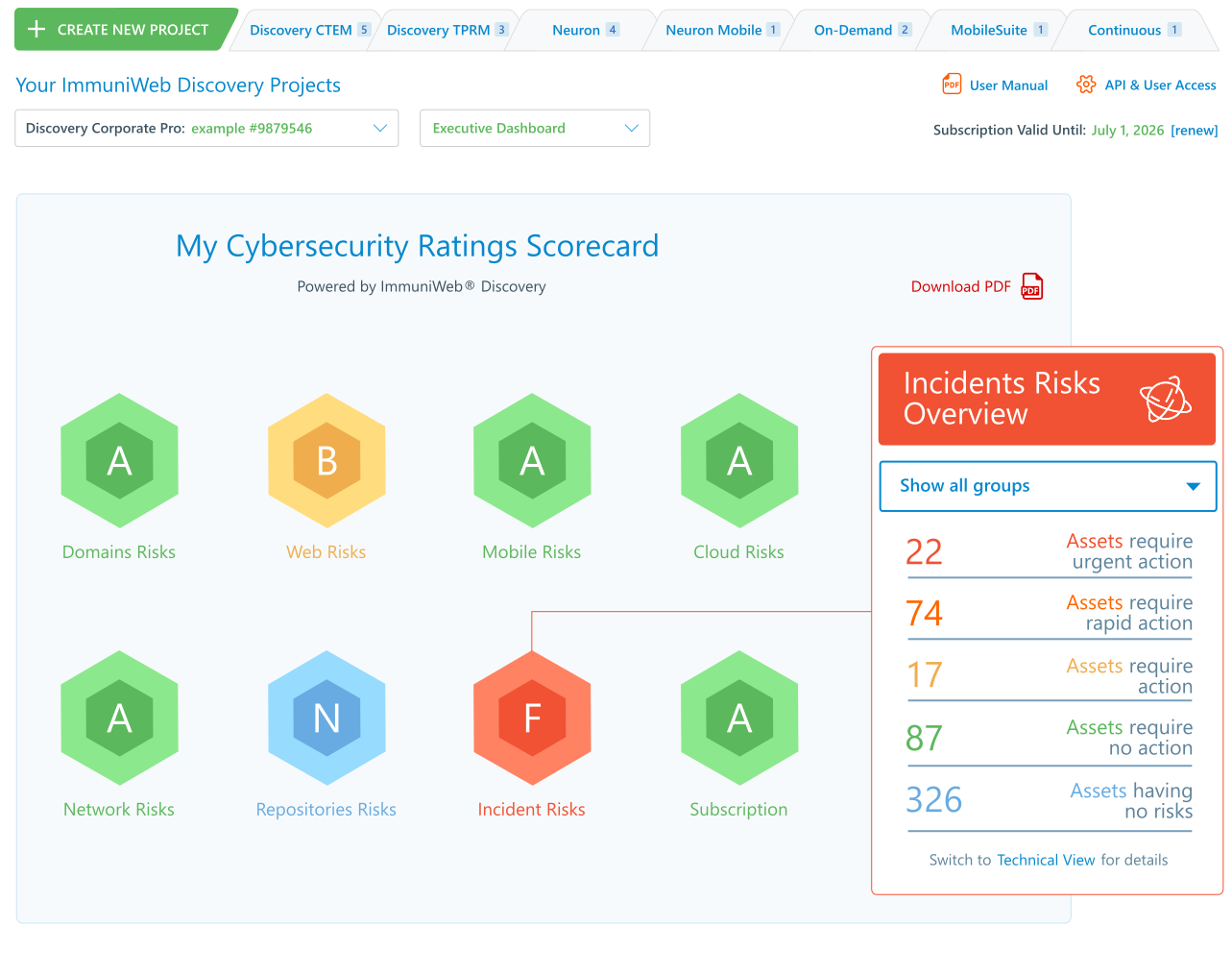
ImmuniWeb provides a powerful and complementary set of capabilities that significantly enhance an organization's Cloud Threat Detection, Investigation & Response (TDIR) efforts, particularly through its focus on proactive external threat intelligence and cloud security posture management. While not a full TDIR platform itself, ImmuniWeb's solutions provide crucial insights that feed directly into and strengthen TDIR programs, enabling organizations to prevent threats before they escalate.
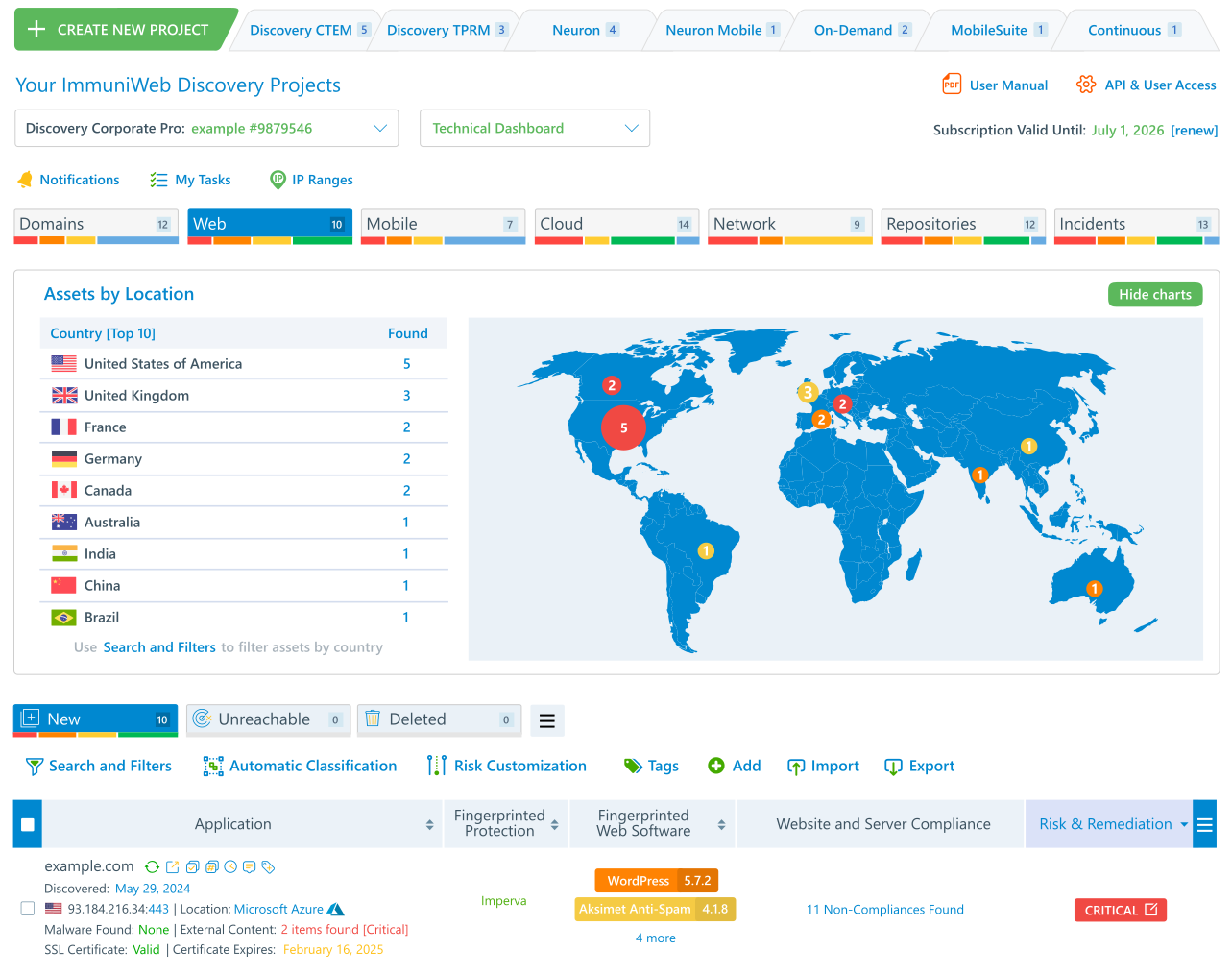
ImmuniWeb's AI-powered Cloud Security Test and External Attack Surface Management (EASM) capabilities are vital for proactive threat prevention. The Cloud Security Test specifically identifies misconfigurations in cloud storage (AWS, Azure, GCP) that could lead to data exposure, which is a common initial access vector for attackers. EASM continuously discovers and monitors an organization's internet-facing cloud assets, flagging exposed services and vulnerabilities that could be targeted. By identifying and helping to remediate these weaknesses, ImmuniWeb significantly reduces the attack surface, making it harder for threats to gain a foothold in the cloud, thereby lessening the load on TDIR teams.
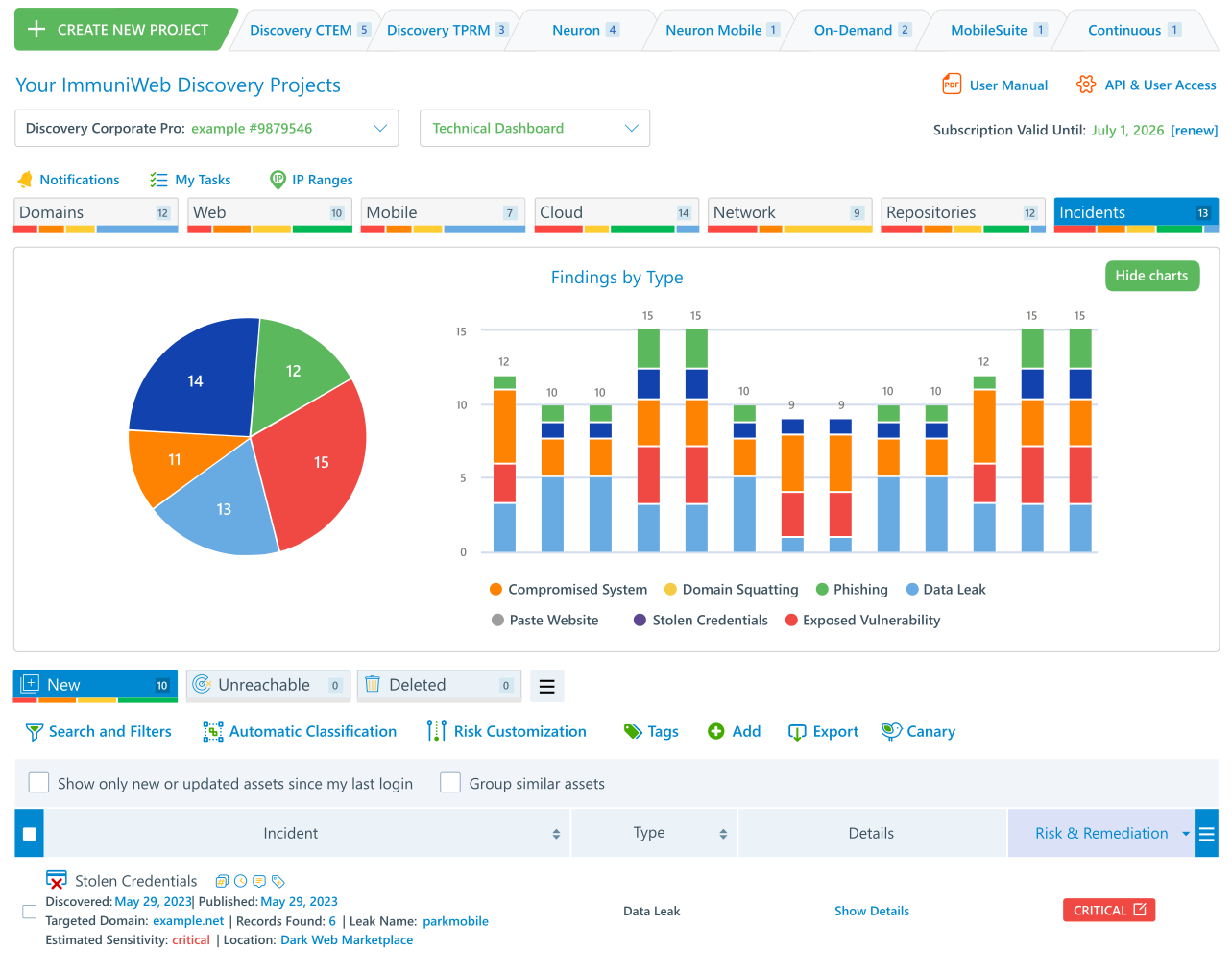
Furthermore, ImmuniWeb's Dark Web Monitoring and Cyber Threat Intelligence (CTI) offerings provide invaluable pre-breach indicators that are critical for threat detection. By scanning the dark web for leaked credentials, compromised accounts, and mentions of an organization's cloud assets or data, ImmuniWeb can alert security teams to potential compromises before they manifest as active incidents. This early warning intelligence allows TDIR teams to proactively investigate potential threats, revoke compromised credentials, and strengthen defenses, transforming reactive response into a more proactive and intelligence-led defense strategy, ultimately making the TDIR process more efficient and effective.
Disclaimer
The above-mentioned text does not constitute legal or investment advice and is provided “as is” without any warranty of any kind. We recommend talking to ImmuniWeb experts to get a better understanding of the subject matter.


















 API Penetration
 API Security
 Application Penetration
 Application Security
 Attack Surface
 Automated Penetration
 Cloud Penetration
 Cloud Security
 Continuous Automated
 Continuous Breach and
 Continuous Penetration
 Continuous Threat
 Cyber Threat
 Data Security Posture
 Dark Web
 Mobile Penetration
 Mobile Security
 Network Security
 Penetration
 Phishing Websites
 Third-Party Risk
 Threat-Led
 Web Penetration
 Web Security