




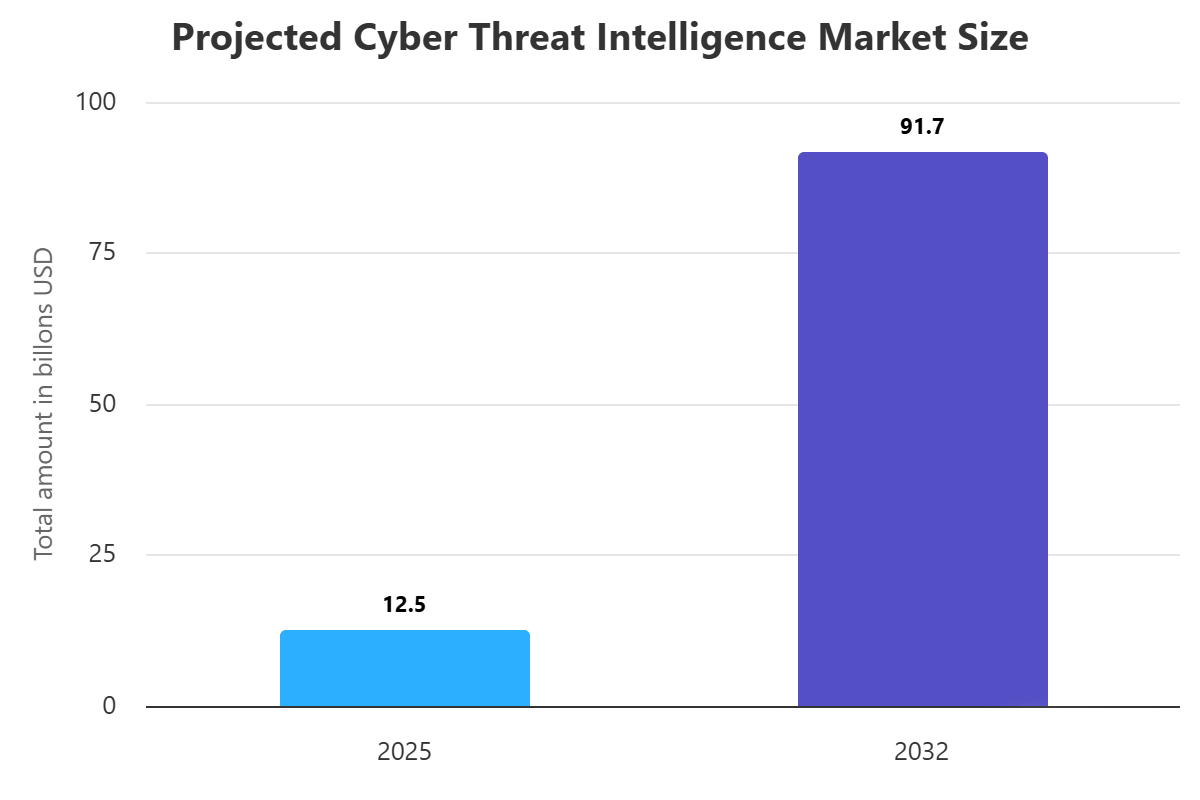
Cyber threats are a constant worry in our connected world. Companies deal with attacks all the time, from government spying to ransomware. Just reacting to these threats isn't enough anymore. That's why Cyber Threat Intelligence (CTI) is so important. It turns regular data into useful information that helps you defend yourself and make smart choices. CTI lets companies predict, spot, and handle cyber risks better, so you're not just defending, but planning ahead.

What Is Cyber Threat Intelligence?
CTI is more than just a list of threats. It's a way of gathering, studying, and sharing information about possible cyber threats. This includes things like how attackers work, what kind of malware they use, which weaknesses they target, and what their goals are. By knowing the who, what, when, where, why, and how of attacks, CTI gives you a full view of what's going on. You can then go beyond just fixing problems to really understand what attackers are trying to do and adjust your defenses.
In the end, CTI is the base for a strong security setup. It helps you find immediate threats and see bigger trends, which is key for creating solid security plans, using resources wisely, and keeping your business running when facing cyber risks. Without good CTI, companies are basically guessing and reacting too late to avoid damage.
Key Aspects of Cyber Threat Intelligence
CTI has some key things that make it work well in a company's security. One is that it focuses on giving you information you can use. Instead of just raw data, CTI turns information into something you can directly use to improve your security. This means giving you specific clues to block threats right away, details on how attackers work to improve your detection, and tips for leaders to make choices about security spending.
Another thing is that it puts threat data in context. CTI doesn't just find bad IP addresses or malware. It tries to understand why an attack is happening, including the attacker's goals, targets, and skills. This lets you see how important a threat is to you and handle it in the right order. For example, if you know an attacker is targeting your industry or a type of tech you use, that threat becomes a higher priority.
Lastly, CTI is a process that keeps going. It's not just a one-time thing. It involves planning, gathering, process, studying, sharing, and getting feedback. This ongoing cycle keeps your threat information up-to-date and in line with your security needs. By always improving your CTI, you can keep up with the changing threat scene and stay ahead of cyber risks.
Why Is Cyber Threat Intelligence Important?
CTI is super important because the cyber world is getting harder to handle. First, CTI lets you defend ahead of time instead of just reacting to problems. You can see attacks coming, find weaknesses before they're used, and take steps to prevent them. This lowers the chance of a successful attack and saves money and damage to your reputation.
Second, CTI helps everyone in a company make better choices. Security people get clues to block threats, and leaders get tips for managing risks and deciding on budgets. It helps you spend money on the right things by showing you which threats are most important. This makes your security better and more efficient.
Finally, CTI helps you handle incidents better. When something happens, having good threat information helps you find and fix problems faster. CTI tells you about the attacker, how they work, and what to look for, so you can understand the attack quickly, stop it, and recover. This speed is key for reducing damage and keeping your business running.
How Does Cyber Threat Intelligence Work?
CTI works by following a plan that starts with Planning and Direction. Here, a company decides what it needs to know based on what it owns, what risks it faces, and what its business goals are. This means finding out what threats are most important, which attackers might target you, and what information you need to protect your systems and data. This step makes sure that the rest of the work is focused and helps you reach your goals.
After planning, the Collection step gathers data from many places. This can be things you find online, like forums, news, and blogs; threat feeds that give you organized data; dark web monitoring to find secret discussions and stolen passwords; data from your security tools like SIEMs, EDRs, and firewalls; and even information from people you trust in the industry. The goal is to get as much information as possible about potential threats.
Once you have the data, Processing and Analysis make it useful. The raw data is turned into information you can use. Process means cleaning up the data, removing duplicates, and making it consistent. Then, security experts look at the data, find patterns, connect information, and take useful information from it. This can mean mapping attacker actions to MITRE ATT&CK, understanding how they work, and checking if the information is real and useful. Finally, the information is sent to the right people in a way they can use, like alerts for security staff, reports for incident response teams, or summaries for leaders. A key step is getting Feedback, where people tell you if the information was helpful and accurate, so you can improve the CTI program.
Types of Cyber Threat Intelligence
CTI is usually split into different types, each with its own purpose and audience in a company. The main types are Strategic, Operational, Tactical, and Technical.
Strategic Threat Intelligence gives a big view of the global threat scene. It looks at trends, world events, attacker goals, and how cyber risks will affect your industry or business in the long run. This is for leaders, risk managers, and senior security people. It helps them make smart choices, decide on security spending, and plan for risks. It lets you see big changes in the threat scene and adjust your security plans. Examples are reports on what governments are doing, major cybercrime trends, and how new laws might affect you.
Operational Threat Intelligence looks at the how and why of specific attacks and attacker plans. It gives you information on how certain attacker groups work, what they want, and what they can do. This is important for incident response teams, threat hunters, and security operations centers (SOCs). It helps them understand how attackers plan and carry out attacks. It might include information on the systems attackers use, how they talk to each other, and details on who they're targeting. It helps you prepare for specific attacks, create plans, and hunt for threats.
Tactical Threat Intelligence focuses on the details of how attackers work right now. This includes information on the tools, and methods they use. It's very useful for security engineers and SOC staff who need to set up security, write detection rules, and understand how to spot an attack. Examples are details on exploit kits, how attackers move around inside a system, or how they steal data. It directly helps you create defenses and makes you better at spotting and stopping attacks in real-time.
Technical Threat Intelligence gives the most detailed clues of attacks, like bad IP addresses, domain names, file codes, URLs, and registry keys. This information is used by security tools like firewalls, intrusion detection/prevention systems (IDS/IPS), and endpoint detection and response (EDR) for automated blocking and detection. It's great for immediate action, but these clues can quickly become old as attackers change their systems. So, it's best to use them with the bigger picture from tactical, operational, and strategic intelligence.
Components of Cyber Threat Intelligence
CTI is based on several building blocks that all add to how well it works. A key one is Data Collection, which means gathering threat data from different places inside and outside your company. This includes security logs from firewalls, intrusion detection systems, and endpoint security, as well as threat intelligence feeds, data from public forums and dark web monitoring, industry groups (ISACs/ISAOs), and sellers. The more and better data you have, the better your intelligence will be.
After collection, Processing and Enrichment are important. Raw data is messy and in different formats. This step cleans up the data, removes duplicates, and organizes it to make it usable. Enrichment adds information to the data, linking it to known attackers, attacks, or weaknesses. This might mean checking IP addresses against databases, analyzing malware in sandboxes, or linking different data points to get a full view of an attack. Without process, raw data is just data and can't be used as intelligence.
Finally, Analysis and Dissemination are where you create intelligence. Expert analysts use methods like studying computer evidence, looking at behavior, and spotting trends to take useful information from the data. They find patterns, guess what attackers are trying to do, predict future attacks, and make recommendations. The intelligence is then given to the right people through alerts, reports, or integration with security tools. A key feedback process makes sure the intelligence is useful, on time, and helpful, always improving the CTI process.
Benefits of Cyber Threat Intelligence
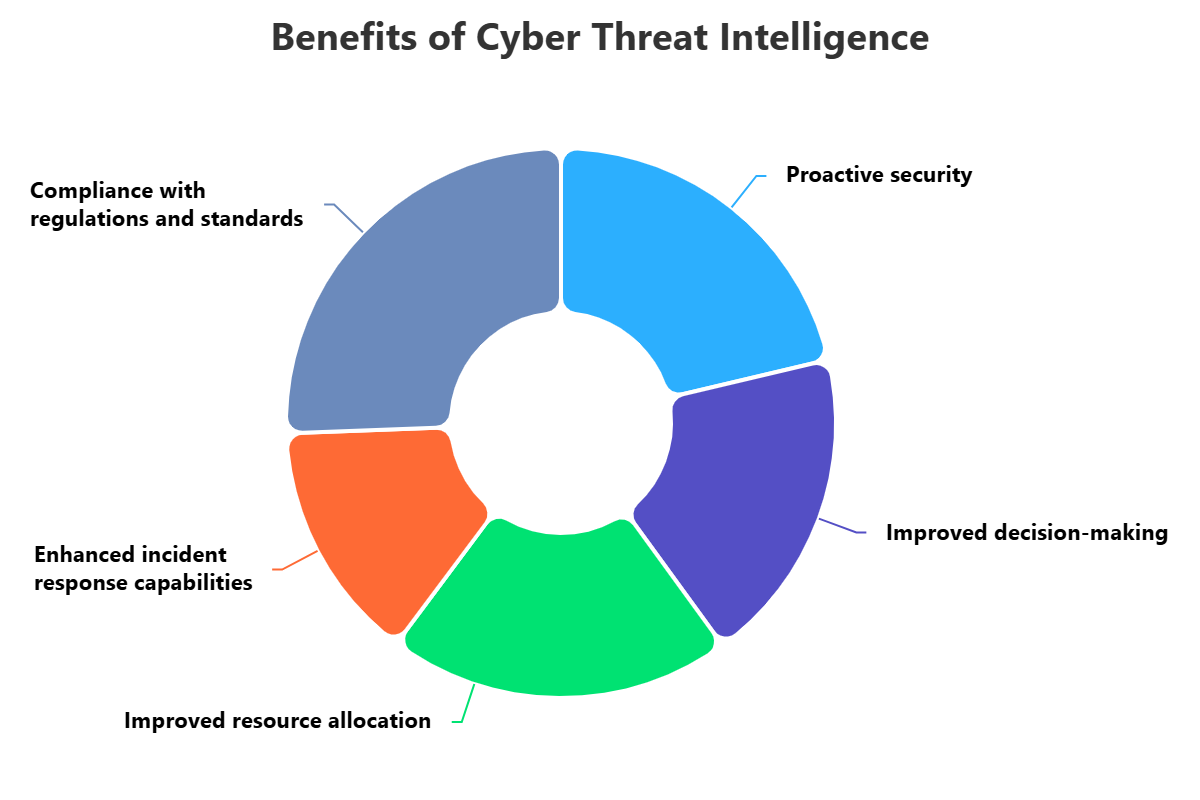
CTI offers many good things to companies trying to improve their security. One of the biggest is moving from reacting to planning ahead. Instead of just responding to incidents, CTI lets you see attacks coming, understand how attackers work, and take steps to prevent them. This helps you strengthen defenses, fix weaknesses before they're used, and create better security policies, reducing your risk and the chance of successful attacks.
Another benefit is better decision-making and use of resources. CTI gives you useful information about the threats that matter most to your industry, systems, and risks. This helps security teams and leaders make better choices about security spending, putting money where it will have the most impact. By knowing the real risks, you can spend wisely, avoid unnecessary costs, and make sure important things are protected, leading to a better and cheaper security program.
CTI also greatly improves incident response. When something happens, having good threat intelligence helps you find, contain, and fix things faster. CTI gives you key information about how attackers work, what to look for, and who might be behind the attack. This helps incident responders understand the attack, stop it quickly, and recover. This speed reduces damage and keeps your business running.
Challenges of Cyber Threat Intelligence
Even though it's helpful, CTI also has some challenges. One big issue is the amount of data. There's so much threat data coming in that it can be hard to handle. Without the right tools to collect, organize, and filter data, security teams can get overwhelmed, making it hard to find the information that really matters. This data fatigue can make you miss threats.
Another challenge is finding skilled people. Turning raw data into useful intelligence takes special skills, like understanding how attackers work, analyzing malware, studying networks, and knowing about world events. Many companies struggle to find and keep security people with the skills to process and understand threat data. Without these experts, CTI can be ineffective, because the human element is key for thinking critically and connecting information.
Finally, putting CTI into action can be hard. Collecting threat intelligence is one thing, but using it in your security is another. Many companies have trouble integrating CTI feeds with their security tools. Also, turning intelligence into actions, like creating detection rules or updating firewalls, takes strong processes and automation. Without this, threat intelligence can stay separate and not help your security.
Best Practices for Cyber Threat Intelligence
To get the most out of CTI, companies should follow some best practices. First, set clear goals for what you want to learn, based on your risks and business goals. Instead of collecting all data, focus on what matters to your industry and systems. This means understanding what's important to you, who might attack you, and what information you need to protect against the biggest threats. Setting these goals makes sure your data collection is focused and doesn't overwhelm you.
Second, use different intelligence sources and share threat information. Don't rely on just one source, or you'll miss things. A good CTI program uses data from online sources, commercial feeds, dark web monitoring, and your own security tools. Also, join industry groups (ISACs/ISAOs) to get information and early warnings about threats. Sharing information also helps the whole cybersecurity community.
Finally, focus on using intelligence and getting feedback. Intelligence is only good if it leads to action. Integrate CTI into your security tools for automated detection and response. Create plans for security teams to act on intelligence. Most important, get feedback from security teams on how useful the intelligence is. This feedback helps you improve your CTI program, making sure it stays helpful in the changing threat scene.
How ImmuniWeb Can Help with Cyber Threat Intelligence?
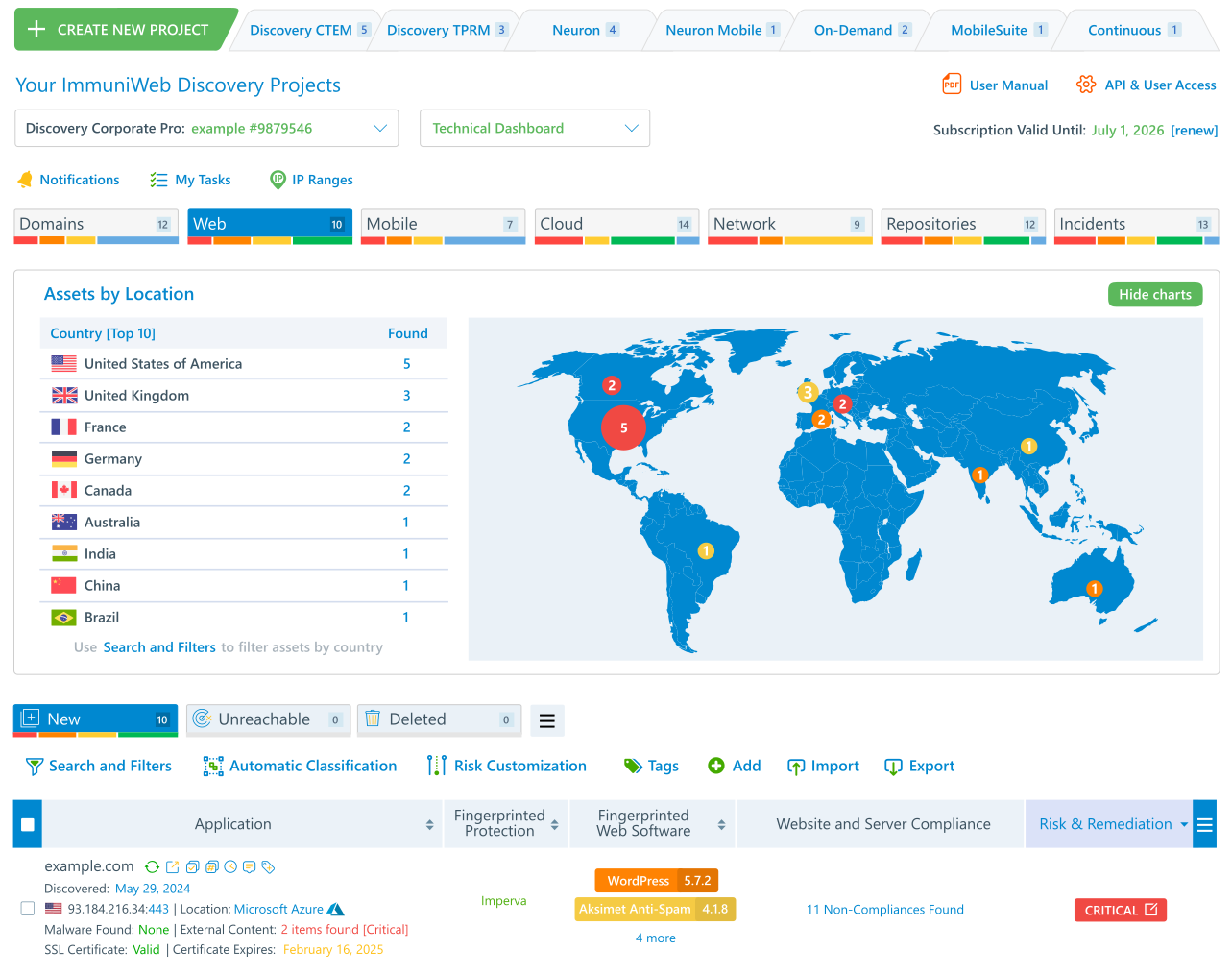
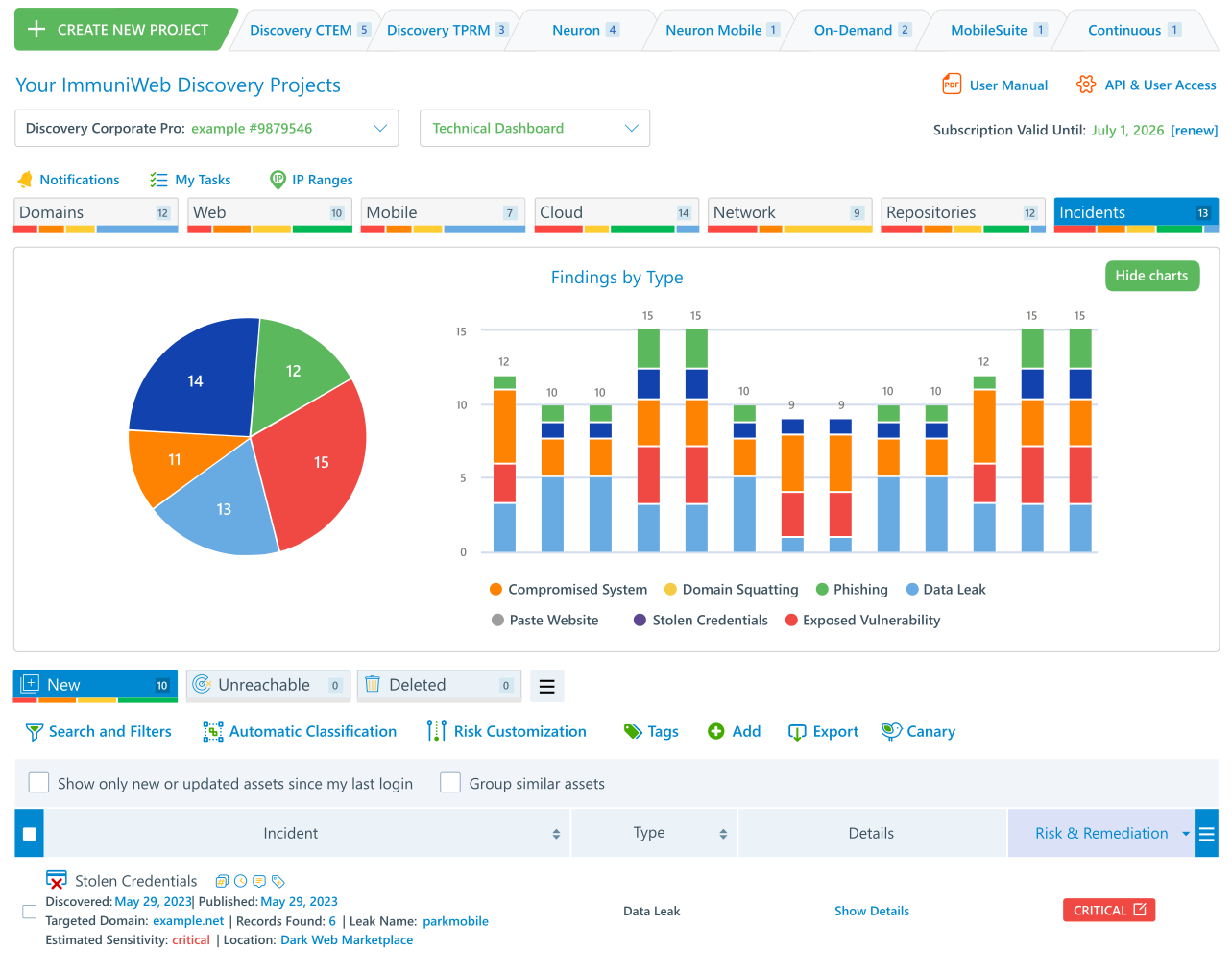
ImmuniWeb offers a comprehensive Cyber Threat Intelligence solution designed to empower organizations with actionable insights and a proactive defense posture against evolving cyber threats. One of the primary ways ImmuniWeb assists is through its real-time threat monitoring and dark web intelligence capabilities. The ImmuniWeb AI Platform continuously scours the clear, deep, and dark web, including hacking forums, underground marketplaces, and Telegram channels, for mentions of your company, its assets (domains, IPs, applications, brands), and even individual user credentials. This extensive monitoring allows organizations to detect early warnings of potential threats such as data breaches, phishing campaigns, brand impersonation, and even discussions about exploiting their systems, often before they materialize into full-blown attacks.
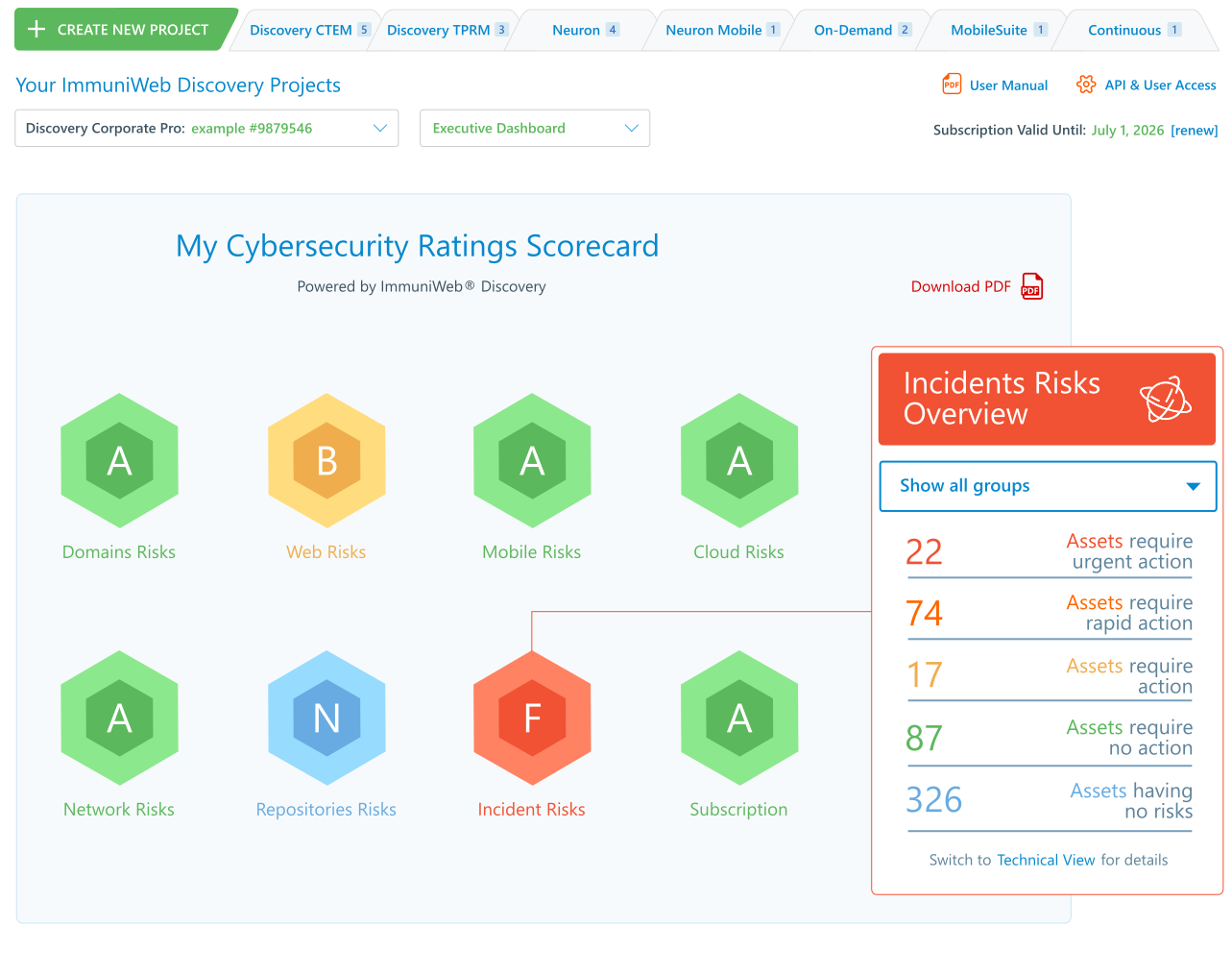
Furthermore, ImmuniWeb's CTI offering goes beyond simple data collection by providing intelligent threat correlation and risk prioritization. The platform leverages its award-winning Machine Learning technology to automatically remove duplicates and fakes, ensuring the reliability of the threat intelligence feeds. It then correlates discovered threats and indicators of compromise (IoCs) with your organization's specific assets and vulnerabilities. This contextualization helps security teams understand the true risk posed by a particular threat, enabling them to prioritize their security efforts and focus on the most critical exposures. This targeted approach prevents alert fatigue and ensures that resources are allocated effectively to address the most impactful risks.
Finally, ImmuniWeb facilitates the operationalization and dissemination of actionable intelligence. The platform dispatches instant alerts about new security incidents, data leaks, and cyber threats to relevant personnel in DFIR or legal teams, utilizing groups and automated incident classification for efficient response. Organizations can export findings into various formats or directly integrate them into their existing Security Information and Event Management (SIEM) systems via API, streamlining their security workflows. By providing tailored, real-time, and actionable intelligence, ImmuniWeb empowers organizations to improve their ability to detect and respond to threats, gain a deeper understanding of their threat landscape, and ultimately reduce the risk of successful cyberattacks and data breaches.
Disclaimer
The above-mentioned text does not constitute legal or investment advice and is provided “as is” without any warranty of any kind. We recommend talking to ImmuniWeb experts to get a better understanding of the subject matter.


















 API Penetration
 API Security
 Application Penetration
 Application Security
 Attack Surface
 Automated Penetration
 Cloud Penetration
 Cloud Security
 Continuous Automated
 Continuous Breach and
 Continuous Penetration
 Continuous Threat
 Cyber Threat
 Data Security Posture
 Dark Web
 Mobile Penetration
 Mobile Security
 Network Security
 Penetration
 Phishing Websites
 Third-Party Risk
 Threat-Led
 Web Penetration
 Web Security