







In today's connected business world, companies rarely work alone. They depend more and more on a wide group of others – like suppliers, contractors, and partners – to provide goods, services, and keep things running. These relationships can be good for business, but they also bring risks that can be hard to control.
That's where Third-Party Risk Management (TPRM) comes in. It's a way to find, measure, and manage the risks that come with working with outside companies. It makes sure that getting help from others doesn't lead to security problems, disruptions, or harm to a company's image.


What Is Third-Party Risk Management (TPRM)?

Third-Party Risk Management (TPRM) is a process for spotting and cutting down the risks that come from using outside companies. These risks can be many, including weak cybersecurity, data privacy issues, problems with how things run, failure to follow rules, a third-party having money troubles, or even damage to a company's reputation because of something a third party does or doesn't do. TPRM helps a company understand its network of third parties, how they use the company's data and systems, and what protections they have in place.
TPRM covers everything from checking out a third party at the start and negotiating a contract to keeping an eye on them and ending the relationship. It's ongoing, not just a one-time check. It changes as the third party's risks change, as new threats come up, and as rules change. The goal is to stay ahead of possible problems so that relying on outside providers doesn't turn into a major weakness.
Basically, TPRM means managing risk beyond a company's own walls. It recognizes that a chain is only as strong as its weakest part, and that weak part is often a third party that is trusted. By checking and managing these outside risks, companies can protect their data, keep things running smoothly, follow the rules, and protect their good name in an increasingly connected world.
Key Aspects of Third-Party Risk Management
Several things are very important for TPRM to work well. First, you need a good list of all your third parties. Companies must keep an accurate, updated list of all their third-party relationships, with details, such as what services they provide, what they have access to, and what data is shared. It's also important to sort these third parties based on how important they are to the business and how much risk they bring. This sorting allows companies to focus on the third parties that pose the biggest risks.
Second, it's very important to keep watching and checking on third parties. A one-time check when you start working with them isn't enough. A third party's security can change quickly because of new weaknesses, company takeovers, or changes in how they do things. Good TPRM means always watching third parties for changes in their security, news of any data breaches, actions by regulators, and whether they're keeping their promises. This constant watching makes sure that risks are found and dealt with right away.
Finally, contracts must manage risk, and it must be clear who is in charge. The TPRM process should end with strong contracts that spell out security needs, data protection rules, steps to take if there's a problem, rights to check on things, and who is responsible if there's a security breach or a service problem. It's also important to have clear roles within the company for managing third-party risks. This means having people in charge of risk and cooperation between different teams so that risks are handled consistently.
Why Is Third-Party Risk Management Important?
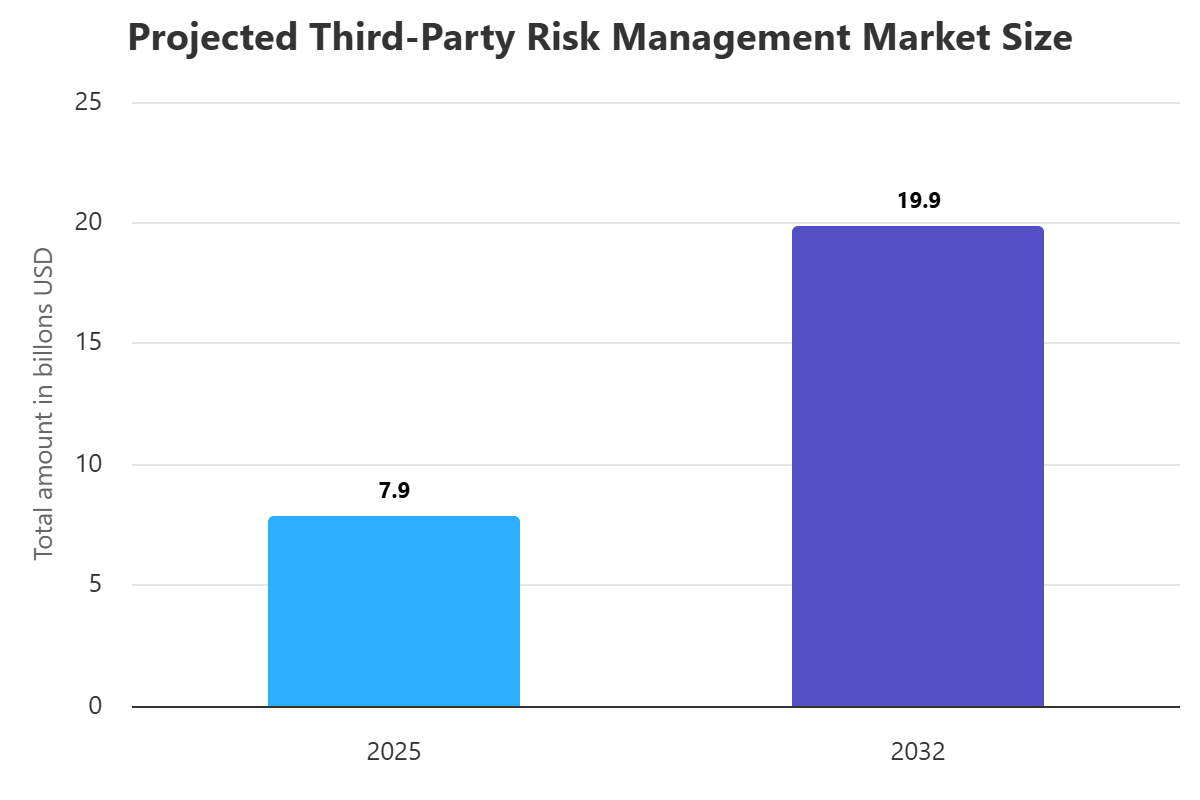
Third-Party Risk Management is very important now because supply chain attacks are happening more often and causing more damage. Companies see that their vulnerability reaches far beyond their own systems and into the systems of their third parties. One weak spot in a third party can put a company's data, systems, and reputation at risk. Without good TPRM, companies are working with risks they can't see.
TPRM is also needed to follow the rules and avoid big penalties. More and more rules and data privacy laws hold companies responsible for how secure their third parties are. Regulators want companies to check on their third parties and keep watching them to make sure data is safe. Not having good TPRM can lead to large fines, legal problems, and damage to a company's reputation.
Besides the money and legal side, good TPRM is needed to keep things running smoothly and protect a company's brand. Many third parties provide services that are key to a company's operations. A problem with a third party can disrupt operations, affecting customer service, product delivery, and the business as a whole. By managing these risks, companies can avoid problems and keep their promises. Also, showing that you're serious about securing the whole supply chain builds trust with customers, partners, and investors, which is very valuable for long-term success.
How Does Third-Party Risk Management Work?
Third-Party Risk Management usually happens in stages, from starting a relationship to watching it and ending it. The process starts with finding third parties and figuring out the risks they bring. Companies need to find all the third parties they work with or might work with. For each one, they need to figure out how much risk they bring, based on what they do, what data they'll have access to, and how important they are to the business. This helps sort the third parties and decide how much checking they need.
Next comes checking them out and measuring the risks. For new third parties, this means checking their security, how well they follow the rules, their financial situation, and how well they can do the job before signing a contract. This often means sending questionnaires, asking for certifications, checking policies, and doing audits. The goal is to find any weak spots in the third party's security. For third parties that a company already works with, these checks are done regularly.
Finally, the TPRM process includes contracts, risk control, and ongoing monitoring. After finding risks, they're managed through contracts that require the third party to have specific security measures, keep up certain certifications, and follow incident response plans. After the contract is signed, it's important to keep watching, using tools like security ratings services, threat intelligence, and regular checks to track the third party's security and any changes in their risk. This makes sure that the agreed-upon security is maintained throughout the relationship, with clear steps for ending the relationship, including destroying data and taking away access.
Types of Third-Party Risk Management
While TPRM is often talked about as one thing, it includes managing different kinds of risks that come from third parties. Knowing these different kinds of risks allows for a more focused and better plan to lower those risks.
One of the main types is Cybersecurity Risk Management. This focuses on checking a third party's computer security to prevent data breaches, ransomware, and other cyber incidents that could start with their systems and affect the company they're working with. It means checking their security measures, how they manage weaknesses, how they respond to incidents, and how well they follow security rules. Because of how connected things are and how much data is shared, this is probably the most important and most often checked type of third-party risk.
Another important type is Operational Risk Management. This deals with the chance of a third-party causing problems with a company's operations by not providing services or products as expected. This could be because the third party is having money problems, doesn't have enough capacity, makes human errors, has facilities affected by natural disasters, or even has its own supply chain problems. Operational risk management involves checking a third party's plans for keeping the business running, their ability to recover from disasters, and how well they meet service agreements to make sure things keep running even if there are problems.
Besides cyber and operational risks, TPRM also includes Compliance and Regulatory Risk Management, which makes sure that third parties follow the laws, rules, and industry standards that apply to the company they're working with. If a third party doesn't follow the rules, the company can face legal and money penalties. Other types include Reputational Risk Management (reducing harm to a brand's image from a third party's actions), Financial Risk Management (checking a third party's financial stability to prevent service problems or money loss), and Strategic Risk Management (making sure third-party partnerships fit with and support the company's goals).
Components of Third-Party Risk Management
A good Third-Party Risk Management program is built on several important parts that together create a full plan for finding, measuring, and reducing risks.
The first part is a clear Governance Framework and Policy. This means having clear rules, processes, and a structure that says who is responsible for managing third-party risks across the company. It sets the company's risk tolerance, defines how third parties are sorted, and decides how often they're checked. This framework provides the main rules for the whole program.
Second, Due Diligence and Risk Assessment are very important. This includes the ways to collect information about third parties and then measure the risks that are found. This part also includes the tools used for these checks, such as risk scoring models, security rating platforms, and vulnerability scanning. How well this part works affects how well a company can find the real risks posed by third parties.
Finally, Continuous Monitoring and Reporting are needed for ongoing risk management. This makes sure that once a third party is approved and risks are lowered, their risk level is watched for any changes. This can mean getting alerts from security rating services, regularly checking performance, and getting threat information related to the third party's industry or the technologies they use. Reporting is also needed to give people clear information about the current risk situation, how well risks are being fixed, and how well the program is working overall.
Benefits of Third-Party Risk Management
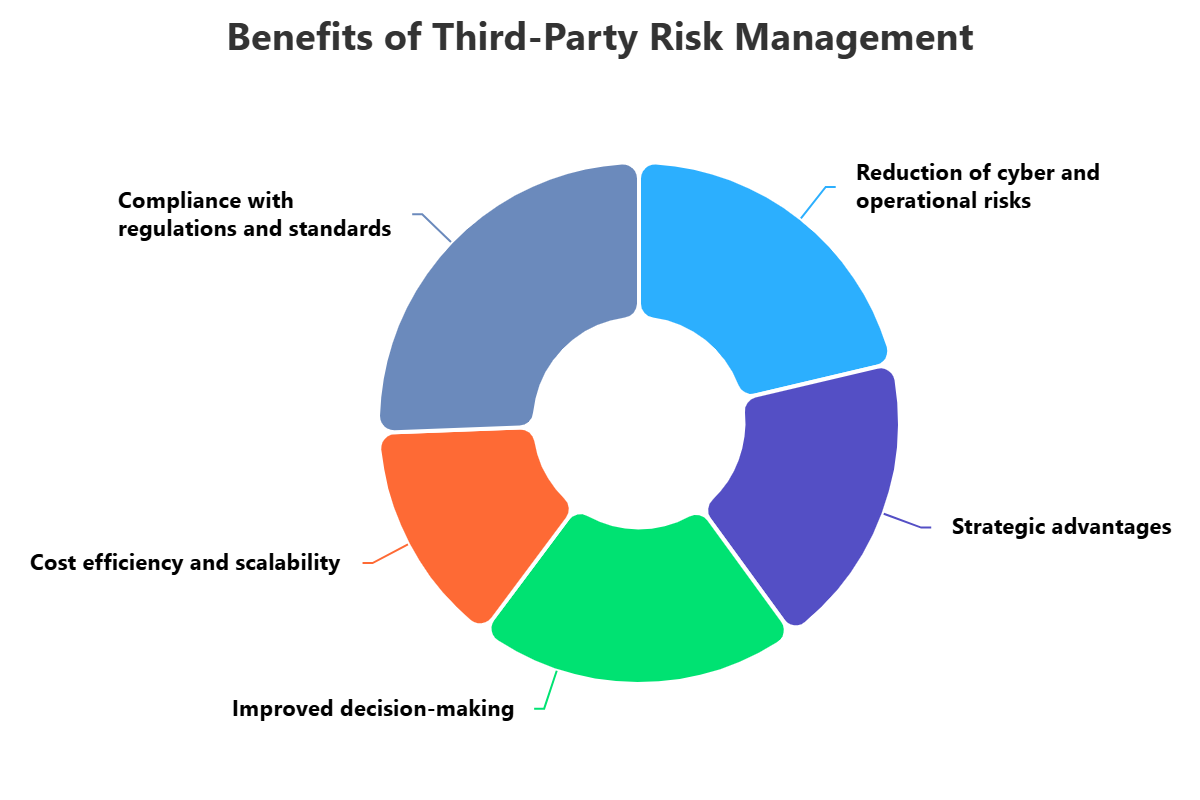
Having a good Third-Party Risk Management program has many benefits for a company's security, operations, and finances. One main benefit is that it lowers cyber and operational risks. By finding weak spots in third-party systems before they're taken advantage of, companies can prevent data breaches, reduce the impact of ransomware, and avoid costly service problems that start in their supply chain. This strengthens the company's security and keeps things running smoothly.
Also, good TPRM helps a company follow the rules and avoid fines. With more and more rules holding companies responsible for their third parties' security and data handling, a good TPRM program provides proof that the company is doing its part. This makes sure the company follows the rules and avoids the money penalties, legal problems, and reputation damage that come with not following the rules.
Besides lowering risks and following rules, TPRM also helps with making better decisions. By understanding third-party skills, security, and possible risks, companies can make better choices when picking new partners and negotiating contracts. This leads to better third-party relationships, better use of resources, and a stronger supply chain. In the end, a strong TPRM program builds more trust with customers, partners, and investors, which strengthens a company's brand and gives it an edge in the market.
Challenges of Third-Party Risk Management
Even though it's very important, having a good Third-Party Risk Management program can be hard. One of the biggest problems is the number and complexity of third parties. Large companies often work with hundreds or even thousands of third parties, each with different levels of access to data and systems. Checking and watching such a large group is hard, and it can lead to risks being missed and inconsistent risk management.
Another problem is getting good information from third parties. Third parties may not want to share security information or may not have the resources to fill out long questionnaires. Also, questionnaires only provide a snapshot in time and can become outdated quickly. The lack of standard ways to check and the different rules across different areas make it harder to gather and validate information.
Finally, not having enough resources and the need for special skills can be a problem for many companies. Building a TPRM team with the needed skills is expensive and hard because there aren't enough people with those skills. Also, the constant changes in cyber threats and rules require ongoing training. Combining TPRM processes with existing systems can also be hard, requiring investment in technology and skilled people.
Best Practices for Third-Party Risk Management
To build and maintain a good Third-Party Risk Management program, companies should follow some key practices. First, have a central and automated TPRM platform. Because of the size of third-party networks, manual processes can't keep up. Use a TPRM solution that can automate third-party approval, questionnaire distribution, risk scoring, proof collection, and ongoing monitoring. A central platform provides one place for all third-party risk data, improves visibility, and makes processes easier, improving efficiency and consistency.
Second, use a risk-based approach to third-party checking and monitoring. Not all third parties bring the same level of risk. Sort third parties based on how important they are to the business and how sensitive the data they access is. High-risk third parties should be checked more closely and monitored constantly. Third parties with less risk may need less checking. This approach makes sure that the most important risks get the most attention.
Finally, have good communication and cooperation across departments and with the third parties themselves. TPRM isn't just an IT or security job; it needs input from other departments. Have clear roles and ways to communicate. Also, work with third parties, clearly telling them security expectations, sharing threat information, and providing guidance. This can lead to better security, faster problem solving, and stronger supply chain partnerships.
How ImmuniWeb Can Help with Third-Party Risk Management?
Prevent supply chain attacks and mitigate third-party risks with ImmuniWeb® Discovery third-party risk management. The third-party risk management offering is bundled with our award-winning attack surface management technology and is also enhanced with Dark Web monitoring to ensure inclusive visibility of cybersecurity risks and threats that external suppliers may pose for your business. The third-party risk management is available both as a one-time assessment and continuous security monitoring for business-critical vendors.
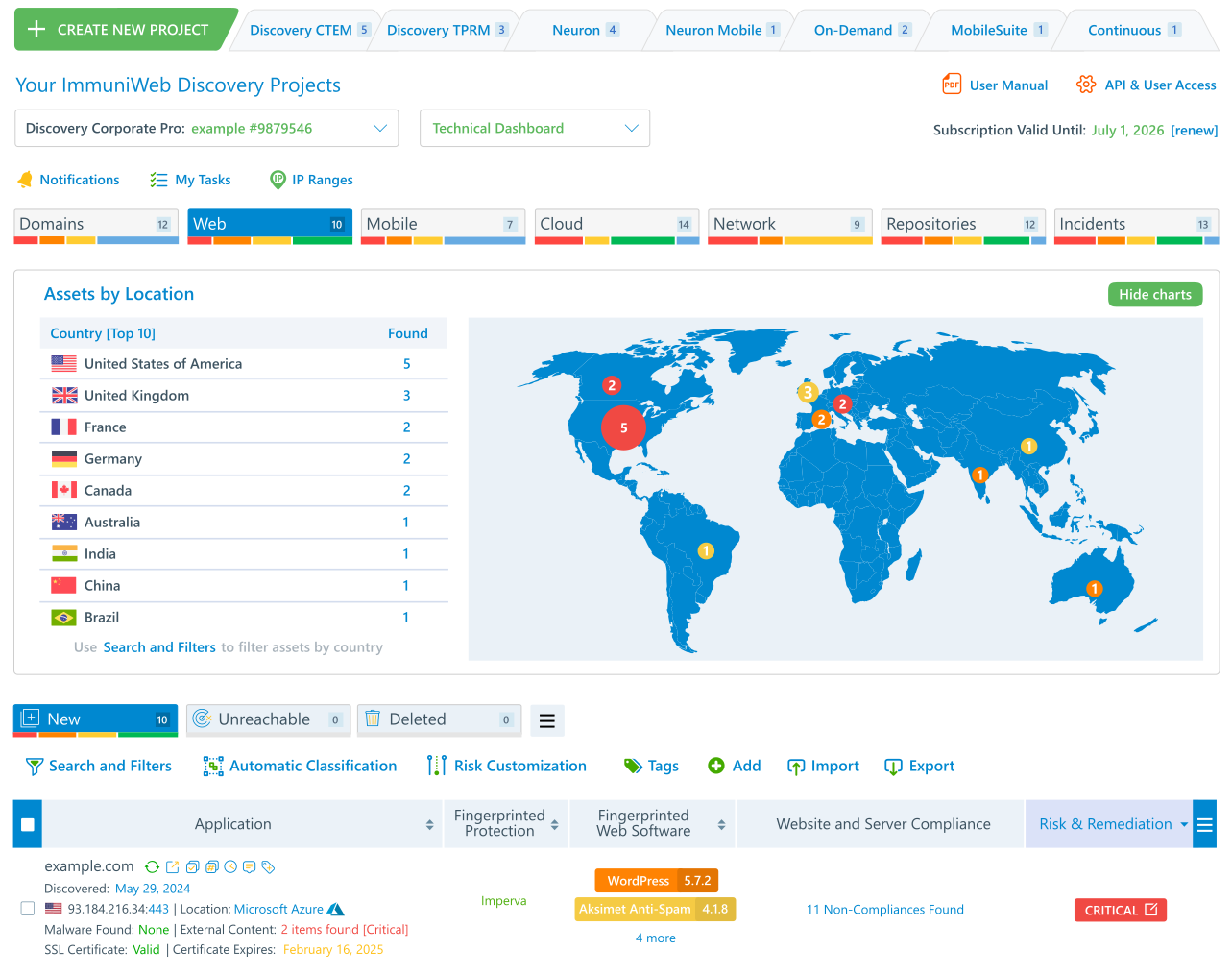
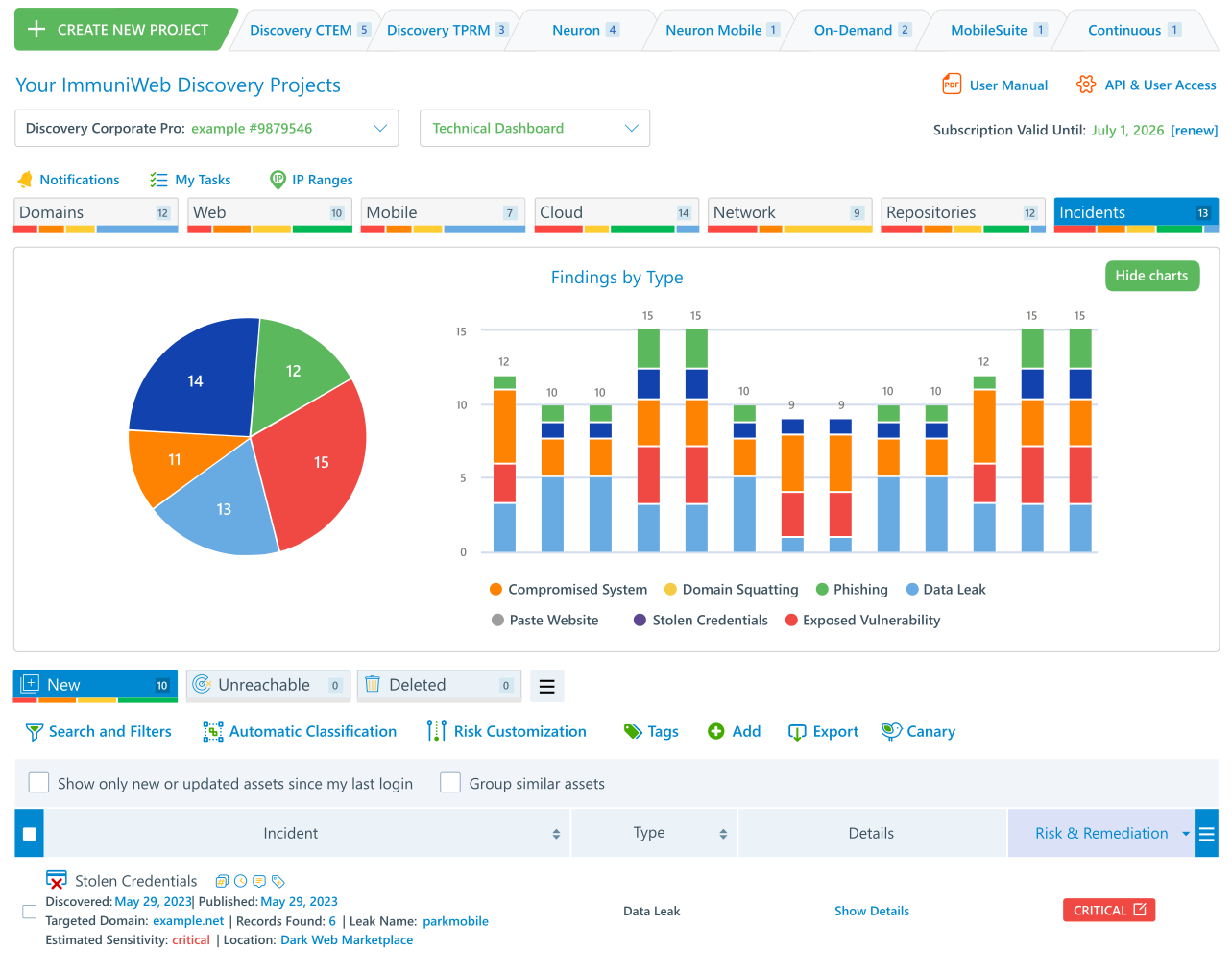
Just enter the name and website of your supplier or vendor to get a comprehensive snapshot of its external attack surface, misconfigured or vulnerable systems and applications, unprotected cloud storage, mentions on the Dark Web and data leaks, stolen credentials or compromised systems, ongoing phishing or domain squatting campaigns. The entire process is non-intrusive and production-safe, making it a perfect fit for your third-party risk management program. Our security analysts are available 24/7 may you have questions about the findings or need further assurance.
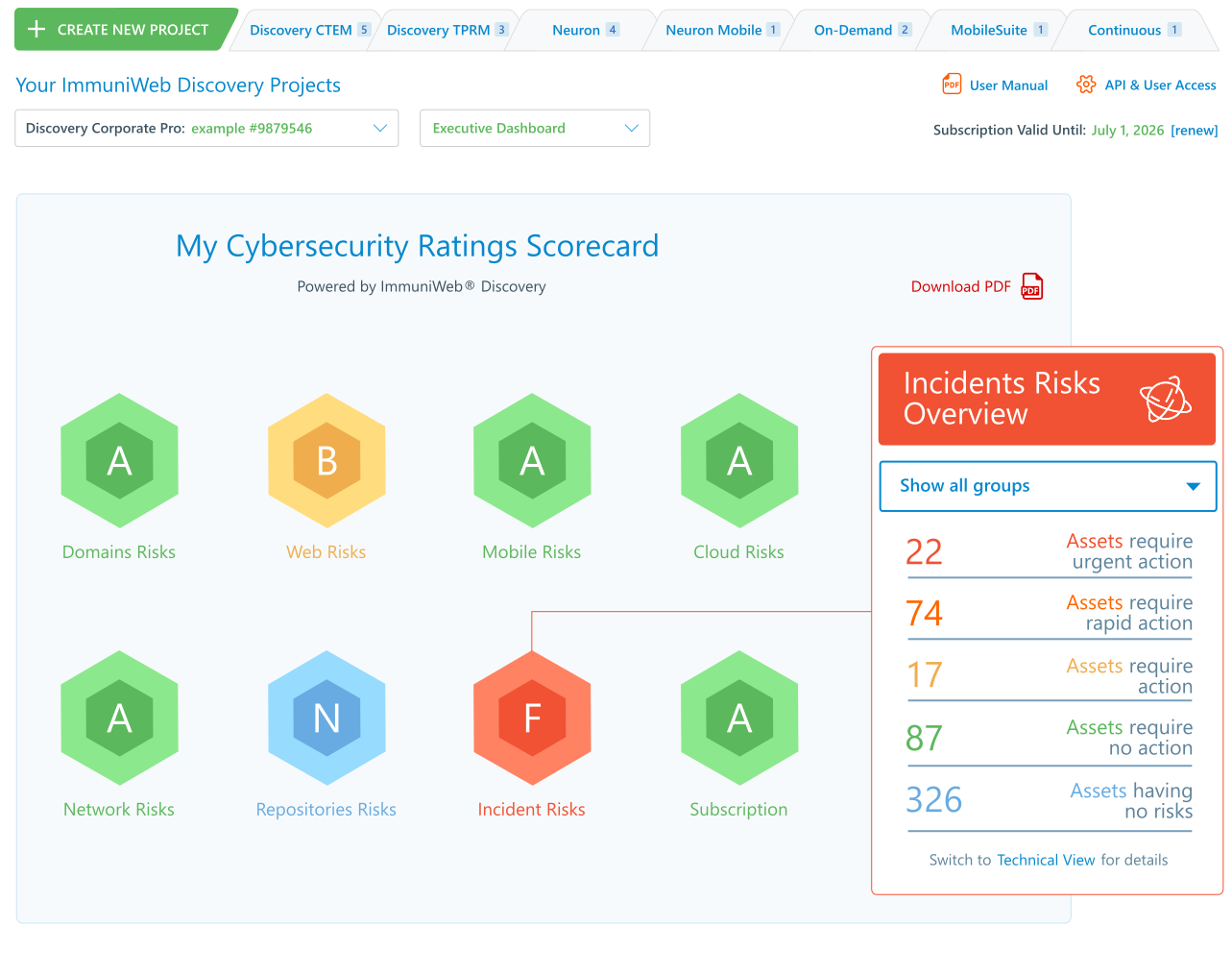
Get the risk-scored findings on the interactive dashboard where your vendors can also connect (with your permission) to see the details and rapidly remediate the problems. Prevent surging supply chain attacks by taking your vendor risk management program to the next level. Fulfill the compliance requirements to regularly audit third-party systems that process personal, financial or other regulated data of your company. Enjoy a fixed price per vendor regardless the number of IT assets, mentions on the Dark Web or number of security incidents.
Disclaimer
The above-mentioned text does not constitute legal or investment advice and is provided “as is” without any warranty of any kind. We recommend talking to ImmuniWeb experts to get a better understanding of the subject matter.















 API Penetration
 API Security
 Application Penetration
 Application Security
 Attack Surface
 Automated Penetration
 Cloud Penetration
 Cloud Security
 Continuous Automated
 Continuous Breach and
 Continuous Penetration
 Continuous Threat
 Cyber Threat
 Data Security Posture
 Dark Web
 Mobile Penetration
 Mobile Security
 Network Security
 Penetration
 Phishing Websites
 Third-Party Risk
 Threat-Led
 Web Penetration
 Web Security