

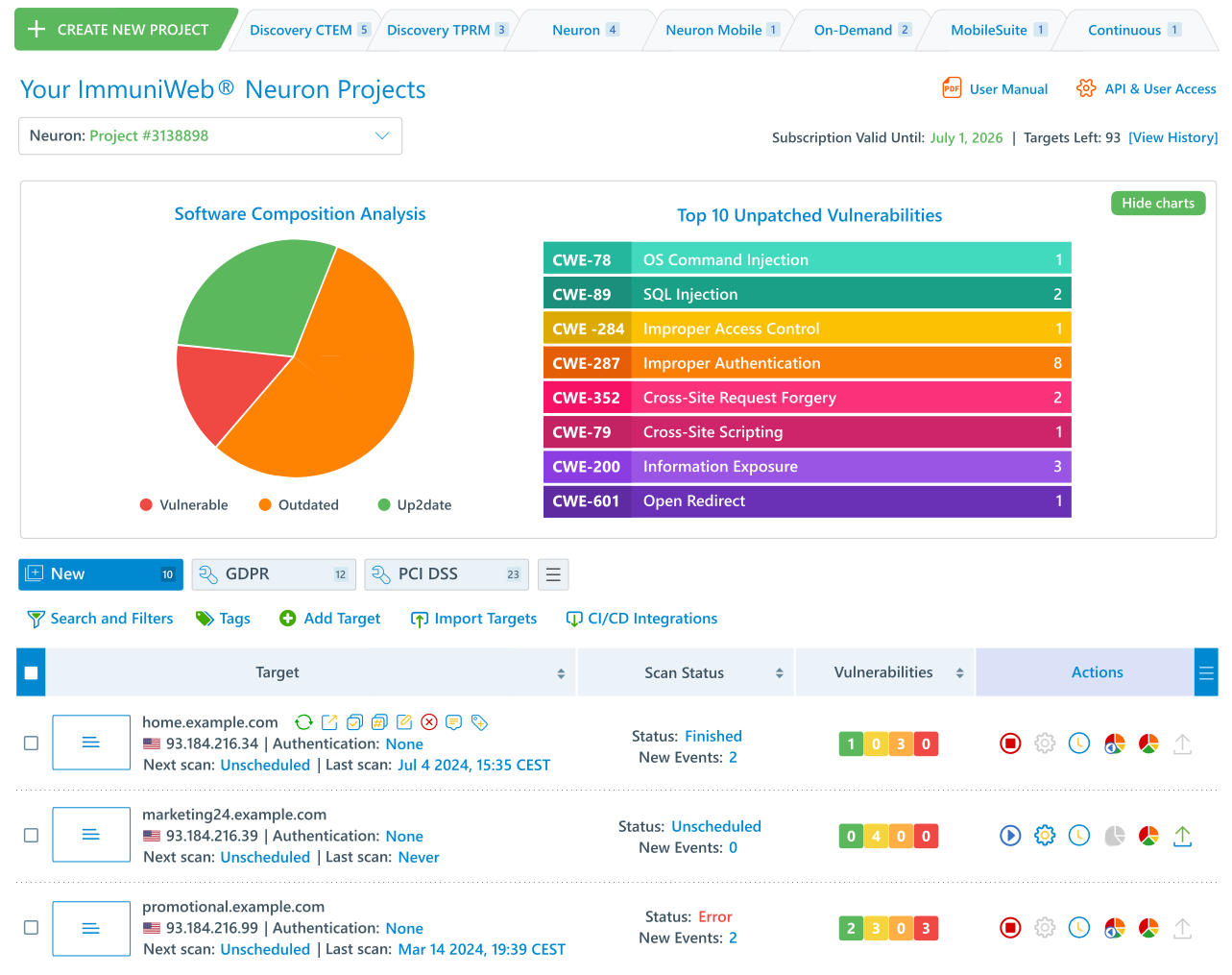
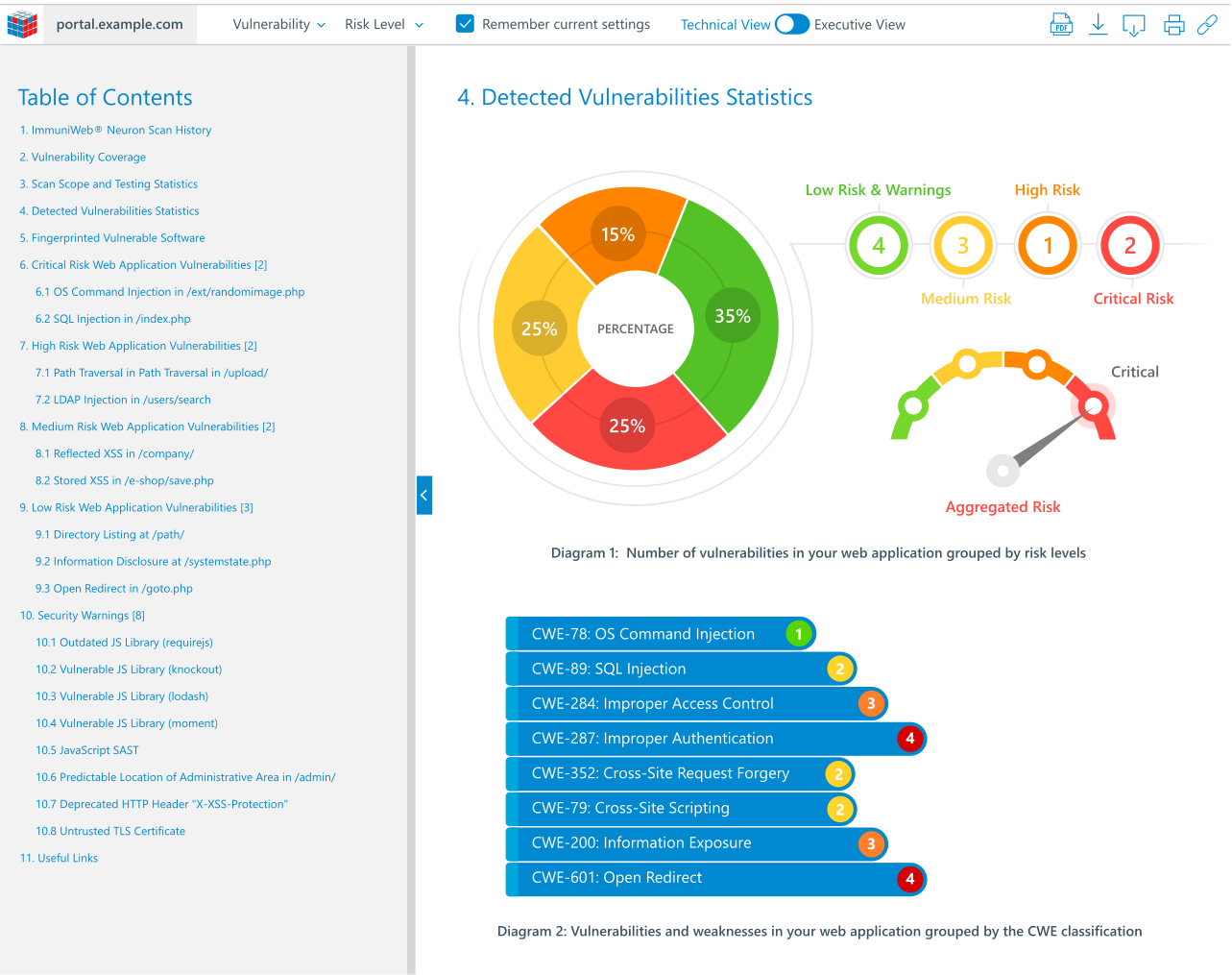
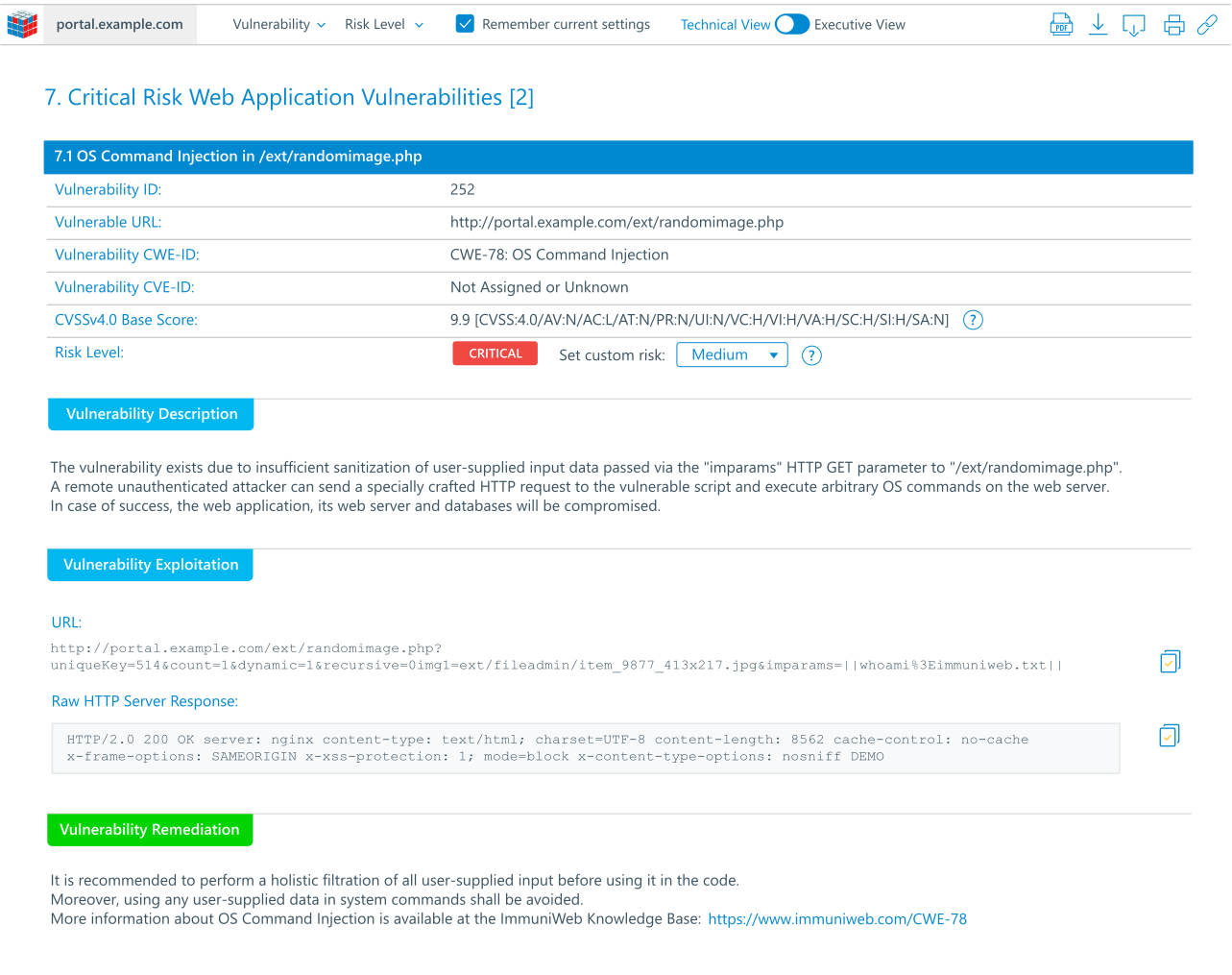






Modern web applications and APIs change daily, expanding the attack surface and increasing the risk of OWASP Top 10 vulnerabilities, security misconfigurations, and exposed admin interfaces. Manual testing alone cannot keep pace with agile releases and growing third-party dependencies.
ImmuniWeb® Neuron is an enterprise web vulnerability scanner delivering automated web security scanning and continuous vulnerability monitoring at scale. It combines AI-powered detection with validation workflows to reduce noise for security teams and accelerate remediation.
Run on-demand and scheduled scans, monitor web applications and APIs continuously, and export compliance-ready reports. Integrate scanning into CI/CD pipelines to support DevSecOps and audit readiness without slowing delivery.
What Is a Web Vulnerability Scanner?

A web vulnerability scanner is software that automatically tests web applications and APIs to identify security weaknesses before attackers exploit them. It performs automated web security scanning by crawling application routes, analyzing responses, and validating findings against known vulnerability patterns.
Enterprise scanners typically assess web applications, APIs, and modern front-end architectures such as SPAs. At a high level, most web vulnerability scanning relies on DAST (Dynamic Application Security Testing), which tests applications at runtime without requiring source code access.
Vulnerability scanning is not the same as penetration testing. Scanners provide continuous, scalable coverage and rapid detection, while penetration testing is a deeper, periodic, human-led assessment. In practice, organizations use both approaches together.
How Automated Web Security Scanning Works
Attack Surface Discovery
Automated scanning begins with attack surface discovery and continuous asset mapping. The scanner identifies reachable application endpoints, exposed services, and risk areas across environments, helping detect Shadow IT exposure and unmanaged external assets that often fall outside inventory.
Vulnerability Detection (OWASP Top 10)
The scanner tests for OWASP Top 10 vulnerability categories and common web application weaknesses by simulating attacker behavior and analyzing runtime responses. This includes web-layer vulnerabilities, API-related vulnerabilities, and selected business logic issues where observable through dynamic testing.
False-Positive Validation
High-volume scanning can create noise. ImmuniWeb uses AI-assisted validation and structured verification workflows to reduce false positives and help security teams focus on actionable findings. Where applicable, validation can be reinforced through expert review for high-severity cases.
Continuous Monitoring
Enterprise environments require continuous security scanning. Schedule recurrent scans, run on-demand assessments after releases, and receive alerts when new vulnerabilities appear. Integrate scanning into CI/CD pipelines to support DevSecOps workflows and shorten remediation cycles.
Vulnerabilities Detected by Web Application Scanners
Automated web application scanners can detect a wide range of vulnerabilities, including:
- SQL Injection: malicious input executed by a database due to unsafe query handling.
- Cross-Site Scripting (XSS): injected scripts executed in users’ browsers, enabling session theft and data exfiltration.
- Cross-Site Request Forgery (CSRF): unauthorized actions performed via a trusted user session.
- Server-Side Request Forgery (SSRF): forced server-side requests that can expose internal services or cloud metadata.
- Insecure APIs: weak input validation, broken access control, or unsafe API exposure.
- Security misconfigurations: insecure headers, permissive settings, debug modes, or outdated components.
- Exposed admin interfaces: publicly accessible admin panels and management endpoints.
- Authentication and authorization flaws: weak authentication flows and broken access control enabling privilege misuse.
Online Web Security Scanner for Websites and Applications
An online web security scanner is delivered as a SaaS service, enabling automated vulnerability scanning without local installation or infrastructure overhead. This model supports cloud-native scalability, centralized management, and fast onboarding across large enterprise environments.
ImmuniWeb® Neuron supports multi-tenant enterprise use cases, provides API integrations, and enables CI/CD pipeline integration to automate web and API security testing. This approach helps security teams scale scanning across multiple applications while maintaining consistent reporting, access control, and governance.
Web Security Scanning vs Penetration Testing
Automated scanning and penetration testing serve different goals and work best together. Scanning provides continuous coverage and rapid detection, while penetration testing delivers deeper human-led validation and exploitation-driven insights.
| Automated Scanner | Penetration Testing |
|---|---|
| Continuous | Periodic |
| Scalable across many apps | Manual, expert-led |
| AI-powered detection | Human-driven methodology |
| Fast feedback for DevSecOps | Deep validation and exploitation |
| Best for continuous monitoring | Best for high-risk scenarios |
DAST and Dynamic Application Security Testing Explained
DAST (Dynamic Application Security Testing) is a runtime testing approach that evaluates web applications from the outside by interacting with the application the way an attacker would. It is a black-box methodology that does not require access to source code and can be applied to modern web apps and APIs.
DAST helps identify vulnerabilities that manifest during execution, such as broken authentication flows, security misconfigurations, and input validation issues. Compared to SAST (Static Application Security Testing), which analyzes code without running it, DAST provides practical, environment-aware findings aligned with real-world attack paths.
For enterprises, DAST is critical because it scales across production-like environments and supports continuous vulnerability monitoring as applications evolve.
Why Enterprise Organizations Need Continuous Web Vulnerability Scanning
Enterprise organizations face expanding attack surfaces driven by agile releases, multicloud deployments, and third-party dependencies. Shadow IT risks and unmanaged external assets create exposure that is difficult to control without continuous scanning.
Continuous web vulnerability scanning reduces risk by detecting OWASP Top 10 issues early, supporting governance and audit readiness, and enabling consistent security controls across environments. It also helps meet regulatory and compliance requirements, including frameworks commonly used in enterprises such as PCI DSS, SOC 2, and ISO 27001.
By integrating automated scanning into DevSecOps workflows, organizations shorten feedback loops, reduce remediation costs, and maintain security posture without slowing delivery.
Web Security Scanning with ImmuniWeb® Neuron
ImmuniWeb® Neuron is an enterprise web application vulnerability scanner designed for automated and continuous security scanning. It provides broad vulnerability detection coverage aligned with OWASP Top 10 and supports scanning of web applications and APIs at scale.
Key capabilities include:
- AI-powered vulnerability detection with noise reduction workflows
- Continuous scanning with scheduled and on-demand assessments
- Authentication scanning support (including SSO and MFA where applicable)
- Compliance-ready reporting and exportable evidence for audits
- Integrations for CI/CD and DevSecOps automation
- Role-based access control and team-ready dashboard workflows
If “zero false positives” SLA is applicable, keep it as one concise line here. Do not expand the claim.

Frequently Asked Questions
Trusted by 1,000+ Global Customers
Trusted by 1,000+ global customers, ImmuniWeb helps enterprises reduce cyber risk and improve application security posture with scalable, automated security testing.
Try Web Security Scanning
See how ImmuniWeb® Neuron detects OWASP Top 10 risks and enables continuous web vulnerability scanning for enterprise environments. Request a demo, contact our security experts, or start automated scanning to improve security posture and support compliance requirements.
Disclaimer
The above-mentioned text does not constitute legal or investment advice and is provided “as is” without any warranty of any kind. We recommend talking to ImmuniWeb experts to get a better understanding of the subject matter.


















 API Penetration
 API Security
 Application Penetration
 Application Security
 Attack Surface
 Automated Penetration
 Cloud Penetration
 Cloud Security
 Continuous Automated
 Continuous Breach and
 Continuous Penetration
 Continuous Threat
 Cyber Threat
 Data Security Posture
 Dark Web
 Mobile Penetration
 Mobile Security
 Network Security
 Penetration
 Phishing Websites
 Third-Party Risk
 Threat-Led
 Web Penetration
 Web Security