

UAE Information Assurance Regulation (1.1) Compliance
The UAE Information Assurance Regulation (1.1) establishes cybersecurity and data protection standards for federal
entities, mandating risk management, incident response, and secure handling of sensitive
information to safeguard national digital infrastructure.

In the rapidly evolving digital landscape, the security and resilience of information infrastructure are paramount for national stability and economic growth. The United Arab Emirates has proactively addressed this imperative with the UAE Information Assurance (IA) Regulation (Version 1.1). Developed by the Telecommunications and Digital Government Regulatory Authority (TDRA), and overseen by the UAE Signals Intelligence Agency (SIA, formerly NESA), this regulation sets forth a comprehensive framework of management and technical controls designed to protect the nation's critical information assets.
Unlike data privacy laws that focus on personal data rights, the UAE IA Regulation takes a broader approach, aiming to establish a uniform cybersecurity standard across industries, enhance national security, and ensure the continuity of essential services. For any organization designated as "critical" or handling sensitive information within the UAE, understanding and meticulously implementing these regulations is a non-negotiable requirement for operational integrity and national security.
This article provides a detailed examination of the UAE IA Regulation (1.1), emphasizing its technical requirements and outlining practical steps for achieving and maintaining compliance.


Overview of UAE Information Assurance Regulation (1.1)
The UAE Information Assurance (IA) Regulation (Version 1.1), often referred to as the NESA or SIA standard, is a crucial component of the UAE's National Cyber Security Strategy (NCSS). Its primary objective is to elevate the minimum level of information assurance across all relevant entities in the UAE, fostering a trusted and resilient digital environment.
The regulation is structured around 15 information security areas, divided into Management Controls (6 families) and Technical Controls (9 families), encompassing a total of 188 security controls. This holistic approach acknowledges that information assurance is not solely an IT function but requires an integrated strategy involving people, processes, and technology across the entire lifecycle of information.
A key aspect of the UAE IA Regulation is its risk-based approach. While certain controls are "Always Applicable" and must be implemented by all in-scope entities, others are dependent on the outcome of a thorough risk assessment. This allows organizations to tailor their security measures to the specific risks and criticality of their assets, ensuring efficient resource allocation and effective risk mitigation.
The regulation also emphasizes a lifecycle approach to information assurance, comprising five key stages:
- Understanding: Identifying information security requirements and developing policies and objectives.
- Risk Management: Conducting risk assessments, determining appropriate risk treatment activities, and implementing controls.
- Operations: Defining and operating security measures to manage risks within the business context.
- Monitoring and Testing: Continuously monitoring and testing information security processes and control effectiveness.
- Continuous Improvement: Ensuring ongoing enhancement based on customized goals and evolving threats.

Key Aspects of UAE Information Assurance Regulation (1.1) Compliance
Compliance with the UAE IA Regulation (1.1) involves the rigorous implementation of its 188 controls, with a significant emphasis on technical safeguards. Here are some key aspects:
- Risk Management Framework (Management Control): Organizations must establish a structured risk management process.
- Technical Detail: Implement methodologies for identifying critical information assets, assessing their value and sensitivity, identifying threats and vulnerabilities (e.g., through vulnerability scanning, penetration testing), estimating likelihood and impact, evaluating risks against defined criteria, and treating risks through technical controls or other mitigation strategies. Tools for risk registers, risk scoring, and GRC platforms are essential.
- Asset Management (Management Control): Maintain a comprehensive inventory of all information assets.
- Technical Detail: Implement asset discovery tools to automatically identify and classify hardware, software, network devices, and data (including shadow IT). Maintain up-to-date configuration baselines for all assets. Ensure secure disposal of assets containing sensitive information (e.g., data sanitization, physical destruction).
- Access Control (Technical Control - 15 sub-controls): Ensure only authorized individuals and processes have access to information and systems.
- Technical Detail: Implement robust Identity and Access Management (IAM) systems. Enforce Multi-Factor Authentication (MFA) for all users, especially for administrative and privileged accounts. Implement Role-Based Access Control (RBAC) and the principle of least privilege (PoLP). Deploy Privileged Access Management (PAM) solutions to secure and monitor privileged accounts. Implement session management controls. Ensure strong password policies and regular password rotation.
- Cryptography (Technical Control - 8 sub-controls): Protect the confidentiality and integrity of information using cryptographic techniques.
- Technical Detail: Mandate strong encryption algorithms (e.g., AES-256) for data at rest (database encryption, file system encryption) and data in transit (e.g., TLS 1.2+ for web traffic, VPNs). Securely manage encryption keys (e.g., Hardware Security Modules - HSMs, Key Management Systems - KMS). Ensure cryptographic modules meet approved standards.
- Communication Security (Technical Control - 12 sub-controls): Protect information communicated over networks.
- Technical Detail: Implement network segmentation, firewalls (including Web Application Firewalls - WAFs), Intrusion Detection Systems (IDS), and Intrusion Prevention Systems (IPS). Secure network configurations and protocols. Implement secure remote access solutions (e.g., VPNs with strong encryption and MFA). Protect against Denial of Service (DoS) attacks.
- System Acquisition, Development and Maintenance (Technical Control - 18 sub-controls): Integrate security throughout the system lifecycle.
- Technical Detail: Implement a Secure Software Development Lifecycle (SSDLC). Conduct security requirements engineering. Perform static application security testing (SAST), dynamic application security testing (DAST), and interactive application security testing (IAST). Conduct code reviews. Implement secure coding guidelines (e.g., OWASP Top 10). Ensure proper patch management and vulnerability management for all software.
- Operations Security (Technical Control - 19 sub-controls): Maintain operational control of information systems.
- Technical Detail: Implement comprehensive logging and monitoring of all security-relevant events. Deploy Security Information and Event Management (SIEM) systems for centralized log collection, correlation, and real-time alerting. Conduct regular vulnerability assessments and penetration tests. Implement robust backup and recovery procedures. Ensure anti-malware protection is in place and regularly updated.
- Incident Management (Management Control - 8 sub-controls): Establish procedures for managing security incidents.
- Technical Detail: Develop a detailed incident response plan that outlines detection, analysis, containment, eradication, recovery, and post-incident review steps. Regularly test the plan through simulated incidents. Ensure forensic capabilities are available to investigate breaches. Secure communication channels for incident reporting.
- Business Continuity Management (Management Control - 6 sub-controls): Ensure the continuity of business operations during disruptive events.
- Technical Detail: Develop and regularly test business continuity and disaster recovery plans that include recovery point objectives (RPO) and recovery time objectives (RTO) for critical information systems and data. Implement redundant systems and data replication where necessary.
- Physical and Environmental Security (Technical Control - 10 sub-controls): Protect physical access to information assets.
- Technical Detail: Implement physical access controls (e.g., biometric scanners, access cards), CCTV monitoring, environmental controls (temperature, humidity), and fire suppression systems for data centers and server rooms.
Why is UAE Information Assurance Regulation (1.1) Compliance Important?
Compliance with the UAE IA Regulation is critical for several profound reasons, extending beyond mere legal adherence:
- National Security Imperative: The regulation is a cornerstone of the UAE's National Cyber Security Strategy. By securing critical information infrastructure, it directly contributes to the nation's stability, economic resilience, and overall defense against sophisticated cyber threats.
- Mitigation of Cyber Risks: It provides a structured framework for identifying, assessing, and mitigating cyber risks, helping organizations proactively defend against a wide array of threats, including data breaches, ransomware, intellectual property theft, and operational disruptions.
- Enhanced Digital Trust and Confidence: Adherence to the IA Regulation builds trust among citizens, businesses, and international partners. A secure digital environment encourages investment, innovation, and the adoption of digital services.
- Business Continuity and Operational Resilience: By mandating robust security controls, incident response plans, and business continuity measures, the regulation helps organizations maintain essential services and recover swiftly from cyber incidents, minimizing downtime and financial losses.
- Avoidance of Penalties and Sanctions: While specific public penalties under the IA Regulation may not be as explicitly detailed as in the PDPL, non-compliance can lead to severe consequences. This can include increased scrutiny from regulators (TDRA, SIA), mandatory expensive audits, the imposition of corrective actions, and in critical cases, suspension of operations. Failure to protect information, especially in critical sectors, can also lead to reputational damage, loss of contracts, and potentially legal liabilities under other related laws.
- Alignment with International Standards: The IA Regulation's risk-based approach and control families align with widely recognized international cybersecurity frameworks (e.g., ISO 27001, NIST CSF), facilitating cross-border collaborations and demonstrating a commitment to global best practices.

Who Needs to Comply with UAE Information Assurance Regulation (1.1)?
The UAE IA Regulation (1.1) primarily targets:
- All UAE Government Entities: This includes federal and local government bodies.
- Critical Entities: This encompasses organizations identified by the TDRA (and formerly NESA/SIA) as operating within the Critical National Infrastructure (CNI) sectors. These sectors typically include:
- Telecommunications
- Energy (Oil & Gas, Utilities)
- Healthcare
- Transportation
- Financial Services
- Defense and Security
- Water
- Food
While mandatory for these designated entities, the TDRA strongly recommends all other entities in the UAE adopt these standards on a voluntary basis. This encourages a nationwide uplift in cybersecurity posture and fosters a collective approach to defending the digital landscape. Organizations handling sensitive data, even if not formally designated as "critical," would benefit immensely from aligning with the IA Regulation's controls.
UAE Information Assurance Regulation (1.1) vs GDPR Comparison
It's important to clarify that the UAE Information Assurance Regulation (1.1) and the GDPR serve fundamentally different, though complementary, purposes:
- UAE IA Regulation (1.1): Focuses on information security and resilience of critical information infrastructure and sensitive data, aiming to protect national security and ensure the continuity of essential services. It is an information security standard.
- GDPR: Focuses on personal data protection and privacy rights of individuals. It is a data privacy regulation.
While they both aim to protect information, their scope, objectives, and specific requirements differ significantly:
| Feature | UAE IA Regulation (1.1) | GDPR (General Data Protection Regulation) |
|---|---|---|
| Primary Focus | Information security, cybersecurity, and resilience of critical information infrastructure. | Protection of personal data and privacy rights of individuals. |
| Scope of Data | All information assets (physical, electronic), with emphasis on critical and sensitive data. | "Personal data" (identifiable information about an individual) and "special categories of personal data." |
| Governing Principles | Confidentiality, Integrity, Availability (CIA triad), Risk Management, Continuous Improvement. | Lawfulness, Fairness, Transparency, Purpose Limitation, Data Minimization, Accuracy, Storage Limitation, Integrity & Confidentiality, Accountability. |
| Key Compliance Elements | 15 control families (Management & Technical), 188 controls, Risk-Based Approach, Lifecycle Management. | Legal bases for processing, Data Subject Rights, DPIAs, DPO, Cross-border transfer rules, Data Breach Notification. |
| Technical Controls | Highly prescriptive on technical security measures (Access Control, Cryptography, Network Security, SSDLC, etc.). | General requirement for "appropriate technical and organizational measures" for security. Less prescriptive on specific technical controls. |
| Extraterritoriality | Applies primarily to entities within the UAE or critical entities related to UAE infrastructure. | Broad extraterritorial reach for processing data of EU residents, regardless of entity location. |
| Regulatory Body | TDRA / SIA (formerly NESA). | Supervisory Authorities in each EU member state, coordinated by the European Data Protection Board (EDPB). |
| Penalties | Administrative actions, operational suspension, potential legal/criminal liability (less specific fines for non-compliance compared to PDPL). | Significant financial penalties (up to €20M or 4% of global annual turnover). |
Technical Implications of the Comparison:
While GDPR emphasizes data privacy by design, the UAE IA Regulation emphasizes data security by design and by default. An organization fully compliant with GDPR's technical security measures for personal data would likely have a strong foundation for many of the UAE IA Regulation's technical controls, especially those related to confidentiality, integrity, and availability. However, the IA Regulation's focus on critical infrastructure and national security might introduce additional requirements for operational technology (OT) security, critical system redundancy, and specific government-mandated security solutions or reporting, which are not directly covered by GDPR. Compliance with both requires a layered and integrated security strategy.
How to Ensure UAE Information Assurance Regulation (1.1) Compliance?
Achieving and maintaining compliance with the UAE IA Regulation is an ongoing process that requires deep technical expertise and organizational commitment:
- Understand Your Scope and Criticality:
- Technical Detail: Identify all information assets, systems, networks, and data that fall within the scope of the regulation. This includes IT (Information Technology) and OT (Operational Technology) systems for critical infrastructure entities. Determine the criticality of each asset to the organization's mission and to national services.
- Tooling: Asset management systems, network discovery tools, ICS/SCADA network mapping tools.
- Conduct a Comprehensive Risk Assessment (Mandatory):
- Technical Detail: Perform a detailed risk assessment as per the IA Regulation's methodology. This involves identifying threats (e.g., cyberattacks, insider threats, natural disasters), vulnerabilities (e.g., unpatched software, misconfigurations), and their potential impact on the Confidentiality, Integrity, and Availability (CIA) of information assets. Prioritize risks based on likelihood and impact. This will determine which of the "risk-dependent" controls are applicable.
- Tooling: GRC platforms with built-in risk assessment modules, vulnerability scanners, penetration testing tools.
- Implement Management Controls:
- Technical Detail: Develop comprehensive information security policies, procedures, and guidelines (e.g., acceptable use policies, incident response plans, data classification policies, secure configuration standards). Establish clear roles and responsibilities for information security. Implement a security awareness and training program for all employees.
- Tooling: Document management systems, learning management systems (LMS).
- Implement Technical Controls (The Core):
- Access Control:
- Technical Detail: Centralized IAM with MFA, RBAC, PoLP, PAM for privileged accounts. Automated access reviews. Secure remote access with VPNs and strong authentication.
- Tooling: Identity Providers (IdP), PAM solutions, VPNs, directory services.
- Cryptography:
- Technical Detail: Full disk encryption, database encryption, email encryption. TLS/SSL for all web traffic. Secure key management system.
- Tooling: Encryption software, HSMs, KMS.
- Network Security:
- Technical Detail: Next-generation firewalls, IDS/IPS, WAFs, DDoS protection. Network segmentation. Secure configurations for routers, switches, and wireless networks. Regular network vulnerability assessments.
- Tooling: Network security appliances, network vulnerability scanners.
- System Acquisition, Development, and Maintenance:
- Technical Detail: Integrate security into SDLC (e.g., secure coding standards, security testing at each phase). Regular patch management, vulnerability scanning of applications and infrastructure. Configuration management to prevent unauthorized changes.
- Tooling: SAST/DAST tools, vulnerability management platforms, patch management systems, configuration management databases (CMDB).
- Operations Security:
- Technical Detail: Centralized logging, SIEM for real-time threat detection and alerting. Anti-malware and Endpoint Detection and Response (EDR) solutions. Regular security audits. Incident response automation.
- Tooling: SIEM, EDR, SOAR (Security Orchestration, Automation, and Response) platforms.
- Physical and Environmental Security:
- Technical Detail: Access control systems for physical premises, environmental monitoring systems (temperature, humidity, fire), CCTV, and alarm systems.
- Tooling: Physical security systems.
- Access Control:
- Establish Robust Incident Management and Business Continuity:
- Technical Detail: Develop and test a detailed incident response plan with clear procedures for detection, analysis, containment, eradication, recovery, and post-incident review. Ensure data backup and disaster recovery capabilities are robust, regularly tested, and meet RPO/RTO objectives.
- Tooling: Incident management platforms, backup and recovery software, BCDR testing tools.
- Continuous Monitoring, Auditing, and Improvement:
- Technical Detail: Information assurance is a continuous cycle. Regularly monitor security controls, perform internal and external audits, conduct penetration tests, and review security policies and procedures. Adapt to new threats and technological changes.
- Tooling: GRC platforms for ongoing compliance monitoring, automated security assessment tools, audit management software.
Consequences of Non-Compliance
While the UAE IA Regulation (1.1) doesn't publicly list specific financial penalties in the same way as the PDPL or GDPR, non-compliance can still lead to severe repercussions for in-scope entities:
- Increased Regulatory Scrutiny: Non-compliant organizations will face intensified oversight from the TDRA and SIA, potentially leading to mandatory audits, corrective action plans, and closer monitoring.
- Operational Disruption and Suspension: For critical entities, persistent non-compliance can result in direct intervention, including orders to suspend operations until compliance is achieved. This can have devastating economic and social impacts.
- Reputational Damage: Failure to protect critical information assets or a public cyber incident linked to non-compliance can severely damage an organization's standing, leading to loss of public trust, stakeholder confidence, and potentially business opportunities.
- Legal and Criminal Liabilities: Depending on the nature and severity of the security lapse, and if it leads to a cybercrime or significant harm, individuals and organizations could face legal charges and criminal prosecution under existing UAE cybercrime laws.
- Financial Losses: Beyond direct fines, non-compliance increases the risk of successful cyberattacks, leading to significant financial losses from incident response, data recovery, business interruption, and potential lawsuits.
- Contractual Implications: Organizations may lose government contracts or face penalties if their non-compliance impacts their ability to deliver critical services.
How ImmuniWeb Helps Comply with UAE Information Assurance Regulation (1.1)
The award-winning ImmuniWeb® AI Platform offers robust technical capabilities that directly support organizations in achieving and maintaining compliance with the stringent technical controls mandated by the UAE Information Assurance Regulation (1.1), particularly those related to Access Control, Cryptography, Communication Security, System Acquisition/Development/Maintenance, and Operations Security.
Here's how ImmuniWeb assists with technical compliance:
 API Penetration Testing
ImmuniWeb conducts deep API penetration testing, uncovering vulnerabilities like insecure endpoints, broken authentication, and data leaks, ensuring compliance with OWASP API Security Top 10.
 API Security Scanning
Automated AI-driven scans detect misconfigurations, excessive permissions, and weak encryption in REST, SOAP, and GraphQL APIs, providing actionable remediation insights.
 Application Penetration Testing
ImmuniWeb provides Application Penetration Testing services with our award-winning ImmuniWeb® On-Demand product.
 Application Security Posture Management
The award-winning ImmuniWeb® AI Platform for Application Security Posture Management (ASPM) helps aggressively and continuously discover an organization's entire digital footprint, including hidden, unknown, and forgotten web applications, APIs, and mobile applications.
 Attack Surface Management
ImmuniWeb continuously discovers and monitors exposed IT assets (web apps, APIs, cloud services), reducing blind spots and preventing breaches via real-time risk scoring.
 Automated Penetration Testing
ImmuniWeb provides Automated Penetration Testing services with our award-winning ImmuniWeb® Continuous product.
 Cloud Penetration Testing
Simulates advanced attacks on AWS, Azure, and GCP environments to identify misconfigurations, insecure IAM roles, and exposed storage, aligning with CIS benchmarks.
 Cloud Security Posture Management (CSPM)
Automates detection of cloud misconfigurations, compliance gaps (e.g., PCI DSS, HIPAA), and shadow IT, offering remediation guidance for a resilient cloud infrastructure.
 Continuous Automated Red Teaming
Combines AI-powered attack simulations with human expertise to test defenses 24/7, mimicking real-world adversaries without disrupting operations.
 Continuous Breach and Attack Simulation (BAS)
Runs automated attack scenarios to validate security controls, exposing weaknesses in networks, apps, and endpoints before attackers exploit them.
 Continuous Penetration Testing
Provides ongoing, AI-augmented pentesting to identify new vulnerabilities post-deployment, ensuring proactive risk mitigation beyond one-time audits.
 Continuous Threat Exposure Management (CTEM)
Prioritizes and remediates risks in real time by correlating threat intelligence with asset vulnerabilities, minimizing exploit windows.
 Cyber Threat Intelligence
Monitors dark web, paste sites, and hacker forums for stolen credentials, leaked data, and targeted threats, enabling preemptive action.
 Data Security Posture Management
The award-winning ImmuniWeb® AI Platform for Data Security Posture Management helps continuously discover and monitor an organization's internet-facing digital assets, including web applications, APIs, cloud storage, and network services.
 Dark Web Monitoring
Scans underground markets for compromised employee/customer data, intellectual property, and fraud schemes, alerting organizations to breaches.
 Mobile Penetration Testing
Tests iOS/Android apps for insecure data storage, reverse engineering risks, and API flaws, following OWASP Mobile Top 10 guidelines.
 Mobile Security Scanning
Automates static (SAST) and dynamic (DAST) analysis of mobile apps to detect vulnerabilities like hardcoded secrets or weak TLS configurations.
 Network Security Assessment
Identifies misconfigured firewalls, open ports, and weak protocols across on-premises and hybrid networks, hardening defenses.
 Penetration Testing-as-a-Service (PTaaS)
Delivers scalable, subscription-based pentesting with detailed reporting and remediation tracking for agile security workflows.
 Phishing Websites Takedown
Detects and expedites takedowns of phishing sites impersonating your brand, minimizing reputational damage and fraud losses.
 Third-Party Risk Management
Assesses vendors’ security posture (e.g., exposed APIs, outdated software) to prevent supply chain attacks and ensure compliance.
 Threat-Led Penetration Testing (TLPT)
Simulates advanced persistent threats (APTs) tailored to your industry, testing detection/response capabilities against realistic attack chains.
 Web Penetration Testing
Manual and automated tests uncover SQLi, XSS, and business logic flaws in web apps, aligned with OWASP Top 10 and regulatory standards.
 Web Security Scanning
Performs continuous DAST scans to detect vulnerabilities in real time, integrating with CI/CD pipelines for DevSecOps efficiency.
By integrating ImmuniWeb into their security operations, organizations can systematically address the technical requirements of the UAE Information Assurance Regulation (1.1). This proactive, intelligence-driven approach strengthens the overall cybersecurity posture, significantly reduces the risk of incidents, and provides verifiable evidence of compliance, ultimately safeguarding the organization and contributing to the UAE's national cyber resilience.
List of authoritative resources
Meet Regulatory Requirements with ImmuniWeb® AI Platform
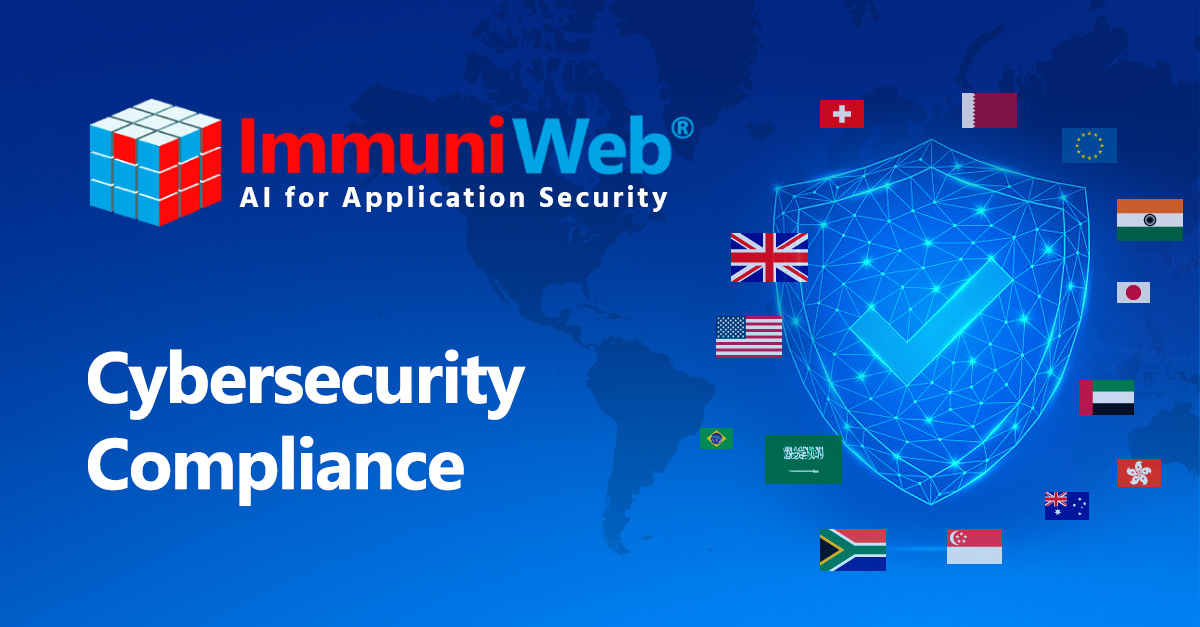
ImmuniWeb can also help to comply with other data protection laws and regulations:
Europe
 EU GDPR
- EU DORA
- EU NIS 2
- EU Cyber Resilience Act
- EU AI Act
- EU ePrivacy Directive
 UK GDPR
 Swiss FADP
- Swiss FINMA Circular 2023/1
North & South America



Middle East & Africa
 Qatar Personal Data Privacy Protection Law
 Saudi Arabia Personal Data Protection Law
- Saudi Arabian Monetary Authority Cyber Security Framework (1.0)
 South Africa Protection of Personal Information Act
 UAE Information Assurance Regulation (1.1)
- UAE Personal Data Protection Law
Asia Pacific
 Australia Privacy Act
 Hong Kong Personal Data Privacy Ordinance
 India Digital Personal Data Protection Act
 Japan Act on the Protection of Personal Information
 Singapore Personal Data Protection Act